 October 2024 in “Journal of the Endocrine Society”
 This case report highlights that Sheehan syndrome, though rare in developed countries, can occur and underscores the importance of detailed history taking to uncover the cause of atypical presentations.
April 2021 in “The journal of heart and lung transplantation/The Journal of heart and lung transplantation” This case report describes a woman with Sheehan's syndrome, leading to severe combined systolic and diastolic heart failure, where treatment improved cardiac function.
10 citations
,
December 2016 in “Asian Journal of Psychiatry” This case report illustrates the relationship between psychosis and Sheehan's syndrome and discusses treatment challenges.

In this case report, a 35-year-old woman was diagnosed with Sheehan's syndrome years after severe postpartum hemorrhage, leading to multiple hormonal deficiencies, highlighting delayed diagnosis's impact on treatment and quality of life.
 October 2023 in “Journal of the Endocrine Society”
 This case report highlights that Sheehan's syndrome can still occur in developed countries due to factors like migration and delayed diagnosis, with diabetes insipidus sometimes masked by adrenal insufficiency.
 October 2022 in “Journal of advanced research in medicine”
 This case study reports that a 52-year-old woman with Sheehan syndrome improved after receiving hormone replacement therapy, highlighting its importance for patients with similar symptoms.
 September 2024 in “The Neurohospitalist”
 Careful management of chronic hyponatremia is crucial to prevent severe neurological issues.
 March 2023 in “European journal of internal medicine”
 This case study highlights a delayed diagnosis of Sheehan's syndrome in a woman with post-partum hemorrhage history, emphasizing the importance of considering non-specific symptoms and menstrual history for diagnosis.
3 citations
,
May 2012 in “BMC Endocrine Disorders” This article presents a unique case of post-partum panhypopituitarism and autoimmune conditions in a 37-year-old woman from Africa, emphasizing the need for early diagnosis and treatment to improve outcomes in similar settings.
 87 citations
,
July 2018 in “Nursing Clinics of North America”
87 citations
,
July 2018 in “Nursing Clinics of North America” This review discusses the diagnostic criteria and treatment options for polycystic ovary syndrome focusing on metabolic subtypes and reports no clinical results.
 30 citations
,
September 2017 in “Clinics in Dermatology”
30 citations
,
September 2017 in “Clinics in Dermatology” This review explores the relationship between androgenetic alopecia and metabolic syndrome, suggesting an association that supports considering cardiovascular risk assessments in patients with this type of hair loss.
 14 citations
,
September 2017 in “Clinics in Dermatology”
14 citations
,
September 2017 in “Clinics in Dermatology” This study highlights that lower testosterone in men and higher testosterone in women are linked to increased risks of metabolic syndrome and type 2 diabetes, with associated skin diseases indicating potential cardiovascular complications.
 171 citations
,
October 1990 in “Alcoholism/Alcoholism, clinical and experimental research”
171 citations
,
October 1990 in “Alcoholism/Alcoholism, clinical and experimental research” The document concludes that the exact way alcohol causes harm to fetal development is unknown, but it significantly affects nutrient transport to the fetus and a safe level of alcohol during pregnancy is not determined.
 70 citations
,
April 2013 in “Endocrine”
70 citations
,
April 2013 in “Endocrine” This review found that lifestyle changes, such as diet and exercise, are beneficial for managing metabolic and endocrine abnormalities in obese patients with PCOS and suggests combining these with anti-obesity agents for enhanced effects.
 38 citations
,
May 2006 in “Archives of Gynecology and Obstetrics”
38 citations
,
May 2006 in “Archives of Gynecology and Obstetrics” This study reported that women with PCOS had higher levels of certain hormones and lower SHBG levels compared to non-PCOS women with similar symptoms, highlighting a less favorable endocrine profile in PCOS cases.
 38 citations
,
June 2004 in “Human Reproduction”
38 citations
,
June 2004 in “Human Reproduction” This review discusses the challenges of using surrogate variables versus primary clinical end-points in PCOS trials and reports no new research results; the authors suggest focusing future studies on primary outcomes.
 29 citations
,
November 2011 in “Human Fertility”
29 citations
,
November 2011 in “Human Fertility” This study reports significant variability in PCOS symptoms across women attending infertility, gynecology, endocrine, and dermatology clinics, highlighting the importance of recognizing diverse presentations and associated health risks like impaired glucose tolerance and diabetes.
 28 citations
,
August 2009 in “Nursing for Women's Health”
28 citations
,
August 2009 in “Nursing for Women's Health” This review highlights that while healthcare providers are starting to diagnose polycystic ovary syndrome earlier in teens, the psychological and social needs often remain inadequately addressed.
 5 citations
,
February 2015 in “Endocrinology Diabetes and Metabolism Case Reports”
5 citations
,
February 2015 in “Endocrinology Diabetes and Metabolism Case Reports” This case report describes a patient with autoimmune polyglandular syndrome type 3 who experienced total hair regrowth following the successful control of diabetes with insulin therapy.
 1 citations
,
July 2022 in “International journal of homoeopathic sciences”
1 citations
,
July 2022 in “International journal of homoeopathic sciences” The case report describes a 27-year-old woman with polycystic ovarian syndrome who experienced successful treatment outcomes from individualized homeopathic care over seven months.
 February 2025 in “Journal of Neonatal Surgery”
 This study explores the role of antidiabetic medications, particularly metformin, GLP-1 receptor agonists, and DPP-4 inhibitors, in managing PCOS, highlighting their combination with hormonal therapies and lifestyle interventions for a comprehensive treatment approach.
 November 2023 in “Curēus”
 This review examines melatonin's role in managing PCOS and its potential to improve hormonal balance, oxidative stress, sleep quality, and mood, but reports no new clinical results.
 August 2023 in “International journal of reproduction, contraception, obstetrics and gynecology”
 In this study, PCOS was found to be highly prevalent among urban, middle socioeconomic status women aged 21 to 30, with common symptoms including oligomenorrhea, weight gain, infertility, hirsutism, and acne.
 1 citations
,
May 2011 in “Molecular Medicine Reports”
1 citations
,
May 2011 in “Molecular Medicine Reports” This study found no association between the -866G/A polymorphism in the UCP2 gene and the development of polycystic ovary syndrome.
 2 citations
,
May 2006 in “Women's Health Medicine”
2 citations
,
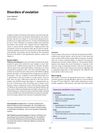
May 2006 in “Women's Health Medicine” This article provides an overview of ovulation disorders, discussing ovarian, hypothalamic, and endocrine defects but reports no new clinical findings.
 1 citations
,
March 2011 in “Infertility”
1 citations
,
March 2011 in “Infertility” This chapter discusses common endocrine disorders affecting the pituitary, thyroid, and adrenal glands, and their impact on human fertility, emphasizing practical evaluation and treatment algorithms.
 November 2013 in “John Wiley & Sons, Ltd eBooks”
 The document concludes that accurate diagnosis of male and female gonadal disorders is crucial for effective treatment and better patient outcomes.
26 citations
,
July 2021 in “International journal of adolescent medicine and health” This review covers various treatments for managing PCOS symptoms and infertility, noting that aromatase inhibitors may be as or more effective than clomiphene citrate for ovulation induction but reports no new clinical results.
 November 2014 in “John Wiley & Sons, Ltd eBooks”
 This review discusses hormones that affect acne and highlights a statistically significant link between a low-glycemic-load diet and reduced acne activity, but reports no new experimental findings.
 78 citations
,
November 2008 in “Fertility and Sterility”
78 citations
,
November 2008 in “Fertility and Sterility” Amenorrhea is relatively rare and initial testing should check FSH, TSH, and prolactin levels.