 29 citations
,
January 1993 in “Dermatologic Clinics”
29 citations
,
January 1993 in “Dermatologic Clinics” This paper reviews diffuse androgen-dependent alopecia and chronic telogen effluvium in women, highlighting diagnostic challenges and management issues, but reports no new clinical findings; the authors suggest effective treatments are available.
 26 citations
,
August 1971 in “Journal of Morphology”
26 citations
,
August 1971 in “Journal of Morphology” In this study, researchers observed that the epidermal specializations on the tail scales of Lygodactylus lizards, including sensory organs and specific secretory glands, are fully restored with similar structure and distribution on regenerated tails.
25 citations
,
May 1972 in “Canadian journal of zoology” This study describes the pelage cycle, hair types, and molt patterns in black-tailed deer, highlighting significant differences in hair properties among various developmental stages and populations.
 14 citations
,
August 2006 in “Clinical and Experimental Dermatology”
14 citations
,
August 2006 in “Clinical and Experimental Dermatology” This case report describes a unique instance of plica neuropathica in a 14-year-old girl linked to chronic illness and acute infection, leading to complete hair loss.
 13 citations
,
March 2017 in “Genomics”
13 citations
,
March 2017 in “Genomics” This study reported that pathways related to apoptosis, cell proliferation, and WNT signaling might be key drivers of hair loss in androgenetic alopecia, guiding potential targets for therapy development.
 13 citations
,
July 2016 in “Pediatric Dermatology”
13 citations
,
July 2016 in “Pediatric Dermatology” This study found that loose anagen syndrome was more common in females and observed across all hair colors and skin types.
 13 citations
,
January 2015 in “International Journal of Trichology”
13 citations
,
January 2015 in “International Journal of Trichology” This study found that cadmium levels were significantly higher in women with chronic telogen effluvium compared to healthy controls, suggesting cadmium toxicity might contribute to this hair shedding condition.
 13 citations
,
July 2004 in “Skinmed”
13 citations
,
July 2004 in “Skinmed” This article reviews the structure and function of hair follicles, diagnostic approaches, and treatments for nonscarring alopecias, but reports no new clinical results.
 8 citations
,
March 2020 in “Frontiers in Cell and Developmental Biology”
8 citations
,
March 2020 in “Frontiers in Cell and Developmental Biology” This study developed a DPC cell line by introducing mutant CDK4, Cyclin D1, and TERT, making it a promising tool to study downstream signaling pathways activated by testosterone in androgenetic alopecia.
 6 citations
,
October 2012 in “Journal of Heredity”
6 citations
,
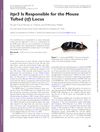
October 2012 in “Journal of Heredity” This study identified the Itpr3 gene as responsible for the tufted hair loss phenotype in the BTBR mouse strain.
 6 citations
,
August 1993 in “Archives of Dermatology”
6 citations
,
August 1993 in “Archives of Dermatology” This article describes the first documented case of acquired uncombable hair syndrome in a 39-year-old woman, contributing to the understanding of this rare condition.
 5 citations
,
May 1983 in “Australian journal of biological sciences”
5 citations
,
May 1983 in “Australian journal of biological sciences” This study found that concurrent administration of cycloleucine with ethionine prevented the weakening of wool fibers in sheep, whereas reduced glutathione did not have the same effect.
 4 citations
,
October 2013 in “Clinics in Dermatology”
4 citations
,
October 2013 in “Clinics in Dermatology” This article discusses three controversial hair growth disorders but reports no new research findings; it explores alopecia areata incognita, pseudopelade of Brocq, and psoriasis-linked alopecia.
 3 citations
,
January 2021 in “Plastic and Aesthetic Research”
3 citations
,
January 2021 in “Plastic and Aesthetic Research” This study found that hair mass index can effectively link hair productivity with clinical scalp coverage perception, suggesting its potential usefulness in diagnosing hair loss patterns and responses to treatment.
 2 citations
,
May 2009 in “Medicine”
2 citations
,
May 2009 in “Medicine” This review discusses skin appendages like hair and nails as indicators of local and systemic pathologies, emphasizing conditions such as inflammatory diseases and infections, but reports no new clinical findings.
 2 citations
,
August 1995 in “Acta agriculturæ Scandinavica. Section A, Animal science”
2 citations
,
August 1995 in “Acta agriculturæ Scandinavica. Section A, Animal science” This study observed that adult male raccoon dogs undergo seasonal moults, with winter fur maturing by the end of November after significant hair growth in spring and autumn.
 2 citations
,
January 1966 in “American Journal of Obstetrics and Gynecology”
2 citations
,
January 1966 in “American Journal of Obstetrics and Gynecology” This study observed that thyroid and hormone treatments did not resolve postpartum alopecia in a small patient group, and most cases may naturally revert to normal.
1 citations
,
February 2016 in “Cell Transplantation” In this study, researchers found that hair follicles and dermal fibroblasts, including dermal papilla cells, supported sustained hair growth in transplanted murine models, with RNA-seq analysis revealing active signaling pathways and gene expression patterns.
 1 citations
,
March 2014 in “Senses and Sciences”
1 citations
,
March 2014 in “Senses and Sciences” This article describes a clinical case of a 67-year-old patient with telogen effluvium treated with a supplement containing amino acids, vitamin E, iron, and Serenoa repens, but reports no new clinical findings.
 1 citations
,
September 2013 in “Mayo Clinic Proceedings”
1 citations
,
September 2013 in “Mayo Clinic Proceedings” This case study identified low iron stores, potentially linked to heavy menstrual periods, as a trigger for diffuse nonscarring alopecia in a 31-year-old woman, leading to a diagnosis of telogen effluvium, for which iron supplementation was prescribed.
 February 2026 in “Dermatology and Therapy”
 This narrative review found that while AI-based tools in dermatology, particularly for hair disorder assessment, have potential to enhance clinical practice by improving objectivity and personalization, they currently serve mainly a complementary role and face challenges like methodological limitations and data bias.
This study found that platelet-rich plasma therapy led to greater improvements in hair density and patient satisfaction compared to topical 5% Minoxidil in androgenetic alopecia patients over 12 weeks.
 May 2025 in “Frontiers in Immunology”
 This paper discusses the balance between target tissue destruction and recovery rates in autoimmune diseases, proposing that high recovery rates are crucial for remitting-relapsing patterns, while exercise might not be neuroprotective in secondary progressive multiple sclerosis.
 August 2024 in “International Journal of Medicine”
 In this study, researchers explored the link between COVID-19 and hair loss, finding that the virus can cause hair shedding in up to 20% of patients, potentially due to multiple factors including inflammation and psychological stress.
 July 2021 in “Australasian Journal of Dermatology”
 This manuscript describes a proposed ‘trichoscopy-assisted hair pull test’ that enhances the diagnosis of hair loss conditions by allowing immediate examination of proximal hair shafts and roots in patients with a positive hair pull test.
 January 2017 in “Jikken doubutsu ihou/Jikken doubutsu/Experimental animals/Jikken Dobutsu”
 This study found that in transgenic mice overexpressing a mutant hairless gene, changes in its expression affected hair loss and regrowth, implicating the gene's role in hair follicle biology.
 August 2018 in “Journal of The American Academy of Dermatology”
 This study found that while both conventional care and teledermatology showed similar clinical response rates for treating actinic keratosis with imiquimod 5% cream, teledermatology was associated with higher treatment failure and local reaction rates.
December 2021 in “International Journal of Research in Dermatology” This article summarizes expert opinions from Indian dermatologists on managing androgenetic alopecia and telogen effluvium, emphasizing varied treatments based on individual patterns and responses.
 68 citations
,
April 2012 in “Journal of Investigative Dermatology”
68 citations
,
April 2012 in “Journal of Investigative Dermatology” The study reports that Fgf18 and Tgf-β2 signaling pathways in hair follicle stem cells have opposing effects on the timing of hair cycle transitions, influencing the shift from telogen to anagen phases.
 24 citations
,
May 2019 in “PLOS genetics”
24 citations
,
May 2019 in “PLOS genetics” This study reports that compound heterozygous loss-of-function mutations in the HEPHL1 gene in a child were associated with abnormal hair and cognitive issues, linking altered ferroxidase activity to hair disorders.