 13 citations
,
December 2012 in “Frontiers in bioscience”
13 citations
,
December 2012 in “Frontiers in bioscience” This review discusses the potential role of vitamin D deficiency in cardiovascular and renal diseases and suggests that supplemental vitamin D could benefit cardiovascular outcomes, especially in African American and postmenopausal women; it reports no new clinical findings.
 6 citations
,
January 2016 in “Dermatology Review”
6 citations
,
January 2016 in “Dermatology Review” This review discusses the role of various stem cell niches in the skin and their potential application in treating skin diseases, but reports no new clinical results.
 5 citations
,
February 2019 in “bioRxiv (Cold Spring Harbor Laboratory)”
5 citations
,
February 2019 in “bioRxiv (Cold Spring Harbor Laboratory)” This study found that in a mouse model of Leigh syndrome, rapamycin alters brain proteome and may extend survival by targeting protein kinase C.
 4 citations
,
January 2021 in “Dermatology Review”
4 citations
,
January 2021 in “Dermatology Review” This review discusses the role of Demodex mites in ocular demodecosis and various eye ailments, highlighting diagnostic methods but noting a lack of standardized treatments, with no new clinical results reported.
 2 citations
,
January 2024 in “Wiadomości Lekarskie”
2 citations
,
January 2024 in “Wiadomości Lekarskie” This study suggests that artificial intelligence could significantly enhance histology education for medical and dental students, but its implementation faces challenges like cost, accuracy, and ethical considerations.
 1 citations
,
April 2025 in “Revista científica FACS.”
1 citations
,
April 2025 in “Revista científica FACS.” This study explored the potential use of natural ingredients in managing alopecia areata, investigating their safety and efficacy as alternatives to conventional chemical treatments.
 1 citations
,
January 2024 in “Wiadomości Lekarskie”
1 citations
,
January 2024 in “Wiadomości Lekarskie” This study evaluated a new computer-aided detection system for identifying Breast Arterial Calcification in mammograms, achieving 70% accuracy, but highlighted the need for a larger dataset to explore its relationship with cardiovascular diseases.
 1 citations
,
May 2023 in “Farmacja Polska”
1 citations
,
May 2023 in “Farmacja Polska” This study summarizes current knowledge on the role of creatine in the human body, its applications in supplementation, and its impact on muscle mass, especially noting that animal-based foods are primary dietary sources and that women may experience health benefits from supplementation.
 July 2026 in “bioRxiv (Cold Spring Harbor Laboratory)”
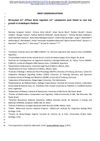
 In this study, researchers found that the efflux of calcium in root hairs of Arabidopsis thaliana, particularly through the ER-localized ACA2 and ACA7, is crucial for modulating cytoplasmic calcium signals and enabling proper root hair growth, with disruptions leading to impaired elongation.
 June 2026 in “Ginekologia Polska”
 This study found that supplementation with micronized and emulsified ferric pyrophosphate effectively improved lab test results and reduced iron deficiency symptoms in patients aged 19-70, with the majority reporting good tolerance and few side effects.
 May 2026 in “Aesthetic Cosmetology and Medicine”
 This study outlined the complexities of common scalp conditions like dandruff and alopecia, emphasizing the need for comprehensive treatment strategies that include modern diagnostic techniques and address underlying factors to enhance therapy effectiveness and improve patients' quality of life.
 April 2026 in “Signal Transduction and Targeted Therapy”
 In a hamster model of COVID-19, this study observed that both low and high doses of testosterone worsened illness in males, while finasteride prevented severe outcomes.
 September 2025 in “International Journal of Innovative Technologies in Social Science”
 This review highlights that while pharmacotherapy, including biological agents, provides varying but often partial control of hidradenitis suppurativa depending on disease severity, significant challenges and high relapse rates persist, necessitating further research for more effective treatments.
Personalized care and evidence-based treatments are crucial for managing skin and hair conditions.
 January 2024 in “Wiadomości Lekarskie”
 This source reports that clinical trials using advanced Deep Brain Stimulation systems, augmented with AI to integrate kinematic data, eye tracking, and cognitive assessments, show promise in improving diagnostic accuracy and monitoring symptoms for patients with Parkinson's disease.
 January 2024 in “Wiadomości Lekarskie”
 In this retrospective study conducted at Grodno Regional Children's Hospital, researchers found that children in western Belarus showed more severe COVID-19 symptoms in 2021 compared to 2020, with urban children primarily affected, and family contact emerging as the most common source of infection.
 January 2024 in “Wiadomości Lekarskie”
 This study reported the development of fluorescent markers using wide band gap metal oxides with rare earth ions for early tumor detection and treatment. Testing in animals showed high efficiency and selectivity, with potential applications in contrast-enhanced MRI, targeted drug delivery, and photodynamic cancer therapy.
 January 2024 in “Wiadomości Lekarskie”
 This study developed an AI-driven method for classifying cells in Follicular Lymphoma cases, achieving a 63% F1-score, precision, and recall in distinguishing centroblasts from other cell types using whole slide images at x20 resolution.
 January 2024 in “Wiadomości Lekarskie”
 This article reviews the potential applications of Point of Care procedures in radiology, discussing their ability to enhance the speed of diagnosis and treatment but does not report new results.
 January 2024 in “Wiadomości Lekarskie”
 This study found that using a combined LH and FSH stimulation protocol significantly increased clinical pregnancy rates in women with low ovarian reserve compared to the standard protocol.
 January 2024 in “Wiadomości Lekarskie”
 This study highlights the growing role of artificial intelligence in vascular surgery, where AI improves diagnostic accuracy, surgical planning, and patient monitoring, ultimately enhancing clinical outcomes, shortening recovery times, and reducing healthcare costs.
 January 2024 in “Wiadomości Lekarskie”
 AI and advanced technologies are improving medical diagnostics and treatments.
 January 2024 in “Wiadomości Lekarskie”
 In this study, researchers analyzed spermogram data from men with diagnosed infertility in Ukraine, aiming to identify the most common sperm disorders, and they found that the study primarily involved men with primary infertility, compared to a control group of healthy men with confirmed fertility.
 January 2024 in “Wiadomości Lekarskie”
 This review discusses the potential of augmented reality to advance vascular and endovascular surgery by improving 3D anatomical understanding and reducing patient risk, but notes that further research is needed to overcome current technological limitations.
 January 2024 in “Wiadomości Lekarskie”
 This abstract outlines a lecture discussing the rise of influencers alongside the internet, highlighting their impact on user behavior in social media by sharing personal experiences and engaging in political and medical discourse.
 January 2024 in “Wiadomości Lekarskie”
 In this study, researchers examined a patient with ZMYM2::FGFR1 fusion-positive leukemia, finding that Pemigatinib showed efficacy, while Ponatinib resistance was linked to a specific FGFR1 mutation. Other FGFR inhibitors demonstrated high effectiveness in ex vivo assays.
 January 2024 in “Wiadomości Lekarskie”
 This study discusses promising research advancements that may improve treatment outcomes for glioblastomas, highlighting stereotactic radiosurgery, FET-PET imaging, and alternating electric field therapy as potential strategies. The abstract emphasizes the need for ongoing and future trials to determine their effectiveness in clinical practice.
 January 2024 in “Wiadomości Lekarskie”
 This presentation discusses the importance of fluid therapy in critical care, reviewing current data, guidelines, and emerging technologies to help clinicians make informed decisions about fluid type and volume for treating critically ill patients. Results are not reported in this abstract.
 January 2024 in “Wiadomości Lekarskie”
 This review highlights that AI-based echocardiography in cardiology can enhance diagnostic precision, automation, and therapeutic strategy development, but also presents challenges like diagnostic errors and high costs, indicating a cautious yet promising progression in its adoption.
 January 2024 in “Wiadomości Lekarskie”
 This study discusses the need for better organization and specialized services in Alzheimer's prevention, focusing on modifiable factors like hearing impairment, vascular risk, and lifestyle habits, and highlights challenges and opportunities from the two-year experience of Brain Health services at Karolinska Institutet in Sweden.