 6 citations
,
February 2016 in “American Journal of Dermatopathology”
6 citations
,
February 2016 in “American Journal of Dermatopathology” This case study reports on an 11-year-old boy with woolly hair nevus, featuring twisted hair shafts and an abnormal hair cuticle, alongside epidermal nevi on his face and back.
4 citations
,
May 2020 in “The journal of pediatrics/The Journal of pediatrics” This case report details the diagnosis of monilethrix in a 4-year-old boy, characterized by brittle hair and specific dermoscopic findings, and highlights the condition's hereditary nature and management through avoiding mechanical hair damage.
2 citations
,
July 2019 in “Indian dermatology online journal” This report documents a rare case of familial eyelash trichomegaly and synophrys in three siblings, with one sister also having loose anagen hair syndrome, an unreported association.
 1 citations
,
January 2014 in “International Journal of Trichology”
1 citations
,
January 2014 in “International Journal of Trichology” This case report describes a 35-year-old woman with diffuse partial woolly hair occurring alongside epidermolysis bullosa with mottled pigmentation.
April 2025 in “Indian Journal of Paediatric Dermatology” This case report describes a 7-month-old girl diagnosed with acrodermatitis enteropathica, linked to low zinc levels, whose skin lesions improved significantly after zinc supplementation.
 July 2024 in “Medical alphabet”
 In this case report, a 9-year-old with alopecia areata experienced full hair regrowth after six months of oral tofacitinib, with no recurrence or significant side effects for a year post-treatment.
November 2023 in “International Journal of Trichology” This case report describes a male child with alopecia areata and renal dysgenesis, highlighting a possible coincidental association that may require future genetic investigation.
Hair disorders are complex and varied, including hair loss, excessive growth, color, and shaft issues.
1 citations
,
January 2013 in “Pediatric Annals” This article discusses the clinical features, differential diagnosis, and natural history of loose anagen syndrome in children but reports no new clinical findings.
 10 citations
,
November 2012 in “International Journal of Dermatology”
10 citations
,
November 2012 in “International Journal of Dermatology” This study identified that certain diseases, including AIDS and systemic lupus erythematosus, may cause African hair to change to a silky, wavy texture similar to neonatal hair in affected patients.
 185 citations
,
June 2014 in “Journal of Investigative Dermatology”
185 citations
,
June 2014 in “Journal of Investigative Dermatology” This case report describes complete hair regrowth in a patient with alopecia universalis and improved psoriasis after treatment with the oral Janus kinase inhibitor, tofacitinib.
 70 citations
,
April 2016 in “Experimental Dermatology”
70 citations
,
April 2016 in “Experimental Dermatology” In this study, oral tofacitinib treatment led to significant hair regrowth and changes in skin and blood biomarkers in a patient with alopecia areata.
 26 citations
,
October 2016 in “Case Reports in Dermatology”
26 citations
,
October 2016 in “Case Reports in Dermatology” In this study, tofacitinib treatment in a male patient with alopecia areata led to significant hair regrowth and improvement in nail dystrophy symptoms, restoring finger function within 10 months.
 8 citations
,
May 2017 in “Singapore Medical Journal”
8 citations
,
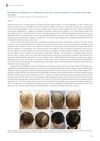
May 2017 in “Singapore Medical Journal” A Korean woman with complete hair loss regrew her hair after taking tofacitinib, with no side effects.
8 citations
,
July 2015 in “International Journal of Dermatology” This study reports that a homozygous A1103G mutation in DSG 4 is responsible for localized autosomal recessive hypotrichosis in a 2-year-old Chinese girl, resulting in reduced DSG 4 expression and hair defects.
 4 citations
,
January 2018 in “International Journal of Trichology”
4 citations
,
January 2018 in “International Journal of Trichology” This case report describes a 4-year-old girl with hypotrichosis and juvenile macular dystrophy, linked to mutations in the cadherin 3 gene affecting P-cadherin expression.
 2 citations
,
October 2006 in “International Journal of Dermatology”
2 citations
,
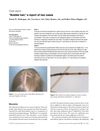
October 2006 in “International Journal of Dermatology” This study reports that discontinuing blow drying improved hair loss in two women with vacuolization in their hair shafts, suggesting a potential link between heat styling and alopecia.
 1 citations
,
October 2012 in “The Journal of Dermatology”
1 citations
,
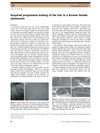
October 2012 in “The Journal of Dermatology” This letter to the editor describes a case of acquired progressive kinking of the hair in a Korean female adolescent, but no new research findings are reported.
 June 2023 in “Asian Journal of Pharmaceutical Research”
 This review examines the various types of alopecia, their impact on hair growth and appearance, and discusses potential future treatments, by analyzing changes in hair structure and physiology throughout life.
 April 2019 in “The journal of investigative dermatology/Journal of investigative dermatology”
 In this study, the researchers observed significant metabolic dysregulation in central centrifugal cicatricial alopecia, particularly involving lipid metabolism and the downregulation of AMPK-related genes.
 August 2010 in “Journal of The American Academy of Dermatology”
 This educational activity reports no new research findings; it aims to help physicians assess and improve their clinical skills through self-evaluation and continued medical education.
 March 2004 in “Journal of The American Academy of Dermatology”
 This study found that the vehicle of hydrocortisone impacts its absorption and therapeutic effectiveness, as demonstrated by efficacy tests using UV-erythema and vasoconstriction models.
October 1966 in “Archives of Dermatology” This abstract reports no research results and details a case presentation of a 19-year-old woman with alopecia universalis treated with DMSO/Fluocinolone Acetonide, providing no new clinical findings.
 16 citations
,
August 2002 in “Journal of Interferon and Cytokine Research”
16 citations
,
August 2002 in “Journal of Interferon and Cytokine Research” In this case study, hypertrichosis in a patient with hemophilia and hepatitis C may have been induced by IFN-alpha treatment, despite the drug usually causing hair loss.
 46 citations
,
December 2003 in “Advances in neonatal care”
46 citations
,
December 2003 in “Advances in neonatal care” This article reviews fetal scalp hair formation and related disorders but reports no new research results.
 46 citations
,
April 2009 in “Journal of Dermatological Case Reports”
46 citations
,
April 2009 in “Journal of Dermatological Case Reports” This study established standard trichoscopy norms for adult white females, providing benchmarks for hair thickness, percentage of thin hairs, and pilosebaceous units with single hair across different scalp areas.
 44 citations
,
November 1998 in “Australasian Journal of Dermatology”
44 citations
,
November 1998 in “Australasian Journal of Dermatology” This review provides a framework for diagnosing acquired scalp alopecias and discusses both non-scarring and scarring types, but reports no new clinical results.
 6 citations
,
March 2016 in “PLoS ONE”
6 citations
,
March 2016 in “PLoS ONE” This study characterized hair from a patient with a ribosomopathy and identified distinct differences, including reduced hair thickness and lipid content, compared to family members.
 1 citations
,
December 1997 in “Journal of The European Academy of Dermatology and Venereology”
1 citations
,
December 1997 in “Journal of The European Academy of Dermatology and Venereology” In this study, 85.9% of 120 hirsute Saudi women exhibited elevated androgen levels, suggesting the need for a comprehensive hormonal evaluation to identify underlying causes of hirsutism.
 November 2024 in “Cureus”
 The authors reported a case of significant scalp edema accompanying lichen planopilaris in a middle-aged woman, suggesting a potential new variant of edematous scalp conditions as a reaction to scarring alopecia.