 January 2025 in “Clinical Dermatology Review”
 In this case report, a 16-year-old female with Netherton syndrome, a rare genetic disorder, exhibited symptoms such as skin issues, hair abnormalities, and elevated serum IgE levels. The diagnosis was supported by skin biopsy, and treatment included topical therapies, NB-UVB, and infliximab.
January 2025 in “Open Science Framework” This abstract outlines the genetic and biological processes of hair growth, highlighting that various hair disorders can have significant medical, aesthetic, and psychological impacts, though specific research findings or results were not reported.
October 2015 in “CRC Press eBooks” This article reviews the use of trichoscopy for diagnosing and monitoring various scalp conditions, but it presents no new experimental findings; the authors emphasize its precision in noninvasive evaluation.
 15 citations
,
March 1997 in “International Journal of Dermatology”
15 citations
,
March 1997 in “International Journal of Dermatology” This article discusses the potential use of 5α-reductase inhibitors in dermatology and reports no new clinical results; the authors suggest further exploration of their dermatological applications.
 8 citations
,
November 2021 in “The Journal of Dermatology”
8 citations
,
November 2021 in “The Journal of Dermatology” This review addresses the complexities in trichoscopy terminology and proposes an updated diagnostic flowchart for hair diseases, but it reports no new clinical findings.
This case report describes a novel mutation in the CDH3 gene in an 11-year-old Iranian boy with sparse scalp hair and macular dystrophy, leading to altered P-cadherin synthesis.
 30 citations
,
January 2013 in “International Journal of Trichology”
30 citations
,
January 2013 in “International Journal of Trichology” This study found that in Jordanian children, tinea capitis, alopecia areata, and telogen effluvium were the most common causes of hair loss, with nutritional deficiencies such as iron and zinc deficiency also noted as significant factors.
22 citations
,
December 1992 in “The journal of pediatrics/The Journal of pediatrics” This study reported that oral zinc therapy improved hair and skin abnormalities in patients with dry brittle hair, alopecia, and other symptoms, regardless of demonstrated zinc deficiency.
13 citations
,
July 2004 in “Pediatric dermatology” This case study describes a 9-year-old boy with monilethrix and associated abnormalities, suggesting a new, severe autosomal recessive variant termed "monilethrix syndrome.
12 citations
,
January 1994 in “Dermatology” This study found that a patient with giant axonal degeneration had unique hair abnormalities such as trichorrhexis nodosa and altered S:N ratios, unlike her relatives but comparable to unrelated controls.
 9 citations
,
August 2014 in “The Journal of Dermatology”
9 citations
,
August 2014 in “The Journal of Dermatology” This study found that clinically non-affected perilesional scalp in Japanese alopecia patients often showed microscopic abnormalities, which may help in assessing the spread of disease activities.
2 citations
,
March 2017 in “Sultan Qaboos University medical journal” This case report describes a six-month-old infant with focal scalp hair heterochromia and no detectable underlying abnormalities, which was still present at a one-year follow-up.
This case study describes a young girl with sparse, brittle scalp hair and multiple keratotic papules, but no systemic or familial abnormalities were found.
August 2016 in “Journal of the American Academy of Dermatology” This case study presents a 9-month-old male infant with symptoms suggesting a likely diagnosis of Hay–Wells syndrome, including severe scalp crusting, nail abnormalities, and partial syndactyly.
3 citations
,
July 2024 in “Dermatology and Therapy” The researchers reported that identifying specific hair shaft abnormalities is crucial for distinguishing patchy/plaque mycosis fungoides from psoriasis and eczematous dermatitis on non-scalp skin using dermoscopy.
 January 2018 in “Journal of clinical and investigative dermatology”
 This study evaluated dermoscopic findings in patients with different types of primary cicatricial alopecias, suggesting trichoscopy may aid in differential diagnosis by revealing abnormalities in scalp structures.
2 citations
,
May 2023 in “Veterinary Pathology” This article outlines methods to study the skin and its molecular traits, focusing on interpretation and techniques applicable to mouse models, including diverse assays and approaches like electron microscopy and large-scale lipid analyses.
 21 citations
,
November 2009 in “Dermatologic Clinics”
21 citations
,
November 2009 in “Dermatologic Clinics” This review discusses hair abnormalities in various epidermolysis bullosa subtypes and reports no new clinical findings.
 20 citations
,
July 2009 in “Journal of Pediatric and Adolescent Gynecology”
20 citations
,
July 2009 in “Journal of Pediatric and Adolescent Gynecology” This article reviews various hair abnormalities in adolescents and young adults and emphasizes the importance of timely diagnosis and education for optimal patient outcomes, but it reports no new clinical results.
 9 citations
,
November 1993 in “Journal of The American Academy of Dermatology”
9 citations
,
November 1993 in “Journal of The American Academy of Dermatology” Some men can have female pattern baldness without hormonal abnormalities or signs of feminization.
 7 citations
,
January 2013 in “Dermatology Research and Practice”
7 citations
,
January 2013 in “Dermatology Research and Practice” This review discusses the usefulness of trichoscopy in diagnosing and managing scalp and hair disorders, reporting it as a valuable tool for linking clinical and histological findings.
 1 citations
,
March 2014 in “Turkderm”
1 citations
,
March 2014 in “Turkderm” Trichoscopy helps tell different hair loss types apart using specific scalp and hair patterns.
 42 citations
,
October 2012 in “Dermatologic Clinics”
42 citations
,
October 2012 in “Dermatologic Clinics” This article reviews the use of trichoscopy for diagnosing common hair and scalp diseases and introduces a new classification for specific skin surface abnormalities, without presenting new clinical results.
 May 2023 in “Elsevier eBooks”
 This article discusses scalp micropigmentation as a noninvasive method to conceal various forms of hair loss and scalp abnormalities and reports no clinical results; the authors highlight its safe and effective application.
36 citations
,
December 2021 in “The journal of allergy and clinical immunology/Journal of allergy and clinical immunology/The journal of allergy and clinical immunology” This study observed that both ritlecitinib and brepocitinib improved scalp biomarkers in patients with alopecia areata, with associations to hair regrowth seen in this phase 2a trial.
 September 2024 in “Cosmoderma”
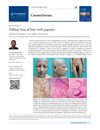
 This case study reports a 20-year-old male with lifelong hair loss and unresponsive skin-colored papules, without other systemic abnormalities or similar family medical history.
December 2019 in “Jordan Medical Journal” This study observed that physical examinations of hair and scalp changes, such as texture and color alteration, can help predict zinc deficiency severity among children with hair abnormalities.
 32 citations
,
June 2003 in “The American Journal of Dermatopathology”
32 citations
,
June 2003 in “The American Journal of Dermatopathology” This report describes the third known case of lipedematous scalp in a 51-year-old woman, marked by progressive thickening of the scalp without hair loss, and notes its association with early meningitis symptoms.
20 citations
,
January 1997 in “Dermatology” This case report describes a 16-year-old with ectrodactyly-ED-clefting syndrome, where scarring alopecia with follicular involvement appeared during puberty, possibly due to anatomic hair abnormalities.
19 citations
,
July 2004 in “Australasian Journal of Dermatology” In this case study, a 74-year-old woman improved her scalp hair condition by reducing chronic rubbing, leading to hair regrowth without ongoing abnormalities after behavior modification.