January 2026 in “International Society of Hair Restoration Surgery” This report highlights that the ISHRS website achieved 1,000,000 active users in 2025, signaling its emergence as a leading global resource for hair restoration information.
1 citations
,
October 2024 in “Indian Dermatology Online Journal” This case report describes a 36-year-old man who developed generalized eruptive histiocytosis on the scalp after undergoing nine platelet-rich plasma treatments for hair loss, likely triggered by injection-related trauma and inflammation.
 24 citations
,
January 2015 in “Evidence-based Complementary and Alternative Medicine”
24 citations
,
January 2015 in “Evidence-based Complementary and Alternative Medicine” In this study, Polygonum multiflorum Radix promoted hair growth in mice, with oral administration being more effective, likely through FGF-7, while topical application favored SHH-related mechanisms.
 May 2025 in “International Journal Of Science Technology & Management”
 This study focused on developing a pomade called "Hyung Hair" made from rambutan leaf extract, which showed potential benefits such as reducing hair loss and slowing gray hair growth, with a feasibility analysis indicating the business's viability.
12 citations
,
March 2012 in “JEADV. Journal of the European Academy of Dermatology and Venereology/Journal of the European Academy of Dermatology and Venereology” This study observed that some patients with homozygous c.736T>A mutation in LIPH may have mild hypotrichosis with long hairs in adulthood.
This study found that platelet-rich plasma significantly enhanced the viability, as well as the expression of alkaline phosphatase and versican, in human hair dermal papilla cells compared to controls.
8 citations
,
March 2011 in “Endocrine” In this study, researchers identified a novel p.R50X mutation in the vitamin D receptor gene, linked to hereditary vitamin D-resistant rickets in two siblings.
 June 2023 in “GSC Advanced Research and Reviews”
 This review covers the history, symptoms, and treatment progress for Hutchinson-Gilford Progeria Syndrome, noting that while no cure exists, understanding its molecular mechanism may improve future treatment strategies.
 15 citations
,
December 2014 in “PLoS ONE”
15 citations
,
December 2014 in “PLoS ONE” This study identifies iRhom2 as a crucial regulator of hair follicle differentiation, showing that the iRhom2Uncv mutation leads to dysplasia and reduced TACE maturation, resulting in a hairless phenotype in mice.
 7 citations
,
September 2014 in “European Journal of Dermatology”
7 citations
,
September 2014 in “European Journal of Dermatology” This study found a significant positive correlation between hair thickness and growth rate, with a notably slower growth rate observed in men with male pattern hair loss compared to healthy controls.
 13 citations
,
July 2016 in “BMC Complementary and Alternative Medicine”
13 citations
,
July 2016 in “BMC Complementary and Alternative Medicine” In this study, topical application of Hominis Placenta significantly promoted hair regrowth and increased hair density in C57BL/6 mice, suggesting its potential as a treatment for alopecia.

This article reports no new findings as it lacks an abstract.
 181 citations
,
January 2009 in “Nature Genetics”
181 citations
,
January 2009 in “Nature Genetics” In this study, researchers linked defects in U2HR, an inhibitory region in the HR gene, to Marie Unna hereditary hypotrichosis, suggesting a mechanism for controlling hair growth and addressing hair loss.
 November 2006 in “Hair transplant forum international”
 This announcement promotes the ISHRS 15th Annual Scientific Meeting in Las Vegas, detailing its status as a leading event for hair restoration, and contains no research findings.
January 2026 in “Jurnal Akta Trimedika” In this case report, microneedling combined with PRP improved hair density and thickness in a 40-year-old man with androgenic alopecia, without side effects, suggesting it as a therapeutic option for those avoiding long-term pharmacotherapy.
July 2025 in “International Society of Hair Restoration Surgery” This article discusses initiatives by the ABHRS to enhance hair restoration surgery standards but presents no new research findings.
December 2022 in “Biochemical and Biophysical Research Communications” This study found that HtrA2 inactivation in mnd2 mice is associated with delayed hair cycle phases and growth retardation of adipocytes, suggesting HtrA2's role in regulating adipogenesis-related hair growth.
 1 citations
,
November 2022 in “Journal of Dermatological Treatment”
1 citations
,
November 2022 in “Journal of Dermatological Treatment” This review discusses the use of platelet-rich plasma for various dermatologic conditions but reports inconsistent evidence and a lack of standardized protocols; patients often report high satisfaction despite mixed clinical outcomes.

This study found that women with genetic hair loss experienced significant improvements in hair density, count, and thickness when treated with both Rehmannia root extract and microneedling therapy, with the combination showing the greatest benefits compared to each treatment alone.
24 citations
,
January 2023 in “Cancer Research” This study suggests that activating AMPK to phosphorylate ZDHHC13 may enhance MC1R function and reduce melanoma risk in individuals with red hair.
January 2020 in “Archives of Pharmacy Practice” This study found that Hibiscus rosa-sinensis leaf extract promoted hair growth in rats more effectively than its flower extract, suggesting its potential as a natural alternative for hair growth treatments.
 April 2024 in “Communications biology”
 The researchers reported that disrupting ATRA signaling by deleting RDHE genes in the hair follicle led to altered hair follicle cycles, composition, and gene expression, indicating RDHEs' role in hair follicle signaling coordination.
 2 citations
,
January 2023 in “Annals of Dermatology”
2 citations
,
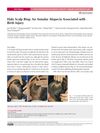
January 2023 in “Annals of Dermatology” A hairless patch on a boy's scalp from birth injury improved with minoxidil treatment.
 7 citations
,
August 2020 in “Journal of The American Academy of Dermatology”
7 citations
,
August 2020 in “Journal of The American Academy of Dermatology” This letter comments on a randomized controlled trial by Shapiro et al that found no significant benefits of platelet-rich plasma compared to placebo for male androgenetic alopecia, highlighting issues with PRP protocol variations.
 September 2014 in “International Journal of Dermatology and Venereology”
 This review explores the roles of histamine receptors H2R, H3R, and H4R in treating various dermatoses but reports no new clinical outcomes.
1 citations
,
September 2020 in “Journal of dermatology” This study identified a novel mutation and confirmed a previous mutation in the LIPH gene in a woman with autosomal recessive woolly hair, expanding the mutation spectrum for this condition.
A new mutation in the TRPS1 gene caused Trichorhinophalangeal syndrome in a 17-year-old, highlighting the need for genetic testing.
January 2016 in “프로그램북(구 초록집)” This study found that the revised BASP classification for pattern hair loss, which addresses certain limitations of the original, could serve as an alternative option despite a decrease in clinical accuracy and ease of use.
 9 citations
,
February 2018 in “The Journal of Dermatology”
9 citations
,
February 2018 in “The Journal of Dermatology” This study identified a novel splice site mutation in the LIPH gene associated with autosomal recessive woolly hair, contributing to understanding the genetic basis of this condition.
 1 citations
,
December 2018 in “Journal of genetic medicine”
1 citations
,
December 2018 in “Journal of genetic medicine” In this case report, a 20-year-old male with tricho-rhino-phalangeal syndrome was found to have a de novo frameshift mutation in the TRPS1 gene, highlighting the challenges in diagnosing this rare disorder.