 May 2026 in “Scientific and Technical Bulletin оf State Scientific Research Control Institute of Veterinary Medical Products and Fodder Additives аnd Institute of Animal Biology”
 The researchers reported that zinc carbonate nanoparticles stabilized with polyvinylpyrrolidone did not show local irritant or skin-resorptive effects in preclinical tests on rabbits and rats.
May 2026 in “Chemical Engineering Journal” January 2026 in “International Journal of Molecular Sciences” This review highlights brimonidine’s potential as a dermatological agent, noting its ability to improve rosacea-related facial redness and its effectiveness in various other skin conditions due to its vasoconstrictive and anti-inflammatory actions, with minimal systemic absorption and a favorable safety profile for long-term use.
July 2024 in “Journal of Investigative Dermatology” ATR04-484 ointment shows promise for treating skin issues from cancer therapies.
3 citations
,
July 2023 in “Cells” This study found that topical application of recombinant human MG53 protein mitigated nitrogen mustard-induced skin injuries in mice by preserving epidermal integrity and hair follicle structure.
 1 citations
,
June 2026 in “Dermato”
1 citations
,
June 2026 in “Dermato” This narrative review found that ritlecitinib shows consistent effectiveness and a favorable safety profile for treating alopecia areata in clinical trials and real-world settings, with progressive hair regrowth observed, particularly when treatment is initiated early and maintained appropriately.
2 citations
,
June 2024 in “Dermatology” This study found that patients receiving active ritlecitinib doses reported greater satisfaction with hair growth compared to placebo, with high agreement observed between clinician evaluations of scalp hair improvement and patient satisfaction through week 48.
 3 citations
,
July 2015 in “Australasian Journal of Dermatology”
3 citations
,
July 2015 in “Australasian Journal of Dermatology” This letter discusses a case of iododerma in pregnancy linked to iodinated multivitamin use, but reports no new clinical findings.
 16 citations
,
August 2011 in “Annals of Allergy Asthma & Immunology”
16 citations
,
August 2011 in “Annals of Allergy Asthma & Immunology” This report describes a case of a 19-year-old woman experiencing severe recurrent angioedema with airway issues, leading to multiple emergency visits and unsuccessful treatment with typical steroid-sparing agents.
 5 citations
,
September 2016 in “Journal of Cosmetic Dermatology”
5 citations
,
September 2016 in “Journal of Cosmetic Dermatology” This article reviews postpartum hair loss management strategies, highlighting a lack of thoroughly investigated effective treatments and suggests that new research focus on targeted biological methods.
 October 2025 in “Frontiers in Immunology”
 This study explores the potential of platelet-rich plasma (PRP) as a novel adjuvant therapy for eczema, positing that it may alleviate inflammation, enhance skin barrier function, and reduce recurrence.
May 2025 in “Journal of the European Academy of Dermatology and Venereology” This study observed that early treatment with ritlecitinib in patients with alopecia areata, especially when severity is low, led to more favorable responses, and continued improvement was seen up to 24 months, offering guidance on treatment timing and duration.
This case report highlights a unique instance where the use of naproxen was associated with concurrent eosinophilic pneumonitis and diffuse alveolar hemorrhage, conditions not previously linked to NSAIDs.
December 2025 in “Actas Dermo-Sifiliográficas” This review analyzes the mechanism and evidence supporting the approved use of ritlecitinib, a JAK3/TEC kinase inhibitor, for treating severe alopecia areata in patients aged 12 and older, highlighting its role in the changing therapeutic landscape of this immune-mediated disease.
This study found that 54% of participants with androgenetic alopecia using Ricapil® showed clinical signs of hair follicle reactivation and initial hair regrowth over three months.
 14 citations
,
January 2016 in “Biochemical and Biophysical Research Communications”
14 citations
,
January 2016 in “Biochemical and Biophysical Research Communications” In this study, researchers found that ginsenoside Re from Panax ginseng increased hair shaft length and duration in mice, comparable to minoxidil, by modulating TGF-β signaling pathways.
2 citations
,
January 2019 in “Journal of Cosmetics, Dermatological Sciences and Applications” This study found that both a nutritional supplement and a topical hair lotion reduced hair loss and increased the anagen to telogen hair ratio in individuals with androgenetic alopecia.
 2 citations
,
November 2017 in “PloS one”
2 citations
,
November 2017 in “PloS one” This study found that 2MbisP increases epidermal thickening more rapidly than atRA in rhino mice, while both compounds similarly reduce utricle size.
February 2026 in “JAAD International”  32 citations
,
January 2012 in “International Journal of Dermatology”
32 citations
,
January 2012 in “International Journal of Dermatology” This study reported that the most common skin side effect of epidermal growth factor receptor inhibitors was a papulopustular rash, treatable with symptom-targeted therapies, while drug suspension was rarely needed.
March 2019 in “Reactions Weekly”  April 2023 in “Journal of Investigative Dermatology”
 This study found that ALRN-6924 effectively protected human hair follicles from cyclophosphamide-induced damage in an ex vivo setting, suggesting it may reduce both acute and permanent chemotherapy-induced alopecia.
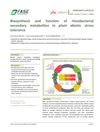 November 2025 in “Frontiers of Agricultural Science and Engineering”
 This study observed that rhizobacterial strain RT3 significantly improved drought tolerance in lettuce by increasing survival rates and fresh biomass after rewatering, with metabolites such as proline and glycine enhancing stress resilience.
91 citations
,
July 2020 in “JAMA Dermatology” This study suggests that minoxidil may improve hypotrichosis in patients with ARWH due to LIPH variants, but a possible genetic factor could affect its efficacy within families.
 48 citations
,
November 1992 in “International Journal of Dermatology”
48 citations
,
November 1992 in “International Journal of Dermatology” This article discusses the history and terminology of toxic epidermal necrolysis but reports no new clinical results.
 February 2025 in “Journal of Clinical Investigation”
 This study found that RNase L acts as a regeneration repressor gene in mammals, as seen in Rnasel-/- mice which showed increased regenerative capacity and elevated Wound Induced Hair Neogenesis through enhanced IL-36α signaling, suggesting a tradeoff between regeneration and immune regulation.
9 citations
,
May 2002 in “PubMed” This study demonstrated that mice lacking skin-specific RXRalpha expression developed hair follicle degeneration and alopecia, indicating the importance of RXRalpha/VDR heterodimers in maintaining hair follicle homeostasis.
2 citations
,
October 2025 in “Frontiers in Medicine” This study found that deuruxolitinib may effectively improve hair regrowth and patient satisfaction in moderate to severe alopecia areata, but careful monitoring is needed due to manageable side effects and concerns about long-term safety.
 July 2026 in “Zenodo (CERN European Organization for Nuclear Research)”
 This study developed a multipurpose herbal gel formulation containing ingredients like lotus, aloe, and turmeric, which was reported to improve hair manageability and skin care while being non-irritant and cost-effective.