 1 citations
,
April 2022 in “AACE clinical case reports”
1 citations
,
April 2022 in “AACE clinical case reports” This case report describes a 36-year-old Pakistani phenotypic female diagnosed with 46,XY 5-alpha-reductase deficiency, highlighting that such disorders of sexual development can manifest with symptoms like obesity, hirsutism, and amenorrhea later in life due to unique circumstances.
2 citations
,
November 1996 in “Transplantation” This study found that intrathymic injection of recipient-type splenocytes into donor rats, combined with antilymphocyte antiserum, effectively prevented graft-versus-host disease for up to 300 days.
 July 2024 in “Age and Ageing”
 In this retrospective, population-based cohort study, researchers found no significant difference in age-related macular degeneration incidence between BPH patients using 5α-reductase inhibitors and those on tamsulosin, but observed a slight increased risk with dutasteride compared to finasteride.
November 2025 in “Clinical and Translational Allergy” This study developed a consensus document to guide danazol discontinuation in hereditary angioedema patients, enhancing the standardization and safety of treatment protocols.
July 2014 in “Journal of the Dermatology Nurses' Association” This article summarizes lessons and tips from the Dermatology Nurses’ Association’s annual conference, sharing insights on various dermatology topics but does not present new research results.
 1 citations
,
November 2011 in “Journal of AIDS & Clinical Research”
1 citations
,
November 2011 in “Journal of AIDS & Clinical Research” Raltegravir may cause hair loss in some patients.
September 2021 in “Fertility and sterility” In this study, daily administration of 100mg DHEA for 16 weeks in women with adequate ovarian reserve did not modify metabolic or reproductive variables, apart from increased antral follicular count and anti-Müllerian hormone levels.
 April 2024 in “bioRxiv (Cold Spring Harbor Laboratory)”
 In this study, researchers identified a gene regulatory network in Arabidopsis that controls root hair growth under low-temperature conditions, revealing specific transcription factors and downstream targets that contribute to this growth response despite overall plant development being halted.
 2 citations
,
December 2022 in “Journal of the American Academy of Dermatology”
2 citations
,
December 2022 in “Journal of the American Academy of Dermatology” This study reported that in Hispanic/Latinx patients with alopecia areata, rheumatoid arthritis was a common autoimmune comorbidity, and gastroesophageal reflux disease was notably more prevalent than in other populations with alopecia areata.
July 2025 in “Zenodo (CERN European Organization for Nuclear Research)” Ritlecitinib helps regrow hair in alopecia areata and is safe for long-term use.
 81 citations
,
July 2008 in “The Journal of Clinical Endocrinology and Metabolism”
81 citations
,
July 2008 in “The Journal of Clinical Endocrinology and Metabolism” This study found that cortisone reductase deficiency is caused by inactivating mutations in the H6PD gene, affecting cortisol metabolism by preventing 11β-HSD1 enzyme function.
 September 2021 in “Clinical research in dermatology”
 This review discusses frontal fibrosing alopecia and reports no new clinical results; the authors highlight the need for randomized controlled trials on 5AR inhibitors to assess their efficacy and safety.
5 citations
,
February 2012 in “Australasian Journal of Dermatology” This case report documents two instances of red-haired men with patch-type alopecia areata, where hair regrowth occurred in black rather than red, an unusual phenomenon potentially linked to pigmentation and receptor pathways.
In this study, a newly designed protein degrader targeting androgen receptors showed promise in reversing hair regrowth inhibition in a mouse model of androgenetic alopecia, suggesting potential as a novel and safe treatment strategy.
May 2025 in “Journal of the European Academy of Dermatology and Venereology” This study reported that etrasimod did not achieve significant improvements in hair regrowth for moderate to severe alopecia areata at 24 weeks, although it showed a dose-dependent trend and was safe and well-tolerated over 52 weeks.
 June 2023 in “International journal of research in ayurveda and pharmacy”
 This study explores how Dhatryadi rasayana, a polyherbal formulation with antioxidant properties, may help prevent and treat premature hair greying by addressing factors such as oxidative stress, nutritional deficiencies, and hormone imbalances, potentially through rasayana therapy.
March 2026 in “International Journal of Biological Macromolecules” Recombinant Filaggrin-2 microneedles effectively promote hair growth and repair in hair loss.
8 citations
,
July 2020 in “The Egyptian Rheumatologist” This study found that nutritional deficiencies are common in Egyptian patients with rheumatic diseases, particularly among the elderly, and should be routinely monitored regardless of disease type or duration.
20 citations
,
April 2000 in “Experimental dermatology” This study observed that overexpression of the enzyme ODC in transgenic mice caused hair loss and skin changes similar to human papular atrichia, suggesting that ODC might be involved in a critical hair follicle function pathway.
 March 2024 in “Skin research and technology”
 This study found that CRP levels were elevated in alopecia areata patients, with an inverse linear association between serum vitamin D and CRP levels specifically noted in ophiasis AA.
 7 citations
,
January 1993 in “Rheumatology”
7 citations
,
January 1993 in “Rheumatology” This article discusses suspected skin toxicity from drugs used to treat rheumatoid arthritis but reports no new clinical findings.
 1 citations
,
January 2023 in “Cutis”
1 citations
,
January 2023 in “Cutis” This article highlights disparities in the prevalence of alopecia areata among people with skin of color and suggests this information could help dermatologic providers address challenges in treating this population.
 January 2025 in “bioRxiv (Cold Spring Harbor Laboratory)”
 This study found that rhamnose can restore hair-inducing gene expression in dermal papilla cells and accelerate hair follicle regeneration by promoting the hair cycle into the anagen phase, suggesting its potential therapeutic application for alopecia treatment.
3 citations
,
March 2022 in “Journal of Infection” This study observed that SARS-CoV-2 shedding significantly decreased after remdesivir treatment, irrespective of RT-PCR cycle threshold values, suggesting early de-isolation might be possible in severe COVID-19 cases.
 October 2023 in “Journal of the European Academy of Dermatology and Venereology”
 In this study, a Delphi survey among 441 European dermatology patients identified psychological impacts as the most significant issues affecting their lives, underscoring the need for psychological support in managing dermatological diseases.

This review discusses recent advances in polydopamine-based biomaterials and their growing potential in personalized medicine, but reports no new experimental results; the authors highlight both opportunities and challenges for future applications.
 April 2024 in “JEADV. Journal of the European Academy of Dermatology and Venereology/Journal of the European Academy of Dermatology and Venereology”
 This study investigates the role of retinoic acid in regulating hair follicle stem cell homeostasis to identify new potential targets for treating androgenetic alopecia.
 December 2023 in “Jurnal Penelitian Pendidikan IPA”
 In this laboratory study on mice, researchers found that both platelet-rich plasma and salmon DNA serum promoted wound healing, with platelet-rich plasma providing faster results due to its bioactive growth factors.
 January 2025 in “Turkish Journal of Cerebrovascular Diseases”
 This case report details two consanguineous patients with cerebral autosomal recessive arteriopathy, both having the same HTRA1 gene mutation, but exhibiting different clinical presentations, including one with epileptic seizures and lobar hemorrhages—previously undocumented in this condition.
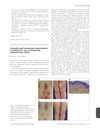 6 citations
,
February 2016 in “British Journal of Dermatology”
6 citations
,
February 2016 in “British Journal of Dermatology” A woman with a drug allergy to anakinra was successfully desensitized, allowing her to continue treatment without allergic reactions.