5 citations
,
December 2023 in “Current Biology” A feedback loop between LRH and RSL4 controls root hair growth in Arabidopsis.
48 citations
,
July 2023 in “Pediatric Dermatology” This study found that among adolescents with alopecia areata and significant hair loss, treatment with ritlecitinib resulted in greater hair regrowth and self-reported improvement compared to placebo over 48 weeks, with common side effects including headache, acne, and nasopharyngitis.
 October 2023 in “Scientific Reports”
 In this study, gene therapy using a VDR-expressing adenoviral vector promoted hair growth in Vdr-KO rats, suggesting its potential for treating alopecia associated with type II rickets.
October 2014 in “The journal of investigative dermatology/Journal of investigative dermatology” This review discusses the formation and goals of the Pediatric Dermatology Research Alliance (PeDRA) but reports no new clinical results; it emphasizes collaborative research to advance treatment options for pediatric skin disorders.
 4 citations
,
January 2017 in “Journal of pediatric endocrinology & metabolism/Journal of pediatric endocrinology and metabolism”
4 citations
,
January 2017 in “Journal of pediatric endocrinology & metabolism/Journal of pediatric endocrinology and metabolism” This study identified two distinct VDR gene mutations among Lebanese families with hereditary vitamin D-resistant rickets, noting varied treatment responses and promising outcomes despite severe phenotypes.
 November 2019 in “Neuro-oncology”
 This study found that using rind-based dosimetric techniques in brain irradiation significantly reduced scalp dose and alopecia compared to standard treatment plans, with 60% of patients experiencing no hair loss.
March 2023 in “SKIN The Journal of Cutaneous Medicine” This study observed that most patients with alopecia areata experienced sustained scalp hair regrowth after 48 weeks of ritlecitinib treatment, with safety consistent with prior findings.
 February 2026 in “Pharmaceuticals”
 This study introduced the KRDQN predictive framework, which outperformed existing methods in predicting adverse drug reactions and provided interpretable insights into drug mechanisms, aiding pharmacovigilance and clinical decision-making.
 July 2023 in “bioRxiv (Cold Spring Harbor Laboratory)”
 This study found that Arabidopsis thaliana mutants with altered AtRBOHC/RHD2 enzyme function showed abnormal protein regulation linked to increased drought sensitivity due to disrupted plasma membrane protein balance and cytoskeleton changes, as revealed through proteomic analysis and advanced microscopy.
13 citations
,
August 2000 in “Blood” This article discusses the evaluation of minimal residual disease in childhood acute lymphoblastic leukemia using molecular methods and reports no new findings.
March 2026 in “SKIN The Journal of Cutaneous Medicine” This study found that ritlecitinib was well tolerated in children aged 6 to under 12 years with severe alopecia areata, with ongoing trials examining its efficacy and safety over a 24-week period and in long-term use up to 36 months.

This review summarizes the proposed model that describes how different shapes of 1alpha,25(OH)2D3 ligands interact with the vitamin D receptor to mediate genomic and rapid responses in cells.
 1 citations
,
April 2021 in “bioRxiv (Cold Spring Harbor Laboratory)”
1 citations
,
April 2021 in “bioRxiv (Cold Spring Harbor Laboratory)” This study identified the NAC transcription factor RD26 as a critical regulator of drought-induced root hair growth restriction in Arabidopsis thaliana, with a similar mechanism observed in tomatoes, indicating evolutionary conservation.
February 2026 in “International Journal of Dermatology” In a single-center study, adolescents with moderate-to-severe alopecia areata treated with ritlecitinib 50 mg daily for 24 weeks showed significant hair regrowth, with 27.3% achieving near-complete regrowth and 45.5% substantial improvement, without serious safety concerns, according to these researchers.
 12 citations
,
January 2016 in “Journal of Orofacial Orthopedics / Fortschritte der Kieferorthopädie”
12 citations
,
January 2016 in “Journal of Orofacial Orthopedics / Fortschritte der Kieferorthopädie” This study identified a novel mutation in the EDA gene, which may impair protein stabilization and be involved in the development of oligodontia and mild ectodermal dysplasia phenotypes.
12 citations
,
September 2017 in “JDR Clinical & Translational Research” In this study, researchers observed that the success of treating hereditary vitamin D–resistant rickets in children depends on the mutation location in the VDR gene, notably with favorable dental development outcomes for those with the p.R391S mutation, despite persistent alopecia.
 1 citations
,
March 2026 in “American Journal of Clinical Dermatology”
1 citations
,
March 2026 in “American Journal of Clinical Dermatology” In this Italian retrospective study, ritlecitinib 50 mg/day showed effectiveness and good tolerability for treating severe alopecia areata over 24 weeks, achieving significant hair regrowth particularly in adolescents, as well as improvements in eyebrows, eyelashes, nails, and quality of life, with mostly mild adverse effects.
August 2024 in “British Journal of Dermatology” The trial is ongoing, but researchers are evaluating the efficacy and safety of REZPEG, a potential new therapy for severe alopecia areata, which selectively expands regulatory T cells.
10 citations
,
January 2014 in “Journal of Pediatric Endocrinology and Metabolism” This study identified three new mutations in the VDR ligand-binding domain that may cause dysfunction, and noted that oral calcium and calcidol treatment was effective, but only one patient experienced hair growth.
 December 2024 in “Journal of Applied Toxicology”
 This study evaluated the potential toxicity of oral dihydroartemisinin in SD rats, finding that female rats experienced greater toxic effects than males, particularly at higher doses, but these effects were reversible after a 4-week recovery period.
15 citations
,
January 2025 in “Journal of the European Academy of Dermatology and Venereology” Ritlecitinib is effective and safe for treating alopecia areata, promoting significant hair regrowth.
 6 citations
,
August 1989 in “European journal of pediatrics”
6 citations
,
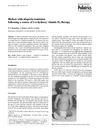
August 1989 in “European journal of pediatrics” This case study describes a child with rickets and alopecia who responded to a small dose of 1-a-hydroxyvitamin D3, but her alopecia remained unchanged despite treatment.
 April 2026 in “The Open Biotechnology Journal”
 This review reports that resveratrol could benefit the management of chronic illnesses such as diabetes and cardiovascular disease, but challenges with bioavailability and regulatory issues persist.
7 citations
,
January 2010 in “JAMA” This abstract highlights that preliminary results from the REDUCE trial indicate dutasteride may lower prostate cancer incidence by 23% in older men compared to a placebo.
1 citations
,
August 2024 in “British Journal of Dermatology” This study found that after 15 months of treatment with ritlecitinib, patients with alopecia areata and less than 95% initial hair loss experienced significant hair regrowth, though those with more extensive hair loss showed more variable improvement.
 March 2021 in “Research Square (Research Square)”
 This study found that strontium ranelate may promote cartilage regeneration by enhancing chondrogenic differentiation and inhibiting the Wnt/β-catenin signaling pathway in rat models of cartilage defects.
 31 citations
,
February 2014 in “Inflammation Research”
31 citations
,
February 2014 in “Inflammation Research” This study found that reduced expression of CD200R1 on monocyte-derived macrophages in rheumatoid arthritis patients was significantly associated with higher disease severity and an imbalance in Th17/Treg cells.
 127 citations
,
July 2002 in “EMBO journal”
127 citations
,
July 2002 in “EMBO journal” This study found that RXRα/RARγ heterodimers are necessary for retinoic acid-induced keratinocyte proliferation in the skin, while normal epidermal maintenance does not require RAR-mediated signaling.
July 2026 in “Skin Appendage Disorders” In this study, patients with treatment-refractory alopecia areata who received oral ritlecitinib 50 mg daily experienced significant hair regrowth, with 52.6% achieving complete scalp regrowth and improved Severity of Alopecia Tool scores, indicating its potential effectiveness in real-world settings.
 1 citations
,
November 2025 in “Clinical Chemistry and Laboratory Medicine (CCLM)”
1 citations
,
November 2025 in “Clinical Chemistry and Laboratory Medicine (CCLM)” This study developed a new measurement procedure using isotope dilution-liquid chromatography-tandem mass spectrometry for accurate quantification of DHEAS in human serum or plasma, demonstrating high selectivity, sensitivity, and low measurement uncertainty, making it suitable for routine standardization and clinical evaluation.