 77 citations
,
June 2006 in “Best Practice & Research Clinical Endocrinology & Metabolism”
77 citations
,
June 2006 in “Best Practice & Research Clinical Endocrinology & Metabolism” This review discusses the importance of androgen production and metabolism in hyperandrogenism, the use of specific serum markers for diagnosis, and the need for improved assays for clinical testing, but reports no new results.
 71 citations
,
May 2007 in “The FASEB journal”
71 citations
,
May 2007 in “The FASEB journal” This study found that human hair follicles express erythropoietin and its receptor, suggesting these follicles may use erythropoietin signaling to modulate apoptosis under stress conditions like hypoxia and chemotherapy.
52 citations
,
April 2016 in “Journal of the American Academy of Dermatology” This review discusses hairstyling practices in the black community linked to traction alopecia, categorizes them by risk, and offers guidance for dermatologists on management and patient education but reports no new clinical results.
 51 citations
,
May 2011 in “Phytotherapy Research”
51 citations
,
May 2011 in “Phytotherapy Research” This study suggests that red ginseng rhizome extracts, particularly ginsenoside Ro, may promote hair re-growth in an androgenetic alopecia model due to their inhibitory activity on testosterone 5α-reductase.
 20 citations
,
February 2002 in “Expert Opinion on Therapeutic Patents”
20 citations
,
February 2002 in “Expert Opinion on Therapeutic Patents” This review discusses the potential uses of 5α-reductase inhibitors for conditions ranging from benign prostatic hyperplasia to skin disorders like acne and male pattern baldness, but it reports no new clinical results.
 18 citations
,
March 2020 in “Frontiers in Neuroendocrinology”
18 citations
,
March 2020 in “Frontiers in Neuroendocrinology” This study suggests that synthetic steroid analogues or 5α-reductase modulation could be potential therapeutic strategies for nervous system disorders, but further research on their effects is necessary.
 15 citations
,
May 2004 in “Facial Plastic Surgery Clinics of North America”
15 citations
,
May 2004 in “Facial Plastic Surgery Clinics of North America” This article describes a technique for improving the aesthetic results of surgical hair restoration by recycling plug grafts into smaller grafts, which can be combined with other procedures like scalp lifting and reductions.
 12 citations
,
October 1954 in “Textile Research Journal”
12 citations
,
October 1954 in “Textile Research Journal” This study found that alkali bromide solutions are absorbed into hair depending on salt activity, and the presence of the salt increases water absorption compared to normal conditions.
 4 citations
,
June 1998 in “The Journal of Clinical Endocrinology & Metabolism”
4 citations
,
June 1998 in “The Journal of Clinical Endocrinology & Metabolism” This study found that keratinocyte growth factor is a potent mitogen in human hyperplastic prostate cells, suggesting it plays an important role in prostate growth by acting in a paracrine manner.
 September 2025 in “Cureus”
 In this case report, a male patient with hair loss showed unusually high testosterone levels without other symptoms or supplement use; follow-up testing revealed normal levels, showcasing the importance of considering testosterone-protein binding differences and using equilibrium dialysis for accurate assessment.

In this study, researchers found that crude extracts from Avicennia marina and its component avicequinone C inhibit mechanisms contributing to androgenic alopecia in vitro, including 5α-reductase activity and DHT-AR interactions, potentially promoting hair growth and delaying the catagen phase in human dermal papilla cells.
 417 citations
,
March 1991 in “American Journal of Psychiatry”
417 citations
,
March 1991 in “American Journal of Psychiatry” This study found that adult trichotillomania is a chronic disorder often linked with high psychiatric comorbidity and suggests the tension-reduction criterion in diagnoses might be too restrictive.
 72 citations
,
January 2011 in “Current Pharmaceutical Design”
72 citations
,
January 2011 in “Current Pharmaceutical Design” This review discusses the potential role of steroid 5α-reductase inhibitors in treating neuropsychiatric disorders related to dopaminergic hyperreactivity but reports no new clinical results.
 17 citations
,
June 1996 in “The Journal of Steroid Biochemistry and Molecular Biology”
17 citations
,
June 1996 in “The Journal of Steroid Biochemistry and Molecular Biology” In this study, FCE 28260 showed greater potency than finasteride in inhibiting 5α-reductase enzymes and reducing prostate DHT levels in rats.
 September 2021 in “Physiology News”
 This abstract only contains a stylized text design and provides no research findings or clinical results.
181 citations
,
January 2019 in “Cell” In this research, authors found that skin-resident ILCs regulate sebaceous gland function and microbial balance, emphasizing an immune-epithelia system that supports host-microbe symbiosis.
2 citations
,
July 2024 in “Materials Today Communications” In this study, an injectable alginate hydrogel with Fibronectin3 was developed, demonstrating high biocompatibility and ability to enhance wound healing in mice, suggesting promise for clinical application in treating irregular wounds.

In this study, researchers observed that atopic dermatitis may alter the appearance of allergic patch test reactions, demonstrating specific patterns like perifollicular erythema and yellowish areas that could aid in interpreting patch tests using dermoscopy, particularly in ambiguous cases.
 25 citations
,
April 2007 in “Journal of The American Academy of Dermatology”
25 citations
,
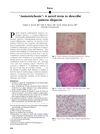
April 2007 in “Journal of The American Academy of Dermatology” This article introduces the term "anisotrichosis" to describe the significant variation in hair shaft diameters observed in pattern alopecia, drawing a parallel to anisocytosis seen in blood smears, but reports no new research findings.
22 citations
,
September 2002 in “Der Urologe” This review discusses the effectiveness and tolerability of alpha1-adrenoceptor antagonists for managing lower urinary tract symptoms in benign prostatic hyperplasia, reporting no new clinical results.
 July 2018 in “IP Indian journal of clinical and experimental dermatology”
 This study examined various causes of hair loss in children and found that factors like malnutrition, poor grooming habits, and stress were common, with acquired non-scarring alopecia being prevalent.
 April 2026 in “Frontiers in Marine Science”
 This study investigated neonatal mortality and health threats to Guadalupe fur seals in Mexico's San Benito Archipelago, finding a 29.52% mortality rate largely due to trauma and emaciation/infectious disease, with high rates of alopecia syndrome and entanglement linked to marine debris, primarily from local sources.
 October 2025 in “Scientia Generalis”
 In this narrative review, dysbiosis was found to potentially influence androgen metabolism and immune response, suggesting that gut microbiota balance may play a role in the prevention and treatment of androgenetic and areata alopecia.
183 citations
,
July 2000 in “American Journal of Botany” In this study, wild-type Arabidopsis thaliana demonstrated increased phosphorus acquisition and growth compared to root hair mutants under low-phosphorus conditions.
 160 citations
,
December 2016 in “Journal of biophotonics”
160 citations
,
December 2016 in “Journal of biophotonics” This review discusses the evolution and potential of photobiomodulation therapy, highlighting its transition from skepticism to recognition in medical research; it reports no new experimental findings.
 70 citations
,
June 1993 in “Biochemistry”
70 citations
,
June 1993 in “Biochemistry” This study found that the binding of finasteride to the enzyme 5a-reductase occurs at a slower rate than previously assumed, complicating the estimation of its real inhibitory constant.
 52 citations
,
May 2013 in “Supportive Care in Cancer”
52 citations
,
May 2013 in “Supportive Care in Cancer” Scalp cooling significantly reduces hair loss in chemotherapy patients.
42 citations
,
January 2002 in “Skin Pharmacology and Physiology” This study reported that reconstructed skin models can be useful for studying the effects of non-water-soluble topical products on xenobiotic metabolism, particularly in enzyme activities like EROD and GST.
25 citations
,
September 2005 in “Journal of Investigative Dermatology Symposium Proceedings” Adding zinc to pyrithione zinc improves its effectiveness against scalp conditions like dandruff.
 16 citations
,
March 1981 in “PubMed”
16 citations
,
March 1981 in “PubMed” This study found that minoxidil significantly reduced blood pressure in patients with intractable hypertension and was generally well-tolerated, although fluid retention and hirsutism posed some challenges.