 October 2023 in “Arab Gulf journal of scientific research”
 This study found that adding Cinnamomum zeylanicum bark extract to a powder shampoo formulation significantly improved antioxidant activity without affecting its cleansing ability, although its clinical effectiveness remains to be tested.
 September 2016 in “International Journal of Herbal Medicine”
 This study undertook powder microscopy and preliminary phytochemical analysis of Buxus wallichiana's stem bark and leaves, identifying steroids, alkaloids, saponins, and glycosides without reporting clinical outcomes.
 22 citations
,
December 1998 in “Dermatologic Surgery”
22 citations
,
December 1998 in “Dermatologic Surgery” This study found that preserving hair micrografts in an enriched storage medium for five hours significantly increased their survival rate compared to those stored in saline.
 16 citations
,
October 2008 in “Dermatologic Surgery”
16 citations
,
October 2008 in “Dermatologic Surgery” In this study, the novel powered FUE method was associated with faster harvesting time and lower graft transection rates compared to manual FUE in male patients with alopecia.
 December 2008 in “Dermatologic Surgery”
 This study found that the novel powered FUE (P-FUE) technique reduced harvesting time and graft transection rates in hair restoration compared to manual FUE, with broader patient applicability.
 2 citations
,
October 2021 in “International journal of pharmaceutical chemistry and analysis”
2 citations
,
October 2021 in “International journal of pharmaceutical chemistry and analysis” This research developed a herbal shampoo powder using traditional plant ingredients and found it met ideal physicochemical standards, but further studies are needed to enhance its quality, performance, and safety.
 July 2026 in “Zenodo (CERN European Organization for Nuclear Research)”
 This study evaluated a polyherbal powder shampoo formulated from Ayurvedic medicinal plants, determining that formulation F3 performed best in cleansing, conditioning, and scalp protection, offering a sustainable and effective alternative to synthetic shampoos.
 July 2026 in “Zenodo (CERN European Organization for Nuclear Research)”
 In this study, the researchers developed and evaluated a polyherbal powder shampoo using Ayurvedic plants, concluding that formulation F3 effectively provides eco-friendly and safe hair care with antimicrobial properties, making it a promising alternative to synthetic shampoos.
June 2026 in “International Journal of Innovative Science and Research Technology (IJISRT)” This study evaluated a natural, herbal-based powder formulation aimed at removing unwanted facial hair while promoting skin health, finding that the product was effective and well-suited for use based on physical properties and user feedback.
 May 2026 in “Zenodo (CERN European Organization for Nuclear Research)”
 In this study, researchers developed an herbal hair serum using extracts from guava leaf, onion peel, and neem leaves, finding it improved scalp health, reduced hair breakage, and enhanced hair texture, suggesting potential as a plant-based alternative for hair care.
 May 2026 in “Zenodo (CERN European Organization for Nuclear Research)”
 This study found that an herbal hair serum containing extracts of guava leaf, onion peel, and neem leaves improved scalp health, reduced hair breakage, and enhanced hair texture, suggesting potential as an effective alternative to synthetic hair products.
 May 2026 in “International Journal of Research Publication and Reviews”
 This study evaluated a polyherbal powder shampoo composed of natural ingredients like Neem and Amla, finding it to have good stability, cleansing ability, and no irritation, offering a safe alternative to synthetic shampoos for regular use in hair care.
 December 2024 in “European Journal of Medicinal Plants”
 This study developed a polyherbal powder shampoo utilizing natural ingredients, with formulation F6 demonstrating optimal cleaning action and foaming index, along with satisfactory physicochemical properties, making it the preferred formula among the tested variations.
 November 2024 in “International Journal For Multidisciplinary Research”
 This review highlights moringa powder's promising role in cosmetics, discussing its nutritional benefits for skin and hair, including anti-aging, hydration, and antimicrobial effects, while also addressing its formulation versatility and consumer acceptance within the beauty industry.
 June 2024 in “International Journal For Multidisciplinary Research”
 This study aims to develop and evaluate herbal shampoo powder made from natural ingredients, focusing on its efficacy in removing debris and dandruff, enhancing hair development and shine, and strengthening and darkening hair. Results are not reported.
 February 2024 in “International Journal of Scientific Research in Science and Technology”
 This literature review outlines the traditional uses, nutritional composition, and bioactive compounds of pomegranate plants, highlighting their varied pharmacological actions such as antibacterial, antiviral, anticancer, and antioxidant effects, and discusses the peel's chemical composition and toxicology.
July 2022 in “Zenodo (CERN European Organization for Nuclear Research)” This study developed a highly effective herbal powder shampoo using natural ingredients like Multani Mitti and banana extract, aiming to match the functionality of synthetic alternatives.
 January 2020 in “Nasza Dermatologia Online”
 A mixture of Dijon mustard, turmeric powder, and linseed oil can effectively treat alopecia barbae.
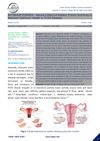 January 2020 in “Asian Journal of Basic Science & Research”
 This review discusses the role of Nutrease powder in managing hormonal disturbances in polycystic ovary syndrome and reports no new clinical results.
This study found that administering drumstick leaves extract with amla powder improved hemoglobin levels among adolescent girls with anemia at a residential facility in Trichy.
January 2022 in “Advanced Pharmaceutical Bulletin” This study found that clove oil and LPGSE pretreatment increased finasteride skin permeability, while extending urea pretreatment reduced its penetration.
 43 citations
,
December 2020 in “PLOS Genetics”
43 citations
,
December 2020 in “PLOS Genetics” This study used a new statistical approach, PLACO, to identify several novel shared genetic regions associated with both Type 2 Diabetes and Prostate Cancer in two large GWAS datasets.
 2 citations
,
April 2020 in “bioRxiv (Cold Spring Harbor Laboratory)”
2 citations
,
April 2020 in “bioRxiv (Cold Spring Harbor Laboratory)” This study introduced a statistical method, PLACO, which revealed novel genetic regions associated with both Type 2 Diabetes and Prostate Cancer from GWAS data.
2 citations
,
March 2015 in “Postępy Nauk Medycznych” 1 citations
,
February 2026 in “ACS Omega” This review highlights the potential of self-powered nanogenerators in revolutionizing biomedical devices by using biomechanical or environmental energy, focusing on applications like regenerative hair growth, drug release patches, and electronic skin while evaluating challenges such as energy efficiency and biocompatibility.
March 2026 in “IntechOpen eBooks” This chapter explores the promising use of low-power laser irradiation for post-hysterectomy reconstructive care, emphasizing enhancements like a flexible fiber optic module, to potentially improve genitourinary rehabilitation in cervical cancer patients.
January 2026 in “National Science Review” Sunlight-powered therapy can effectively and painlessly heal diabetic wounds.
November 2025 in “Analytical Chemistry” This study developed an ultrahigh-power sonicator to improve protein extraction from hair shafts, followed by advanced proteomic analysis, identifying 239 differentially expressed proteins in fetal growth restriction cases compared to healthy controls, which were validated as potential biomarkers for perinatal diagnostics.
November 2025 in “OPAL (Open@LaTrobe) (La Trobe University)” This study developed a new method using ultrahigh-power sonication and mass spectrometry to improve protein extraction from hair shafts, identifying 239 differentially expressed proteins related to fetal growth restriction, which were validated as potential noninvasive biomarkers for perinatal diagnostics.
 July 1998 in “Proceedings of SPIE”
 This study found that Low Power Laser therapy may be an effective complementary treatment for scalp alopecia and crural ulcers, showing quicker and potentially better results than conventional treatments.