August 2022 in “Journal of Pakistan Association of Dermatologists” This case report describes a 7-year-old female from the Middle East with monilethrix, highlighting the disease's rarity in this population, characterized by brittle, sparse hair and keratosis pilaris.
54 citations
,
November 1994 in “Differentiation” This study found that trichohyalin is expressed in various normal and pathological epithelia beyond hair follicle cells, where it is uniquely associated with filaggrin, suggesting a specific role in aggregating K6/K16-containing intermediate filaments.
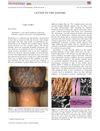
January 1996 in “Studia iuridica” This study identified two novel point mutations in the hHb6 gene associated with monilethrix, suggesting these mutations could serve as diagnostic markers for this genetic hair disorder.
 1 citations
,
February 2018 in “Australasian journal of dermatology”
1 citations
,
February 2018 in “Australasian journal of dermatology” Advanced imaging techniques are crucial for accurately diagnosing Monilethrix, a rare hair disorder.
January 1999 in “Journal of Investigative Dermatology” 2 citations
,
July 2019 in “Indian dermatology online journal” This report documents a rare case of familial eyelash trichomegaly and synophrys in three siblings, with one sister also having loose anagen hair syndrome, an unreported association.
 January 1999 in “American Journal of Medical Genetics Part A”
 This case report describes a rare occurrence of ectodermal dysplasia features in a 14-year-old with MBTPS1 gene variants, expanding the known spectrum of related disorders.
53 citations
,
May 1988 in “Journal of Molecular Evolution” 14 citations
,
June 1989 in “Journal of dermatology” This report describes the first documented occurrence of Vohwinkel's disease combined with congenital alopecia universalis in siblings from the same family, both unresponsive to prior treatments.
November 2024 in “DELOS Desarrollo Local Sostenible” In this study, researchers observed that Thunbergia grandiflora and Russelia equisetiformis exhibited mutual aid by altering their phenotypic characteristics to facilitate intertwining, suggesting a form of solidarity without apparent external threats.
12 citations
,
May 2009 in “Ophthalmic plastic and reconstructive surgery” This case report highlights a 13-year-old girl with Turner syndrome who developed multiple pilomatrixoma, suggesting a possible link between the two conditions.
This chapter reviews the clinical and morphological diagnostic features of various hair dysplasias, including atypical pili torti, pseudomonilethrix, and trichothiodystrophy, and reports no new results.
1 citations
,
January 2008 34 citations
,
November 1998 in “Journal of Investigative Dermatology” A common mutation in the hHb6 gene is linked to monilethrix, but other factors may also play a role.
 1 citations
,
July 2023 in “Cureus”
1 citations
,
July 2023 in “Cureus” This report describes a rare case of pili multigemini, where multiple hair shafts arise from a single follicle, discovered during an examination for folliculitis on a patient's abdomen.
 4 citations
,
June 2014 in “The Journal of Dermatology”
4 citations
,
June 2014 in “The Journal of Dermatology” Elkonyxis, a rare nail condition, improved when patients stopped their nail-picking habits.
June 2026 in “Skin Appendage Disorders” This study suggests that pili annulati is likely more common than traditionally thought, highlighting the importance of recognizing its characteristic clinical and trichoscopic features for accurate diagnosis.
2 citations
,
May 1979 in “PubMed” This report describes four cases of monilethrix in children and concludes that periodic inhibition of keratin synthesis, not a metabolic defect, may explain the hair abnormality.
4 citations
,
May 2020 in “The journal of pediatrics/The Journal of pediatrics” This case report details the diagnosis of monilethrix in a 4-year-old boy, characterized by brittle hair and specific dermoscopic findings, and highlights the condition's hereditary nature and management through avoiding mechanical hair damage.

This case report describes a 16-year-old girl with severe generalized gingival fibromatosis and hypertrichosis, who underwent successful treatment through gingivectomy, with uneventful healing observed over an eight-month follow-up.
4 citations
,
April 1983 in “The Journal of Dermatology” This case report describes a 15-year-old Japanese girl with juvenile hypothyroidism who developed hypertrichosis and hyperkeratosis due to a keratin plug inhibiting hair growth on her back and arms.
27 citations
,
June 1989 in “Journal of Medical Genetics” This case report describes four patients with hypertrichosis cubiti and short stature, but could not determine a genetic link between hypertrichosis cubiti and skeletal dysplasia.
3 citations
,
September 2016 in “Pediatric Dermatology” This case study reports that hypertrichosis, although not always present, may be an important diagnostic clue for superficial epidermolytic ichthyosis in a young child.
10 citations
,
January 2003 in “Dermatology” This study describes a Japanese family with monilethrix and found no clear genotype/phenotype correlation in cases with the E413K mutation in hHb6.
29 citations
,
August 1999 in “Journal of Investigative Dermatology” New mutations in hair keratin genes cause the rare hair disorder monilethrix.
8 citations
,
May 2005 in “The American journal of dermatopathology/American journal of dermatopathology” This study observed unique ultrastructural changes in a 4-year-old girl with pili trianguli et canaliculi that may affect hair shaft surface characteristics due to inner root sheath alterations.
43 citations
,
April 1996 in “Journal of Investigative Dermatology” 15 citations
,
April 1970 in “PubMed” This letter describes a case of a 22-year-old woman with ichthyosis serpentina and related symptoms, suggesting it as a variant form of ichthyosis associated with bamboo hair, without necessarily including atopic features.
 17 citations
,
September 2010 in “Pediatric dermatology”
17 citations
,
September 2010 in “Pediatric dermatology” This report describes a case of widespread Porokeratotic eccrine and hair follicle nevus in a 15-year-old woman with keratitis-ichthyosis-deafness syndrome, involving both eccrine ostia and hair follicle infundibula.
March 2003 in “中華皮膚科醫學雜誌” This report describes a patient with trichothiodystrophy exhibiting both specific hair abnormalities and developmental delay, contributing to the understanding of this rare disorder's clinical presentation.