1 citations
,
August 2024 in “Pediatric Dermatology” In this report, researchers describe an unusual case of congenital pili multigemini, a hair follicle disorder, presenting on the eyebrow of a female infant, highlighting its rarity and atypical location.
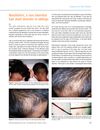
Recognizing bamboo hair helps diagnose Netherton’s syndrome.
 4 citations
,
January 2014 in “Indian dermatology online journal”
4 citations
,
January 2014 in “Indian dermatology online journal” This article discusses the genetic hair disorder monilethrix, characterized by beaded, fragile hair due to defective keratin genes, and reports no effective treatment currently available; variability in severity was noted among affected siblings.
 5 citations
,
March 2009 in “Pediatric Dermatology”
5 citations
,
March 2009 in “Pediatric Dermatology” The study found that pili bifurcati causes hair to intermittently split into two branches, each with its own outer layer.
58 citations
,
November 1969 in “British Journal of Dermatology” This report describes two patients with ichthyosis linearis circumflexa exhibiting symptoms resembling Netherton's disease, noting multiple hair shaft defects and discussing a possible connection to aminoaciduria.
4 citations
,
November 1999 in “PubMed” This article presents five family cases of monilethrix and reports that neither vitamins nor desquamative ointments are effective treatments, although symptoms may spontaneously regress over time.
 6 citations
,
August 2012 in “The Journal of Pediatrics”
6 citations
,
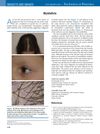
August 2012 in “The Journal of Pediatrics” This case report describes a 12-year-old girl diagnosed with monilethrix, characterized by fragile, beaded hair shafts, with no effective treatment currently available.
62 citations
,
October 1999 in “Journal of Investigative Dermatology” New mutations in hair keratin genes can change hair structure and cause monilethrix, with nail issues more common in certain gene mutations.
1 citations
,
January 2018 in “Jornal Brasileiro de Patologia e Medicina Laboratorial” This case report describes a 10-year-old girl with monilethrix, detailing hereditary autosomal dominant traits and distinctive nodular hair shaft abnormalities observed in her family through clinical examination and microscopic analysis.
20 citations
,
December 1999 in “Journal of Investigative Dermatology” Mutations in the hHb6 gene cause the hair disorder monilethrix.
27 citations
,
June 2015 in “Journal of Investigative Dermatology” This study found that mutations in the TRPV3 gene can cause a broader range of symptoms in Olmsted syndrome than previously recognized, including severe palmoplantar keratoderma without other classic features.
2 citations
,
June 2013 in “Journal of Dermatological Case Reports” This article presents a case of Olmsted syndrome in a 5-year-old boy, adding to the limited number of reported cases of this rare keratinization disorder.
 October 2023 in “Indian dermatology online journal”
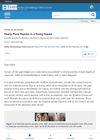
 This report describes a case study of a 23-year-old female exhibiting multiple trichodiscomas, a type of benign tumor of the hair follicular discs common in familial cases and potentially linked to Birt-Hogg-Dube syndrome, though genetic testing was not performed due to financial constraints.
 November 2022 in “Journal of Investigative Dermatology”
 This study identified 15 Iranian patients with PLEC variants linked to various plectinopathies and highlighted a novel association between a homozygous nonsense variant in PLEC and a rare combination of disorders including EB pruriginosa, muscular dystrophy, and congenital myasthenic syndrome.
June 2010 in “Chinese Journal of Dermatology” This study found a novel R430Q gene mutation in hHb6, which may be linked to the hereditary hair disorder monilethrix in the examined family.
 September 2022 in “JAAD case reports”
 This case study of a 45-year-old man from Tonga describes the identification of pachyonychia congenita through genetic testing, revealing a mutation in the keratin gene KRT16, associated with chronic painful skin and nail conditions.
61 citations
,
February 1982 in “Cell and Tissue Research”  April 2023 in “Journal of Investigative Dermatology”
 This study found that alopecia areata patients have higher odds of certain comorbidities like ulcerative colitis and vitiligo, while showing lower odds for conditions like hypertension and type 2 diabetes compared to healthy controls.
187 citations
,
May 1988 in “Differentiation” This study found that trichocytic cytokeratins, typically found in hair, are also present in nails, filiform papillae of the tongue, and the epithelial reticulum of the thymus.
26 citations
,
December 2003 in “Experimental Dermatology” In this study, researchers identified two de novo germline missense mutations in the hair keratins hHb1 and hHb6 in patients with monilethrix whose parents were not clinically affected.
21 citations
,
January 2010 in “International journal of trichology” This report on two Indian male siblings with monilethrix highlights trichoscopy's role in diagnosing this condition, which can be complicated by early-onset androgenetic alopecia.
13 citations
,
June 2012 in “European journal of medical genetics” In this study, researchers observed monochorionic diamniotic twins with discordant clinical phenotypes, where one had high-grade trisomy 12p mosaicism in certain tissues, while the other showed confined mosaicism likely due to twin-to-twin transfusion.
175 citations
,
August 1997 in “Nature Genetics” 4 citations
,
January 2009 in “PubMed” In this study, researchers identified an autosomal dominant mutation (E402K) in exon 7 of the KRT86 gene as a cause of Monilethrix in a large family from Turkey.
 5 citations
,
October 2019 in “The journal of investigative dermatology/Journal of investigative dermatology”
5 citations
,
October 2019 in “The journal of investigative dermatology/Journal of investigative dermatology” This study identified a high-risk allele in the PLCD1 gene associated with hereditary trichilemmal cyst formation, proposing a monoallelic two-hit mechanism as the underlying genetic pathogenesis.
5 citations
,
June 1993 in “Pediatric dermatology” Monilethrix Syndrome causes fragile, beaded hair that breaks easily and needs early diagnosis for better care.
 June 2024 in “Annals of Medicine and Surgery”
 This case report highlights the rare co-occurrence of Pili Annulati and Trichorrhexis Nodosa in a Syrian woman, underlining the need for further research into their relationship and treatment.
2 citations
,
March 2024 in “Pediatric Dermatology” This case report described two siblings with uncombable hair syndrome characterized by unique hair features, and identified a new pathogenic variant in the PADI3 gene (c.1374dup; p. Val459ArgfsTer15) not previously documented.
79 citations
,
March 2005 in “Journal of Medical Genetics” This study identified a novel heterozygous missense mutation in the hHb3 gene associated with monilethrix, highlighting its role in this hair disorder.
2 citations
,
April 1970 in “Archives of Dermatology” This report discusses a case of ichthyosis serpentina, suggesting it as a variant of ichthyosis associated with bamboo hair, although atopy may not be a necessary component.