 1 citations
,
September 2018 in “Plastic and reconstructive surgery. Global open”
1 citations
,
September 2018 in “Plastic and reconstructive surgery. Global open” This study found that a single session of nanofat combined with platelet-rich plasma significantly increased hair density and thickness in male androgenic alopecia patients compared to platelet-rich plasma alone, with effects partially persisting at 12 months.
26 citations
,
April 2024 in “Particle and Fibre Toxicology” In this study, researchers investigated the penetration and cellular responses to nanoplastics in human skin models with compromised barriers, finding that nanoplastics can penetrate the skin, accumulate in cells, and trigger inflammatory responses through specific signaling pathways.
 12 citations
,
February 2010 in “Tetrahedron Letters”
12 citations
,
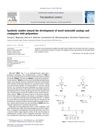
February 2010 in “Tetrahedron Letters” This article describes the synthesis of novel polyamine-modified minoxidil analogs and conjugates to potentially enhance minoxidil's biological activity, selectivity, and water solubility, but reports no new biological results.
 May 2025 in “Ambulatornaya khirurgiya = Ambulatory Surgery (Russia)”
 This study found that using platelet-rich plasma in optimal doses improves mesh integration and reduces the risk of chronic pain and fibrosis in hernia repair, but overdoses led to inflammatory complications in rats.
23 citations
,
October 2009 in “Gastroenterology” This article reviews the multifaceted roles of vitamin D beyond bone health and notes its potential involvement in reducing risks of certain cancers and autoimmune diseases, but it presents no new clinical results.
May 2025 in “Acta Dermato Venereologica” The Paxbp1 gene is crucial for healthy hair follicles.

This study identified ISPP-Rb, a novel immuno-stimulatory complex from Royoporus badius, that significantly activates murine macrophage cells and induces multiple proinflammatory cytokines.
 1 citations
,
November 2020 in “Asian Journal of Pharmaceutical and Clinical Research”
1 citations
,
November 2020 in “Asian Journal of Pharmaceutical and Clinical Research” This review discusses the potential of nanotechnology in treating idiopathic pulmonary fibrosis by targeting abnormal alveolar epithelial cells and reports no new clinical results.
24 citations
,
December 2016 in “Stem Cell Research & Therapy” This study found that P311 triggers transdifferentiation of epidermal stem cells into myofibroblast-like cells via TGFβ1/Smad signaling during wound healing.
 80 citations
,
April 2011 in “Plant physiology”
80 citations
,
April 2011 in “Plant physiology” This study suggests that the GPX-PDE1 and GPX-PDE2 genes in white lupin enhance root hair development and contribute to Pi limitation acclimation by facilitating glycerophosphodiester degradation.
 September 2024 in “Cureus”
 In this study, researchers optimized a method for preparing platelet-rich plasma to improve light transmittance aggregometry testing in coronary artery disease patients on clopidogrel and ticagrelor, finding distinct differences in platelet aggregation and volumes among these patients compared to healthy controls.
 June 2023 in “British Journal of Dermatology”
 In this case report, researchers described a female child with total alopecia due to a mutation in the SNRPE gene, emphasizing the need for updated genetic testing as knowledge advances to avoid diagnostic delays in hereditary nonsyndromic hypotrichosis.
 12 citations
,
November 2014 in “Bioscience, Biotechnology, and Biochemistry”
12 citations
,
November 2014 in “Bioscience, Biotechnology, and Biochemistry” In this study, the researchers successfully increased dipicolinic acid production in Bacillus subtilis by genetically modifying the spoVF operon, achieving a significant productivity improvement in the culture medium.
 3 citations
,
March 2014 in “Journal of Industrial Microbiology & Biotechnology”
3 citations
,
March 2014 in “Journal of Industrial Microbiology & Biotechnology” This study identified a cytochrome P450 enzyme, CYP-pa1 from Pseudonocardia autotrophica, as responsible for the specific hydroxylation of cyclosporin A at the 9th N-methyl leucine, suggesting potential for biotechnological applications.
 1 citations
,
April 2018 in “Journal of Investigative Dermatology”
1 citations
,
April 2018 in “Journal of Investigative Dermatology” This study found that Polycomb repressive complex 1 is crucial for skin development and stem cell specification, influencing gene activity beyond its known repressor functions.
 15 citations
,
November 1994 in “International Journal of Dermatology”
15 citations
,
November 1994 in “International Journal of Dermatology” This study found that while the combination of oral propranolol and intradermal injections in guinea pigs led to psoriasiform changes, it did not fully mimic psoriasis.
33 citations
,
May 2017 in “Journal of Clinical Oncology” This phase I study reported that ETC-159, targeting Wnt signalling, showed tolerable safety profiles at doses that inhibit its pathway, though bone turnover markers increased, warranting early and regular monitoring. No tumor responses were observed, but two patients achieved stable disease for several cycles.
5 citations
,
September 2024 in “Biomolecules and Biomedicine” This study found that total glucosides of paeony (TGP) reduced hair loss and inflammation in alopecia areata mice by inhibiting cellular pyroptosis.
 13 citations
,
January 2019 in “Colloids and Surfaces B: Biointerfaces”
13 citations
,
January 2019 in “Colloids and Surfaces B: Biointerfaces” This study found that incorporating a block copolymer significantly alters the size and morphology of niosome drug delivery systems made of non-ionic surfactants and cholesterol, affecting their stability.
 April 2020 in “Journal of The American Academy of Dermatology”
 This letter highlights concerns about transient lymphadenopathy as a potential adverse effect of platelet-rich plasma combined with microneedling for alopecia, emphasizing the need to understand its underlying cause.
36 citations
,
August 2020 in “Polymers” The researchers developed semi-dissolving microneedle patches using TEMPO-oxidized bacterial cellulose nanofibers, which allow effective transdermal drug delivery by forming micro-channels for large drug quantities, overcoming traditional microneedles' low drug loading.
 2 citations
,
October 2021 in “Egyptian Journal of Chemistry”
2 citations
,
October 2021 in “Egyptian Journal of Chemistry” In this study, researchers used pumpkin aqueous extract to create iron nanoparticles, finding them effective at inhibiting harmful bacteria found in burn and wound infections, as well as promoting burn healing and hair growth in a laboratory mouse model.
7 citations
,
August 2017 in “Genetic testing and molecular biomarkers” This report suggests that patients with primary spontaneous pneumothorax should be evaluated for FLCN mutations, as they may indicate Birt-Hogg-Dube syndrome and associated cancer risks.
 114 citations
,
October 2009 in “Gastroenterology”
114 citations
,
October 2009 in “Gastroenterology” This review discusses zinc's role as an essential trace element in human nutrition, particularly its importance in total parenteral nutrition, and reports no new clinical results.
 2 citations
,
May 2023 in “Life”
2 citations
,
May 2023 in “Life” This review summarizes the mechanisms by which Plumbagin, a naphthoquinone derived from plants, may impact inflammation and explores its potential biological effects, highlighting areas that require further comprehensive research before considering it for therapeutic use.
January 2026 in “Burns & Trauma” This study reported that NLRP3 plays complex roles in wound healing by initially promoting inflammation and delaying repair, but later enhancing structural restoration through distinct signaling pathways, highlighting its potential as a therapeutic target for controlling inflammation and regeneration phases.
November 2022 in “Journal of Nanobiotechnology” In this study, researchers used a new method with platelet-rich plasma-loaded microcarriers to enhance dermal papilla cell activity and hair follicle regeneration, achieving significant hair and vessel growth in a mouse model compared to control groups.
19 citations
,
May 2001 in “Endocrinology” This study suggests that Mrp3 may play a role in both wound healing and the hair follicle cycle as a growth factor and/or angiogenesis factor.
 16 citations
,
September 2018 in “Journal of Molecular Liquids”
16 citations
,
September 2018 in “Journal of Molecular Liquids” This study investigated a nanostructured system using PS-b-PAA diblock copolymer for incorporating the hydrophobic photosensitizer ClAlPc, finding it effective in causing cellular damage in Caco-2 cells under light while demonstrating no cytotoxicity without light, suggesting its potential use in photodynamic therapy.
 August 2019 in “bioRxiv (Cold Spring Harbor Laboratory)”
 This study developed the CATNIP computational model, which uses biological and chemical information to successfully identify drug repurposing opportunities for various conditions, including Parkinson’s disease and Type 2 Diabetes.