 3 citations
,
September 2022 in “Journal of the American Academy of Dermatology”
3 citations
,
September 2022 in “Journal of the American Academy of Dermatology” In this study, baricitinib treatment for severe alopecia areata showed similar safety and led to hair regrowth improvements independent of atopic background, with 40.8% of patients with atopy achieving a significant response compared to 30.2% without atopy when using a 4 mg dose.
September 2023 in “Journal of the American Academy of Dermatology” Guselkumab effectively reduces fatigue in Psoriatic Arthritis patients over two years.
 April 2021 in “Journal of Investigative Dermatology”
 This study observed that photobiomodulation therapy may contribute to hair growth stability or improvement in individuals with darker skin types, without reported adverse events, though its findings are limited by a small sample size.
2 citations
,
May 2011 in “Journal of Clinical Oncology” This study found that paclitaxel poliglumex showed limited effectiveness and was relatively well tolerated in post-menopausal women with advanced NSCLC, suggesting further testing of this treatment may not be justified.
12 citations
,
July 2012 in “Journal of cutaneous medicine and surgery” This study reported that adalimumab was well tolerated in patients with severe alopecia areata but did not lead to significant hair regrowth.
4 citations
,
December 2024 in “European Journal of Medicinal Chemistry” This study reported the development of new pyrazole-based MPC inhibitors that effectively inhibit mitochondrial pyruvate transport, showing potential as therapeutic candidates for conditions like metabolic dysfunction-associated steatohepatitis without activating PPARγ.
60 citations
,
August 2005 in “Endocrinology” This study suggests that αMSH may play a regulatory role in human dermal papilla cells, potentially influencing immune and inflammatory responses in hair follicles, which could contribute to inflammatory alopecia.
 April 2016 in “Journal of Investigative Dermatology”
 This study found that the peptide derivative beta-Ala-Pro-Dab-NHbenzyl may reduce wrinkles and sebum production in human skin by inhibiting dipeptidyl peptidase 4, suggesting potential for acne and skin inflammation treatment.
 April 2016 in “Journal of Investigative Dermatology”
 This study found that administering botulinum toxin A via Flex-PADs to mouse footpads inhibited sweating similarly to traditional injections, suggesting a promising patient-friendly delivery method for hyperhidrosis treatment.

This phase Ib study found that combining pegylated liposomal doxorubicin and pembrolizumab was well-tolerated and effective, with durable antitumor responses and a median survival of over two years in heavily pretreated ER-positive metastatic breast cancer patients.
 3 citations
,
March 2012 in “Actas Dermo-Sifiliográficas”
3 citations
,
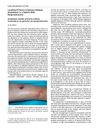
March 2012 in “Actas Dermo-Sifiliográficas” An elderly man with skin amyloidosis and abnormal blood proteins was monitored without finding widespread disease after 18 months.
22 citations
,
March 2003 in “Steroids” This study found that both finasteride and a new steroidal compound, PM-9, competitively inhibit the 5α-reductase enzyme in Penicillium crustosum broth.
 1 citations
,
July 1997 in “The Lancet”
1 citations
,
July 1997 in “The Lancet” This study suggests that a newly discovered protein, AMY117, found in Alzheimer's disease brain lesions may be crucial in the disease's development and progression.
 1 citations
,
August 2021 in “Preventive Medicine”
1 citations
,
August 2021 in “Preventive Medicine” This study found that non-adherence to medication in the Prostate Cancer Prevention Trial was associated with increased all-cause mortality unrelated to prostate cancer.
36 citations
,
October 2009 in “Journal of biological chemistry/The Journal of biological chemistry” This study reports that TFM-4AS-1, a selective androgen receptor modulator, promoted bone and muscle growth with reduced effects on reproductive organs in ovariectomized rats.
97 citations
,
December 2011 in “New England Journal of Medicine” This article discusses the FDA's decision not to approve 5α-reductase inhibitors for prostate cancer prevention, citing an increase in high-grade tumors but no mortality evidence, and reports no new results.
October 2024 in “Skin Appendage Disorders” This study found that serum FABP4 levels were significantly higher in alopecia areata patients compared to healthy controls and may correlate with disease severity.
 10 citations
,
June 2001 in “Annals of neurology”
10 citations
,
June 2001 in “Annals of neurology” This study reports that patients with Alzheimer's disease have increased levels of polyamines in their hair.
 April 2016 in “Journal of Urology and Nephrology Open Access”
 This abstract discusses treatment options for benign prostatic hyperplasia and provides no new clinical results.
91 citations
,
July 2004 in “Journal of Biological Chemistry” This study found that overexpression of the enzyme SSAT in a mouse model significantly reduced prostate tumor size and progression, suggesting it could be a promising strategy against prostate cancer.
![Synthesis, Biological Evaluation, and Molecular Docking of 4-Amino-2H-benzo[h]chromen-2-one Analogs Containing the Piperazine Moiety](/images/assets/2ecf4eed-7dbe-4f1a-83db-739625546cdd/small/31808.jpg) 7 citations
,
August 2019 in “Bioorganic & medicinal chemistry”
7 citations
,
August 2019 in “Bioorganic & medicinal chemistry” This study identified novel 4-Amino-2H-benzo[h]chromen-2-one analogs as potent androgen receptor antagonists that show strong antiproliferative activity against prostate cancer cells, suggesting them as potential lead compounds for therapy development.
 March 2026 in “International Journal of Dermatology and Venereology”
 This study found that abrocitinib showed promising efficacy and safety in adolescents with moderate-to-severe alopecia areata, with significant hair regrowth observed over 10 months of treatment.
 6 citations
,
August 2020 in “JCRPE”
6 citations
,
August 2020 in “JCRPE” This report presents a case of familial male-limited precocious puberty with a novel LHCGR gene mutation, where a boy responded well to treatment with bicalutamide and anastrozole.
October 2025 in “Australasian Journal of Dermatology” In this case report, a 31-year-old male with refractory sycosis barbae achieved complete remission after 4 months of treatment with bimekizumab, suggesting this dual inhibitor of interleukin-17A and IL-17F may be a promising therapy for this condition.
 November 2025 in “DOAJ (DOAJ: Directory of Open Access Journals)”
 This study observed that the choice between using Belimumab and Anifrolumab for treating active Systemic Lupus Erythematosus was mainly based on clinical phenotype, with Anifrolumab linked to chronic-active disease and Belimumab associated with relapsing-remitting disease.
35 citations
,
July 2008 in “International Journal of Gynecology & Obstetrics” This study found that medroxyprogesterone acetate treatment in women with PCOS reduced hyperandrogenism-related hormonal levels and improved skin conditions without affecting lipid or carbohydrate metabolism.
18 citations
,
February 2020 in “Journal of pharmaceutical and biomedical analysis” This study using high-performance liquid chromatography reported that mice with more diverse gut microbiota had higher levels of specific compounds in hair compared to those with less diversity, with stress affecting certain plasma levels.
 March 2026 in “Frontiers in Immunology”
 In this study, a 49-year-old female with metastatic adrenocortical carcinoma experienced an abscopal effect following pulse electric field ablation, suggesting potential as an adjunct to systemic immunotherapy for liver tumors.
August 2025 in “OPAL (Open@LaTrobe) (La Trobe University)” This study demonstrates that machine learning-assisted fabrication of PRP-incorporated microneedles effectively promotes hair regrowth in AGA mice, outperforming minoxidil and mitigating biosafety risks associated with synthetic materials.

In this study, a validated chromatographic method demonstrated the ability to simultaneously analyze gemcitabine and olaparib in pancreatic cancer tissues, supporting the advancement of pharmaceutical formulations combining these drugs, particularly for patients with BRCA mutations.