June 2026 in “Indian Dermatology Online Journal” In this case report, a 20-year-old man with a birthmark was identified as having a supernumerary nipple, a developmental anomaly, using dermoscopy to distinguish it from other pigmented skin lesions such as melanocytic nevus or basal cell carcinoma.
6 citations
,
March 2009 in “Pigment Cell & Melanoma Research” This study suggests that a purified sphingolipid fraction can activate melanocyte stem cells via p38 signalling, potentially offering a non-UV-based treatment for vitiligo, though additional validation is needed.
 3 citations
,
November 2023 in “Frontiers in cell and developmental biology”
3 citations
,
November 2023 in “Frontiers in cell and developmental biology” This paper provides a comprehensive review of melanocytes' roles in skin biology, focusing on their pigmentation and immune functions, and suggests potential research opportunities for preventing and treating skin disorders.
This pilot study employed in-vivo multiphoton microscopy to visualize pigment-producing melanocytes in vitiligo patients, aiming to enhance understanding of treatment impacts and potentially improve transplantation therapies.
28 citations
,
July 2005 in “International Journal of Dermatology” Vitiligo is caused by the immune system attacking skin pigment cells.
 April 2023 in “The journal of investigative dermatology/Journal of investigative dermatology”
 This review explores the multifaceted roles of melanocytes in skin biology, emphasizing their potential impact on future research to prevent and treat skin diseases, but reports no new experimental results.
20 citations
,
November 2004 in “Archives of Pathology & Laboratory Medicine” This case report describes a rare instance of melanocytic matricoma, a benign pigmented papule found in sun-damaged skin of an elderly individual, highlighting its distinct clinical and pathological features.
 July 2025 in “Advanced Science”
 In this study, researchers discovered two new signaling pathways that regulate how melanocytes establish pigment patterns in reconstituted hair-bearing skin, offering insights that could inform strategies to prevent hair greying.

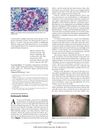
This study discusses the safety, complications, and limitations of melanocyte transplantation for treating vitiligo, noting that these techniques are generally safe and often combined with medical treatments for repigmenting stable vitiligo macules.
 10 citations
,
February 2006 in “Archives of dermatology”
10 citations
,
February 2006 in “Archives of dermatology” A man's chest hair turned white after a shingles infection, possibly due to virus-damaged pigment cells.
18 citations
,
April 1989 in “Archives of Dermatology” This study found that segmented heterochromic scalp hair associated with iron-deficiency anemia in a teenage girl completely recovered following iron supplementation, suggesting a role for iron in hair pigment production.
 55 citations
,
December 2014 in “Dermatologica sinica/Zhōnghuá pífūkē yīxué zázhì”
55 citations
,
December 2014 in “Dermatologica sinica/Zhōnghuá pífūkē yīxué zázhì” This article discusses the interactions between keratinocytes and melanocytes in maintaining epidermal and hair follicle homeostasis, without reporting new experimental results.
29 citations
,
June 1998 in “Developmental Biology” This study found that the patchwork mutation in mice affects melanocyte survival in hair follicles, leading to a variegated coat pattern without partially pigmented hairs due to a community effect among melanoblasts.
15 citations
,
June 1986 in “Pediatric Dermatology” This study observed that 5α‐dihydrotestosterone increased pigmentation in certain skin areas of male Syrian hamsters, while estradiol decreased melanocyte numbers and counteracted the androgen-induced pigmentation effects.
 9 citations
,
April 2024 in “Cureus”
9 citations
,
April 2024 in “Cureus” This study outlines the features and diagnosis of Vogt-Koyanagi-Harada disease, highlighting its association with specific genes, its prevalence among pigmented races, and treatment with systemic steroids and immunosuppressants.
 8 citations
,
February 2013 in “Central European Journal of Biology”
8 citations
,
February 2013 in “Central European Journal of Biology” This article discusses melanocyte development from neural crest cells and reports no new experimental results; the authors suggest a broader range of functions for melanocytes than previously recognized.
 3 citations
,
November 2022 in “Experimental dermatology”
3 citations
,
November 2022 in “Experimental dermatology” This article discusses melatonin's role in mammalian coat color and its potential in melanoma treatment when used with chemotherapy, but reports no new clinical results.
68 citations
,
April 1965 in “General and Comparative Endocrinology” This study found that the pituitary gland is crucial for normal pelage color cycles in weasels, with certain hormones influencing regrowth of pigmented or white hair after molting.
July 2026 in “Asian Journal of Pharmaceutical Sciences” The researchers designed a Janus microneedle system for treating vitiligo, which targets the skin’s layers to regulate the immune response, promote melanocyte regeneration, and enhance pigment transfer, offering a new precise treatment approach for this condition.
 November 2025 in “EXPERIMENTAL ANIMALS”
 In this murine study, researchers found that topical treatment with Philippine stingless bee propolis increased folliculogenesis, epidermal thickness, and melanogenesis, but not hair length, potentially supporting hair follicle regeneration and melanocyte function in chemotherapy-induced alopecia models.
40 citations
,
November 2005 in “The journal of investigative dermatology/Journal of investigative dermatology” This study suggests that different melanocyte subpopulations in hair follicles have varying patterns of apoptosis and survival during the catagen phase, which may inform models for modulating melanocyte behavior in vivo.
January 2026 in “Current Issues in Molecular Biology” This study found that transfecting alpaca melanocytes with miR-5110 altered gene expression related to pigmentation, specifically identifying pathways like MAPK and Wnt as involved in melanogenesis regulation, providing insights into miR-5110's role in pigmentation processes.
21 citations
,
February 2006 in “Clinical Cancer Research” This commentary discusses how microphthalmic-associated transcription factor levels in circulating tumor cells correlate with melanoma progression and suggests the factor may be up-regulated in vivo, but it reports no new clinical results.
May 2021 in “The journal of investigative dermatology/Journal of investigative dermatology” This research discusses a zebrafish model showing that nicastrin deficiency leads to tyrosinase-dependent depigmentation and melanophore cell death, suggesting implications for studying skin depigmentation disorders.
June 2009 in “Pigment Cell & Melanoma Research” This review explores the role of oxidative stress and stem cell decline in hair graying, suggesting potential areas for future research but reports no new findings.
March 2011 in “Pigment Cell & Melanoma Research” This study found that changes in the expression of the Agouti gene contribute to the pale pigmentation in beach mice, with implications for melanocyte development and localization.
 January 2024 in “International Journal of Herbal Medicine”
 This abstract describes the role of melanin in determining hair color and protecting against UV radiation, highlighting how its production affects hair health, growth, and vitality, with reduced production contributing to greying with age.
 60 citations
,
April 2006 in “International Journal of Dermatology”
60 citations
,
April 2006 in “International Journal of Dermatology” This review discusses various surgical techniques for vitiligo repigmentation, noting that suction blister and split-thickness skin grafting have the highest success rates according to previous analysis, but reports no new results.
 1 citations
,
March 2015 in “Journal of the European Academy of Dermatology and Venereology”
1 citations
,
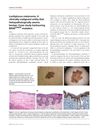
March 2015 in “Journal of the European Academy of Dermatology and Venereology” This letter to the editor shares a case study of lentiginous melanoma that appears clinically malignant but histopathologically benign, involving the BRAFV600R mutation.
1 citations
,
October 2019 in “International Journal of Dermatology and Venereology” This review discusses the role of zebrafish as a model for studying human hereditary pigmentary disorders and reports no new experimental results, emphasizing their genetic similarities and the genetic tools available.