 July 2022 in “Journal of Investigative Dermatology”
 This study found that the transcription factor Lef1 is crucial for normal skin and hair development and wound healing, highlighting its role in regulating essential genes and pathways in papillary fibroblasts.
 234 citations
,
February 2001 in “British Journal of Dermatology”
234 citations
,
February 2001 in “British Journal of Dermatology” FPHL affects hair density and diameter, causing visible hair loss in older women.
128 citations
,
August 2020 in “Cell stem cell” In this study, researchers found that extrafollicular progenitors marked by Hic1 are the main contributors to reparative fibroblasts in wound repair, with potential to modulate healing outcomes through genetic and pharmacological interventions.
 August 2025 in “International Journal of Contemporary Pediatrics”
 This case report presents a rare subtype of hypomyelinating leukodystrophy linked to a PYCR2 gene mutation, emphasizing exome sequencing's value in diagnosing undiagnosed childhood HLDs with atypical symptoms.
 January 2026 in “Journal of Clinical and Investigative Dermatology”
 This case report describes a father with HOXC13-associated pure hair-nail ectodermal dysplasia, presenting with severe nail dystrophy affecting all digits and notable hypotrichosis or complete alopecia.
89 citations
,
March 1996 in “Proceedings of the National Academy of Sciences” This study found that homozygous mutant mice with a hypomorphic CD18 mutation developed a chronic inflammatory skin disease resembling human psoriasis, potentially implicating additional genetic factors in disease susceptibility.
4 citations
,
March 2000 in “Journal of Investigative Dermatology” The gene for Marie Unna hereditary hypotrichosis is located on chromosome 8p21, near the hairless gene.
This study found that the Arabidopsis cation chloride cotransporter CCC1 is critical for regulating pH in the trans-Golgi network/early endosome, impacting plant growth and stress response.
 21 citations
,
October 2019 in “The journal of investigative dermatology/Journal of investigative dermatology”
21 citations
,
October 2019 in “The journal of investigative dermatology/Journal of investigative dermatology” This study identified specific germline and somatic mutations in the Phospholipase C Delta 1 gene as high-risk factors for developing hereditary trichilemmal cysts, involving a monoallelic two-hit mechanism.
 36 citations
,
January 2021 in “Scientific Reports”
36 citations
,
January 2021 in “Scientific Reports” This study identified key genes and signaling pathways involved in the growth phases of Pashmina goat hair follicles, highlighting the role of several gene families and transcription factors in fiber quality and growth regulation.
29 citations
,
March 2000 in “Journal of Investigative Dermatology” The gene for Marie Unna hereditary hypotrichosis is located on chromosome 8p21.
 July 2022 in “Research Square (Research Square)”
 This study found that Egyptian women with frontal fibrosing alopecia had lower serum PPARγ levels and a higher occurrence of PPARG gene polymorphism compared to healthy controls, suggesting a potential role for PPARγ in the condition's development.
![Influence of FHIT on Benzo[a]pyrene-Induced Tumors and Alopecia in Mice: Chemoprevention by Budesonide and N-Acetylcysteine](/images/assets/f8f56777-f891-4879-8c45-c87d6aa82563/small/35499.jpg) 24 citations
,
May 2006 in “Proceedings of the National Academy of Sciences of the United States of America”
24 citations
,
May 2006 in “Proceedings of the National Academy of Sciences of the United States of America” This study reported that heterozygosity for FHIT affects mice's susceptibility to spontaneous alopecia areata and to certain preneoplastic lesions induced by benzo[a]pyrene, but does not change how they respond to budesonide and N-acetyl-L-cysteine.
 October 2021 in “Journal of Investigative Dermatology”
 In this study, the researchers found that scalp hair follicles affected by female pattern hair loss are poorly vascularized, likely affecting nutrient delivery, but capable of nutrient uptake when supplemented.
1 citations
,
October 2020 in “Research Square (Research Square)” This study identified a 505-bp indel variant in the FGF5 gene associated with cashmere growth in goats, which may serve as a molecular marker in cashmere goat breeding programs.
 6 citations
,
February 2023 in “Journal of nanobiotechnology”
6 citations
,
February 2023 in “Journal of nanobiotechnology” In this study, HA-P5, a nanoparticle derived from peptide and polysaccharide conjugation, effectively reduced acne lesions and sebum production by inhibiting specific receptors in cells, without triggering unfavorable reactions compared to a commercial inhibitor, highlighting HA-P5's potential as a novel acne treatment.
36 citations
,
August 2016 in “The Plant cell” This study found that downregulating PI3K in common bean severely impaired symbiosis with beneficial microorganisms, indicating an essential role for autophagy-related processes in these mutualistic interactions.
 April 2023 in “The journal of investigative dermatology/Journal of investigative dermatology”
 This study found that p21 is much more highly expressed in normal melanocytes compared to melanoma cells, suggesting a potential target for preventing melanoma progression through cell cycle repair processes.
This article reviews current understanding of Hutchinson–Gilford Progeria Syndrome and suggests RNA-based treatments show promise, but no new clinical findings are reported.
 August 2020 in “Pakistan Journal of Zoology”
 This study identified a novel genetic mutation, c.429delC in the hairless gene, associated with atrichia with papular lesions in two Pakistani families.
 25 citations
,
May 1994 in “Journal of Investigative Dermatology”
25 citations
,
May 1994 in “Journal of Investigative Dermatology” This study identified a novel gene, hacl-1, that is specifically expressed in the hair follicles of ICR mouse skin and is associated with their active state.
 July 2026 in “bioRxiv (Cold Spring Harbor Laboratory)”
 This study identified a new FAK isoform, FAKΔe4, which is regulated by ECM stiffness and affects cell migration, invasion, and mechanosensing in human-derived data and engineered models.
 13 citations
,
January 2021 in “Scientific Reports”
13 citations
,
January 2021 in “Scientific Reports” This study found that Pannexin 3 plays a crucial role in skin development by regulating the transcription factor Epiprofin, affecting keratinocyte differentiation and hair follicle regeneration in mice.
 3 citations
,
February 2020 in “The journal of gene medicine”
3 citations
,
February 2020 in “The journal of gene medicine” This study found a recurrent nonsense mutation in the HR gene linked to atrichia with papular lesions in two Kashmiri families, suggesting whole exome sequencing as an efficient method for diagnosis and genetic counseling.
6 citations
,
August 2022 in “International journal of molecular sciences” This study demonstrated that α-phellandrene promotes dermal papilla cell proliferation through a cAMP-mediated pathway and upregulates VEGF expression, suggesting its potential use in hair loss prevention.
1 citations
,
July 2024 in “Journal of Investigative Dermatology” MPZL3 protein affects hair growth cycles and could help manage hair loss.
 13 citations
,
November 2009 in “Journal of Dermatological Science”
13 citations
,
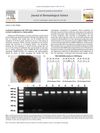
November 2009 in “Journal of Dermatological Science” This article discusses various dermatological studies cited by previous authors and reports no new clinical results.
 122 citations
,
May 2010 in “Plant Physiology”
122 citations
,
May 2010 in “Plant Physiology” This study found that expressing certain PIN proteins in Arabidopsis root hairs inhibited growth by decreasing auxin levels, while PIN5 slightly stimulated growth, demonstrating differential effects on auxin transport.
 October 2023 in “Journal of dermatological science”
 This study highlights that mutations in the MBTPS2 gene can lead to dermatological disorders like IFAP syndrome and severe bone diseases such as X-Linked Osteogenesis Imperfecta, emphasizing the significance of understanding these genetic variants for disease mechanisms and associations.
28 citations
,
February 2010 in “Experimental Dermatology” This study concluded that the frizzy mutation in mice is linked to a T to A transversion in Prss8 and is orthologous to the 'hairless' mutation in rats.