December 2019 in “Reproduction Fertility and Development” This study found that mouse embryonic fibroblasts better supported the growth and maintenance of LGR5+ epidermal stem cells compared to porcine fetal fibroblasts, under various culture conditions.
49 citations
,
July 2000 in “Journal of Histochemistry & Cytochemistry” This study found cell-specific variations in POMC mRNA and peptide expression in murine skin, suggesting that PC1 and PC2 convertases contribute to differential POMC processing.
This study found that the Arabidopsis cation chloride cotransporter (CCC1) is crucial for regulating pH and processes in the trans-Golgi-network/early endosome, impacting plant growth and stress responses.
14 citations
,
October 2017 in “Gene Expression Patterns” This study generated a Dct-H2BGFP mouse model that allows for effective identification and isolation of melanocytic cells in vivo, facilitating research into their molecular and biological properties.
 33 citations
,
May 2006 in “Journal of Investigative Dermatology”
33 citations
,
May 2006 in “Journal of Investigative Dermatology” This study found that high levels of parathyroid hormone-related protein expression can result in the production of shorter hair shafts, likely through effects on angiogenesis.
 10 citations
,
May 2016 in “Journal of Dermatological Science”
10 citations
,
May 2016 in “Journal of Dermatological Science” This study found that PDGF-BB affects human melanocytes differently depending on their differentiation stage, stimulating melanoblast proliferation but inhibiting melanocyte proliferation while promoting their differentiation.
15 citations
,
September 2018 in “Frontiers in Plant Science” This study identified that downregulation of the gene BcFLA1 decreases root hair length in Brassica carinata under phosphate-deficient conditions, highlighting its role in root hair elongation.
 January 2016 in “Faculty Opinions – Post-Publication Peer Review of the Biomedical Literature”
 A substance called prostaglandin D2 is found more in bald scalps and it stops hair from growing. Blocking its receptor could potentially treat hair loss.
52 citations
,
May 1997 in “Journal of Biological Chemistry” This study suggests that polyamines regulate CK2 enzyme activity and its subcellular distribution, as demonstrated in mouse models and cell cultures with elevated levels of ornithine decarboxylase.
September 1999 in “Molecular Carcinogenesis” This study reported that overexpressing ornithine decarboxylase in C57Bl/6 mice increased their sensitivity to tumor promotion by TPA, a change reversible by doxycycline treatment.
44 citations
,
April 2013 in “Proceedings of the National Academy of Sciences of the United States of America” This study found a significant association between reduced FGF13 levels and X-linked congenital generalized hypertrichosis, suggesting FGF13's potential role in hair follicle growth and the hair cycle.
November 2022 in “bioRxiv (Cold Spring Harbor Laboratory)” This study found that prostaglandin E2 pretreatment may reduce radiotherapy-induced alopecia by enhancing hair follicle self-repair through transient G1 arrest, suggesting a potential preventive treatment.
January 2026 in “Animal Genetics” This study investigated a Labrador Retriever with paw pad hyperkeratosis and identified a unique de novo heterozygous missense variant in the GJB6 gene, suggesting its potential role in the condition, analogous to Clouston syndrome in humans, although differences between species may provide further insights.
31 citations
,
September 1999 in “Molecular Carcinogenesis” This study in a transgenic mouse model found that repressing overexpression of ornithine decarboxylase reduced papilloma development, indicating its role in tumor promotion sensitivity.
 6 citations
,
January 2011 in “Journal of pediatric endocrinology & metabolism/Journal of pediatric endocrinology and metabolism”
6 citations
,
January 2011 in “Journal of pediatric endocrinology & metabolism/Journal of pediatric endocrinology and metabolism” This report details the case of an 11-year-old girl with APECED syndrome carrying a unique homozygous mutation in the AIRE gene, the first of its kind documented.
2 citations
,
January 2022 in “The Application of Clinical Genetics” This case report presents the first Russian patient with Meier-Gorlin syndrome 5, expanding clinical understanding through the identification of two novel CDC6 gene variants.
January 2026 in “Applied Sciences” In this study, cyclic ADP-ribose (cADPR) treatment in human hair follicle dermal papilla cells was associated with increased intracellular calcium retention and activated anagen-related signaling without causing significant cytotoxicity, indicating its potential impact on hair growth processes.
6 citations
,
March 2007 in “BioTechniques” This study observed that PCR-based genotyping for cre-loxP mice can lead to errors due to cre-mediated recombination in non-target tissues like tails, affecting the detection of lox alleles.
November 2022 in “Journal of Investigative Dermatology” This study reported that an HS-associated NCSTN mutation in iPSC-derived skin organoids led to altered hair follicle stem cell differentiation and increased expression of proteins linked to HS inflammation.
 10 citations
,
March 2015 in “Journal of dermatology”
10 citations
,
March 2015 in “Journal of dermatology” This case report describes a 12-year-old boy with severe skin scaling due to novel compound heterozygous null truncation mutations in the TGM1 gene, resulting in loss of transglutaminase 1 activity.
September 2019 in “Journal of Investigative Dermatology” CCCA in women of African ancestry may be caused by PADI3 gene mutations and intense hair grooming.
 April 2024 in “bioRxiv (Cold Spring Harbor Laboratory)”
 In a keratinocyte-specific knockout mouse model, this study found that deleting GRK2 disrupted hair follicle homeostasis, causing cyst-like structures, abnormal growth patterns, and eventual hair loss, suggesting potential links to immune-mediated alopecias.
 3 citations
,
May 2022 in “The journal of investigative dermatology/Journal of investigative dermatology”
3 citations
,
May 2022 in “The journal of investigative dermatology/Journal of investigative dermatology” In this study, researchers found that skin pigmentation alterations in a mouse model of Carney complex may be caused by specific dermal fibroblasts promoting melanogenic signaling.
324 citations
,
May 2002 in “Oncogene” 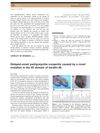 4 citations
,
December 2013 in “The Journal of Dermatology”
4 citations
,
December 2013 in “The Journal of Dermatology” This letter to the editor discusses a case of delayed-onset pachyonychia congenita linked to a new mutation in keratin 6b but presents no new research findings.
1 citations
,
January 2019 in “PubMed” This study found that transgenic mice expressing cgVEGF164 had increased hair follicle diameter and density, potentially linked to higher phosphorylation levels of ERK1/2, AKT1, and LEF1 proteins.
 17 citations
,
April 2023 in “Aging”
17 citations
,
April 2023 in “Aging” In this study, the authors used AI-driven methods to identify and prioritize promising therapeutic targets that may address both aging and Glioblastoma Multiforme, proposing CNGA3, GLUD1, and SIRT1 as novel candidates.
 April 2026 in “Tissue Engineering and Regenerative Medicine”
 This study found that the GPRC6A-Duox1 signaling pathway influences hair cycle progression and testosterone-mediated hair loss in mice, suggesting that disruption of this pathway leads to resistance against testosterone-induced hair loss and longer anagen phase duration.
 April 2023 in “The journal of investigative dermatology/Journal of investigative dermatology”
 This study found that p21 is much more highly expressed in normal melanocytes compared to melanoma cells, suggesting a potential target for preventing melanoma progression through cell cycle repair processes.
3 citations
,
January 2005 in “Photochemistry and Photobiology” This study found that overexpression of PKCɛ in mouse epidermis increased sensitivity to metastatic squamous cell carcinoma, suggesting that a PKCɛ-mediated microenvironment may promote cancer development through specific cytokines like TNFα.