 July 2026 in “Frontiers in Cellular and Infection Microbiology”
 This study found that patients with androgenetic alopecia had increased scalp microbial diversity and reduced Staphylococcus abundance, particularly in the frontal and vertex regions, suggesting this dysbiosis as a sensitive indicator of AGA.
 June 2026 in “Frontiers in Bioengineering and Biotechnology”
 This review outlines the transition from simple hair follicle organoids to immune-competent microphysiological systems, addressing limitations in replicating native hair follicle immune features and discussing their applications in disease modeling and regenerative medicine.
 June 2026 in “International Journal of Drug Delivery Technology”
 This review explores the potential of herbal therapies and modern delivery methods for managing premature hair greying, highlighting promising plant-based treatments and emphasizing the need for clinical trials to validate their effectiveness.
 June 2026 in “Frontiers in Immunology”
 This review synthesizes both traditional and emerging molecular mechanisms of tissue remodeling across different organs, aiming to establish a theoretical basis for precision interventions in pathological conditions, according to the authors.
 June 2026 in “Frontiers in Materials”
 This review examines advancements in "smart" hydrogel dressings for complex wound healing, highlighting innovations in materials that provide multifunctionality, such as responsive drug delivery and regenerative capabilities. The study also addresses potential challenges in clinical application, like manufacturing and regulatory hurdles.
 June 2026 in “Frontiers in Cell and Developmental Biology”
 In this review, researchers examined how needle gauge and length impact the viability of human stem cells during injections, emphasizing the balance between minimizing tissue trauma and preserving cell viability to optimize clinical protocols.
 May 2026 in “Frontiers in Cell and Developmental Biology”
 In this study, researchers suggest that hair follicle miniaturization in conditions like androgenetic alopecia may result from impaired conversion of quiescent stem cells to progenitor cells, influenced by the follicular niche, its collagen network, and various mechanical constraints.
 May 2026 in “The EMBO Journal”
 This study explores the complex mechanisms of skin aging, including cellular senescence and disrupted communication, and highlights rejuvenation strategies like gene expression rewiring and microbiome modulation, offering potential frameworks for regenerative therapies and precise interventions in skin and systemic aging.
 May 2026 in “Organoid Research”
 This review discusses recent advancements in hair follicle organoid technology for alopecia treatment but presents no new experimental results, emphasizing the potential for clinical applications and drug screening.
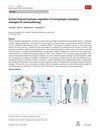
This review highlights that surface mechanical regulation can program macrophage behavior through specific mechanical cues on material surfaces, potentially advancing immunotherapies and regenerative medicine by enabling precise control over macrophage functions.
This article examines how digital technologies, drawing on Marshall McLuhan's concept of media as an "extension of man," transform design thinking by creating new possibilities without replacing it, emphasizing the need for a hybrid, reflective practice in design.

In this article, the author explores how digital technologies can expand the cognitive and creative capabilities of designers, noting that while technology transforms design thinking, it does not replace it but rather opens up new possibilities and requires a hybrid, reflective practice.
 April 2026 in “Frontiers in Cell and Developmental Biology”
 This study found that PGRP-S expression in mouse epidermis is specific to certain hair follicle epithelia, depending on the skin region, and can be transiently induced in flank skin hair follicle epithelium after exposure to Staphylococcus aureus, suggesting a role in environmental surveillance.
 April 2026 in “Communications Biology”
 In this study of Danioninae species, researchers reported that the presence of breeding tubercles on the pectoral fins is conserved in certain species and linked to local androgen conversion, with steroid 5-α-reductase playing a crucial role in their development.
 April 2026 in “International Journal of Clinical Case Reports and Reviews”
 In this preclinical study, researchers developed and evaluated a new non-invasive laser system designed for personalized medical use, showing its potential for chronic disease management and adjunctive fat reduction by offering enhanced treatment precision and adaptability over existing devices.
 April 2026 in “bioRxiv (Cold Spring Harbor Laboratory)”
 This study introduced hydrogel microneedles loaded with palladium nanoparticles, which utilize the inherent cytotoxicity of polyethyleneimine to enhance the effectiveness of doxorubicin in treating melanoma, achieving a tumor inhibition rate of up to 98% in a murine model.
 March 2026 in “Journal of Hunan University Natural Sciences”
 This study evaluated the antimicrobial activity of Albizia saponaria stem bark against microorganisms causing dandruff and fungal alopecia. It found that the hexane fraction exhibited potent antifungal effects comparable to ketoconazole, highlighting its potential as a natural therapeutic for dandruff.
 February 2026 in “International Journal of Web of Multidisciplinary Studies”
 This review synthesizes current research on how the interaction between the skin microbiome and exosome-mediated communication influences hair disorders, and discusses how microbiome restoration and exosome-based therapies could advance treatments for conditions like alopecia by promoting hair regrowth and follicular health.
 February 2026 in “Clinical Cosmetic and Investigational Dermatology”
 This study highlights how combining genetic and environmental risk assessments could advance early screening and personalized prevention for vitiligo, given its genetic complexity and environmental interactions.
 January 2026 in “Microsystems & Nanoengineering”
 This study analyzed 853 articles to reveal that research on silica-based nanobiomaterials in regenerative medicine has rapidly increased, with distinct regional differences in impact and emerging focus areas in drug delivery and wound healing.

In this study, researchers used a mouse model to identify an adipocyte-to-fibroblast conversion pathway that promotes mast-cell recruitment and dermal fibrosis in atopic dermatitis, suggesting a potential therapeutic approach to block this process and reduce inflammation and fibrosis.
 January 2026 in “International Journal of Applied Pharmaceutics”
 This review discusses the integration of nanoparticles with microneedles to improve drug delivery through enhanced stability, bioavailability, and controlled release, noting ongoing challenges with stability, scalability, and safety.
 January 2026 in “Journal of Biomedical Research”
 This review discusses the potential of small extracellular vesicles (sEVs) as next-generation therapeutics, noting their ability to overcome biological barriers and modulate cellular environments for various diseases.
 December 2025 in “Frontiers in Nutrition”
 This review suggests that although hydrolyzed collagen peptides with certain supplements may improve skin elasticity and joint function, evidence for collagen's anti-aging and regenerative benefits remains inconsistent.
 November 2025 in “Nanoscale Advances”
 This review highlights the potential of inorganic nanoparticle-based scaffolds as innovative tools for advanced wound care, emphasizing their ability to provide antimicrobial action and regenerative support, while also discussing fabrication strategies and challenges in optimizing their clinical application.
 November 2025 in “Frontiers in Endocrinology”
 This review examines the potential of apigenin and ellagic acid as adjunct or alternative treatments for PCOS, but reports no new clinical results and highlights the need for further trials to confirm their efficacy and optimize dosing and delivery.

This review reports that empirical evidence suggests an overlap between Long Covid, chronic fatigue syndrome, and fibromyalgia, highlighting the need for standardized definitions and rigorous methodologies in related research.
 October 2025 in “International Journal of Clinical Trials”
 This article highlights India's suitability as a strategic location for dermatology clinical trials due to its diverse patient population and cost-effective environment, offering insights on optimizing trials through advanced diagnostics, regulatory compliance, and ethical governance to attract global sponsors.
 August 2025 in “Frontiers in Pharmacology”
 This study identified three Ayurvedic compounds that may serve as potential treatments against the macrolide-resistant enzyme murE of *Tropheryma whipplei*, addressing challenges in treating Whipple disease.
 July 2025 in “Scientific Reports”
 This study found that dermal papilla cell-conditioned medium can protect against UV-induced skin aging in a mouse model by modulating ferroptosis pathways, highlighting its potential for treating oxidative stress-related skin conditions.