 23 citations
,
November 2018 in “npj Regenerative Medicine”
23 citations
,
November 2018 in “npj Regenerative Medicine” This review discusses the similarities and differences in wound healing between non-sterile skin wounds and ischemic injuries to internal organs, emphasizing regenerative capabilities observed in zebrafish models, with no new clinical results reported.
9 citations
,
August 2021 in “Genome Biology and Evolution” This study found widespread losses of g-type lysozyme genes across various mammalian lineages, with both gene copies extensively lost in cetaceans and sirenians, and linked this to hairlessness in these fully aquatic mammals.
8 citations
,
January 2022 in “Current topics in developmental biology/Current Topics in Developmental Biology”  93 citations
,
May 2010 in “European Journal of Cancer”
93 citations
,
May 2010 in “European Journal of Cancer” This phase II trial found that BI 2536 demonstrated limited antitumor activity across five solid tumor types, with no confirmed objective responses observed.

The researchers reported that certain physical characteristics of hair shafts, such as length and color, may influence mtDNA read counts and degradation state when analyzed by massively parallel sequencing.
 September 2013 in “Science”
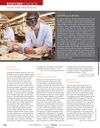
 Human stem cells can aid stroke recovery, research experiences boost students' career aspirations, minoxidil may reduce cancer spread, a molecule can slow tumor growth, a protein affects water flow in cells, magnesium behaves differently at tiny scales, and a new method detects slow-moving objects.
January 2024 in “Arquivos de Neuro-Psiquiatria” This case study reported on a 49-year-old male with muscle weakness and low potassium levels, suggesting a diagnosis of thyrotoxic hypokalemic periodic paralysis.
October 2021 in “Operative techniques in otolaryngology--head and neck surgery” This article reviews various surgical techniques to improve ocular and cosmetic outcomes in patients with facial paralysis but reports no new clinical results; it emphasizes tailored long-term management strategies.
 3 citations
,
May 2006 in “Dermatologic Surgery”
3 citations
,
May 2006 in “Dermatologic Surgery” This study found that multi-hair follicles in nonbald men are primarily oriented perpendicular to the radial line from the crown whorl, suggesting perpendicular transplant grafts might mimic natural appearance.
 January 2025 in “Annals of Thoracic and Cardiovascular Surgery”
 This case report describes a 55-year-old woman with alopecia areata whose condition improved rapidly and did not recur after the surgical resection of a thymoma, suggesting a potential immunological link between alopecia areata and thymoma that warrants further investigation.
 July 2024 in “Influenza and Other Respiratory Viruses”
 This study by Kyung et al. found a significant association between SARS-CoV-2 infection and an increased risk of developing alopecia areata in long COVID patients, with COVID-19 severity and vaccination status impacting this risk.
 26 citations
,
March 2015 in “American journal of clinical dermatology”
26 citations
,
March 2015 in “American journal of clinical dermatology” This study found that systemic mycophenolate mofetil and topical clobetasol were equally effective at reducing lichen planopilaris activity over six months, but satisfaction differed between the treatments.
 19 citations
,
December 2021 in “Cureus”
19 citations
,
December 2021 in “Cureus” This study found that proxalutamide significantly increased recovery rates, reduced mortality, and shortened hospital stays in hospitalized COVID-19 patients across different regions in Brazil.
 17 citations
,
April 2020 in “Dermatology and Therapy”
17 citations
,
April 2020 in “Dermatology and Therapy” In this randomized double-blind study, 160 adults with alopecia areata showed significant improvements in hair loss severity after using a bioactive peptide cosmetic product that mimics platelet-rich plasma, while the placebo group showed no significant change, underlining the treatment's potential effectiveness.
 5 citations
,
July 2021 in “medRxiv (Cold Spring Harbor Laboratory)”
5 citations
,
July 2021 in “medRxiv (Cold Spring Harbor Laboratory)” This study found that proxalutamide treatment significantly reduced 30-day hospitalization rates in women with mild-to-moderate COVID-19 compared to placebo, with no safety issues identified.
4 citations
,
September 2025 in “Journal of the American Academy of Dermatology” The trial helped find the best dose of deuruxolitinib for treating alopecia areata.
1 citations
,
July 2016 in “PubMed” This study found that 5% minoxidil topical foam used once daily for 24 weeks was well tolerated and significantly improved hair regrowth and scalp coverage in women with female pattern hair loss compared to vehicle foam.
 April 2025 in “International Journal of Research in Dermatology”
 In this study, a holistic hair treatment regimen significantly increased hair density in men with stages 2-4 male androgenetic alopecia, showing a more effective outcome than minoxidil over six months, and offering an alternative to traditional treatments.
 February 2010 in “Journal of The American Academy of Dermatology”
 This study found that the novel antifungal emulsion NB-002 demonstrated significant antifungal activity and nail clearing in patients with distal subungual onychomycosis involving ≤50% of the nail.
 176 citations
,
August 2015 in “The journal of allergy and clinical immunology/Journal of allergy and clinical immunology/The journal of allergy and clinical immunology”
176 citations
,
August 2015 in “The journal of allergy and clinical immunology/Journal of allergy and clinical immunology/The journal of allergy and clinical immunology” This study identified a distinct cytokine activation signature in alopecia areata, involving TH2, TH1, IL-23, and IL-9/TH9 pathways, suggesting potential targeting strategies similar to those in psoriasis and atopic dermatitis.
88 citations
,
January 2001 in “Dermatology” This study found that the monophasic oral contraceptive ethinylestradiol/chlormadinone acetate was more effective in treating mild to moderate papulopustular acne in women than ethinylestradiol/levonorgestrel.
6 citations
,
May 2021 in “Aesthetic Surgery Journal” This study found that intradermal injections of platelet-rich plasma were equally safe and effective for treating androgenetic alopecia, with higher platelet numbers possibly enhancing hair density and follicle diameter.
2 citations
,
July 2022 in “Frontiers in Medicine” This study found that combining topical minoxidil with microneedling improved hair density more than either minoxidil alone or with spironolactone for women with mild-to-moderate female pattern hair loss.
1 citations
,
November 2023 in “Journal of Ayurveda and Integrative Medicine” In this study, a topical Ashwagandha serum significantly improved hair growth, density, thickness, and quality of life in adults with mild to moderate hair loss compared to a placebo, demonstrating potential as an effective and safer alternative treatment for alopecia.
1 citations
,
September 2022 in “Aesthetic Surgery Journal”  March 2026 in “Cosmoderma”
 This clinical study found that using a cream or lotion as an additional treatment alongside standard care for atopic dermatitis significantly reduced symptoms and improved skin moisturization and barrier function within 28 days compared to standard care alone in participants with mild-to-moderate eczema.
January 2026 in “Dermatologic Therapy” This study found that a hair serum containing Acanthus ebracteatus extract improved hair regrowth in men with androgenic alopecia, increasing hair count and density of anagen hairs over a 6-month period, with combination treatments showing early effectiveness.
 September 2025 in “International Journal of Women’s Dermatology”
 This study found that oral spironolactone 100 mg daily for 24 weeks improved terminal hair counts and diameters in premenopausal women with female pattern hair loss when used alongside minoxidil, despite a higher incidence of menstrual irregularities.
 September 2025 in “JAAD International”
 In this study, twice-weekly and thrice-weekly dutasteride improved hair growth and were well-tolerated, although thrice-weekly dosing did not significantly outperform finasteride 1 mg daily for increasing hair count.
 January 2025 in “Annals of Dermatology”
 In this study, 0.2 mg dutasteride significantly improved hair growth in men with androgenetic alopecia compared to placebo over 24 weeks, showing similar efficacy to the higher 0.5 mg dose with a favorable safety profile.