 33 citations
,
January 2007 in “Pediatric dermatology”
33 citations
,
January 2007 in “Pediatric dermatology” This report describes a 3.5-year-old girl with argininosuccinicaciduria, highlighting congenital trichorrhexis nodosa as a notable feature associated with the disorder.
2 citations
,
May 2023 in “The Journal of Immunology” This animal study observed that treatment with the S1PR modulator NXC736 significantly reduced lesion area and CD8+ T cell infiltration in mice with alopecia areata, suggesting its potential as a promising therapy for the condition.
Nonlinear artificial neural networks are better at identifying different types of animal hair than linear ones.
October 2025 in “Indian Journal of Paediatric Dermatology” In this case report, a 6-year-old boy with Netherton syndrome was diagnosed using trichoscopy, which revealed characteristic hair shaft abnormalities such as bamboo, golf tee, and matchstick hairs.
37 citations
,
January 2010 in “Journal of Clinical Investigation” In this study, N-WASP deficiency in mouse skin was found to cause severe alopecia and disrupt hair follicle cycling by 5 months, highlighting its critical role in skin function and Wnt signaling.
3 citations
,
November 2020 in “Dermatologic Therapy” This study found that intralesional triamcinolone acetonide was more effective than saline for hair regrowth in scalp alopecia areata, with 10 mg/mL showing the best response but more side effects.
November 2022 in “Journal of Investigative Dermatology” This study reported that an HS-associated NCSTN mutation in iPSC-derived skin organoids led to altered hair follicle stem cell differentiation and increased expression of proteins linked to HS inflammation.
April 2022 in “Journal of evolution of medical and dental sciences” In this study, intralesional triamcinolone acetonide was found to be more effective than platelet rich plasma and placebo for moderate to severe alopecia areata, but had a higher relapse rate.
 28 citations
,
April 2009 in “Annals of laboratory medicine”
28 citations
,
April 2009 in “Annals of laboratory medicine” This study found that the DFS pattern occurs in about 28% of ANA-positive cases and is relatively frequent in autoimmune diseases, contrary to previous observations suggesting no link with these diseases.
 27 citations
,
July 2017 in “Scientific Reports”
27 citations
,
July 2017 in “Scientific Reports” This study found that conditional knockout of N-WASP in keratinocytes of mice led to skin barrier defects, increased immune cell infiltration, and hyperproliferation of keratinocytes, indicating its crucial role in skin homeostasis.
 March 2026 in “Scientific Journal”
 This case study reported a 15-year-old girl with a nevus sebaceus of Jadassohn, where a secondary neoplasm potentially developed into either pigmented trichoblastoma or pigmented basal cell carcinoma, highlighting the importance of early recognition and evaluation of such lesions for effective management.
8 citations
,
October 2014 in “The Journal of Dermatology” This paper reviews Satoyoshi syndrome and suggests diagnostic criteria to differentiate its subtypes, emphasizing the importance of testing alopecia areata patients for antinuclear antibodies, muscle spasms, and diarrhea.

This abstract contains no research findings; it outlines website features and access options for the JAMA network's publications.
 13 citations
,
September 2019 in “EBioMedicine”
13 citations
,
September 2019 in “EBioMedicine” This study found that Secretory Phospholipase A2-IIA (sPLA2-IIA) promotes proliferation through JNK/c-Jun signaling, distinctively affecting normal stem cells and cancer cells, suggesting it as a potential target for cancer treatment.
4 citations
,
March 2023 in “IP International Journal of Comprehensive and Advanced Pharmacology” This study explored the development of a self nanoemulsifying drug delivery system to enhance the solubility and oral bioavailability of exemestane HCl for breast cancer therapy.
 70 citations
,
January 2000 in “Hormone Research in Paediatrics”
70 citations
,
January 2000 in “Hormone Research in Paediatrics” This article reviews the characteristics and classification of SAHA syndrome and its relationship with other conditions, without presenting new clinical findings.
 1 citations
,
October 2020 in “Journal of Investigative Dermatology Symposium Proceedings”
1 citations
,
October 2020 in “Journal of Investigative Dermatology Symposium Proceedings” This report from the seventh AA Research Summit discusses research highlights and sets future priorities for managing alopecia areata.
This study observed that nearly 70% of children with treatment-resistant alopecia areata had nail involvement, and while this was associated with longer disease duration, it did not correlate with the severity of scalp hair loss.
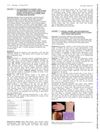
This case report details a child with a specific TNFAIP3 mutation manifesting as a severe SLE/SS phenotype, expanding the known phenotype for this genetic variant.
191 citations
,
October 2012 in “International Current Pharmaceutical Journal” This review discusses the potential uses, benefits, and challenges of solid lipid nanoparticles in drug delivery systems but presents no new experimental findings.
March 2018 in “International Society of Hair Restoration Surgery” This announcement outlines job opportunities at the Anderson Center for Hair and provides no clinical research findings.
 July 2024 in “Clinical Case Reports”
 In this case study, a 25-year-old presented with symptoms of lupus but tested negative for antinuclear antibodies, complicating diagnosis. The researchers emphasize that comprehensive diagnostic approaches, beyond ANA testing, are vital for effectively identifying and treating lupus nephritis to avoid serious outcomes.
28 citations
,
January 2023 in “Cell Transplantation” This study found that the Hy-Tissue Nanofat product isolates a significant number of proliferative nucleated cells and shows potential for regenerative medicine due to its rich content of adipose-derived stem cells and pluripotent MUSE cells.
May 2017 in “The journal of investigative dermatology/Journal of investigative dermatology” In this study, researchers found potential evidence of inducible skin-associated lymphoid tissue (iSALT) in alopecia areata patients undergoing topical immunotherapy, which may suggest an essential role in treatment efficacy.
 April 2018 in “Journal of Investigative Dermatology”
 The researchers reported that nicotinic acid normalized excessive sebaceous lipogenesis without affecting basal lipogenesis and suggested potential anti-acne benefits.
2 citations
,
November 1955 in “Archives of dermatology” In this report of a pediatric alopecia case, cortisone and ACTH gel treatments did not result in significant nail improvement, but there was considerable scalp hair regrowth.
This Special Issue in Nutrients investigates the nutritional strategies and outcomes in managing severe anorexia nervosa, with the aim of improving clinical practices for patients with serious or common physical conditions associated with the disease.
6 citations
,
December 2021 in “Journal of Cancer Research and Therapeutics” In this study, induction nab-paclitaxel plus cisplatin, combined with nimotuzumab and IMRT, followed by S-1 adjuvant chemotherapy, showed excellent survival benefits with tolerable toxicities for stage N3 nasopharyngeal carcinoma patients.

This study observed that nearly 70% of children with treatment-resistant alopecia areata had nail involvement, predominantly pitting, which was significantly linked to longer disease duration but not the severity of scalp hair loss.
 56 citations
,
December 2011 in “Steroids”
56 citations
,
December 2011 in “Steroids” This review discusses the genetics and variable phenotypic expression of nonclassic congenital adrenal hyperplasia, and reports no new clinical results; the authors call for further research on long-term health impacts and treatment strategies.