25 citations
,
March 2004 in “Regulatory Toxicology and Pharmacology” Using testosterone-stimulated weanling rats can effectively replace castrated rats for anti-androgen testing, reducing animal stress.
5 citations
,
June 2005 in “Journal of Clinical Oncology” This study found that paclitaxel poliglumex induces significantly less and milder alopecia compared with standard taxanes in ovarian and breast cancer patients.
 28 citations
,
February 2010 in “British journal of dermatology/British journal of dermatology, Supplement”
28 citations
,
February 2010 in “British journal of dermatology/British journal of dermatology, Supplement” This article reviews phenotypic variability linked to WNT10A nonsense mutations and does not present new research findings.
 3 citations
,
July 2021 in “Aesthetic Plastic Surgery”
3 citations
,
July 2021 in “Aesthetic Plastic Surgery” This case series observed that the combination of platelet-rich plasma and fat grafting improved hair quality and density in patients with non-scarring alopecia, with effects visible by 12 weeks and sustained up to one year.
April 2026 in “UNC Libraries” This case report describes a 49-year-old woman with metastatic adrenocortical carcinoma in the liver who experienced an abscopal effect after pulse electric field ablation, with PET/CT imaging showing complete resolution of three untreated lesions two months post-treatment.
January 2026 in “Dermatologic Therapy” In this study, photobiomodulation therapy applied twice weekly for 12 weeks significantly improved hair regrowth and quality of life in alopecia areata patients, with no noted side effects.
5 citations
,
January 2020 in “Skin Appendage Disorders” In this study, a water-soluble nail strengthener containing Pistacia lentiscus and hyaluronic acid significantly improved the appearance and firmness of brittle nails in both in vitro and clinical settings.
 6 citations
,
October 2018 in “Endocrinology”
6 citations
,
October 2018 in “Endocrinology” This study indicates that sheep prenatally androgenized with testosterone show wool fiber diameter changes that parallel the increased hair diameter in women with polycystic ovary syndrome.
 April 2023 in “Journal of Investigative Dermatology”
 This study found that PX-12 inhibited the NLRP3 inflammasome and reduced psoriasis-like symptoms in a mouse model, suggesting its potential as a treatment for psoriasis.
2 citations
,
May 2011 in “Journal of Clinical Oncology” This study found that paclitaxel poliglumex showed limited effectiveness and was relatively well tolerated in post-menopausal women with advanced NSCLC, suggesting further testing of this treatment may not be justified.
 October 2023 in “Facial Plastic Surgery”
 This article describes the PHAT technique for lip and facial rejuvenation but reports no new clinical findings; the technique aims to improve skin quality and enhance surgical outcomes.
 April 2018 in “Radiotherapy and Oncology”
 Prostaglandin helps regenerate hair follicles after radiation damage.
July 2026 in “Environmental Science & Technology” This study found that nanoplastics' aggregation behavior on human skin, influenced by factors like concentration, photoaging, and organic constituents, affects their penetration potential through sweat glands and hair follicles, highlighting potential dermal exposure risks.
 April 2024 in “JEADV. Journal of the European Academy of Dermatology and Venereology/Journal of the European Academy of Dermatology and Venereology”
 A new change in the WNT10A gene caused a condition leading to short hair growth in a Chinese family.
 159 citations
,
November 2007 in “American Journal of Pathology”
159 citations
,
November 2007 in “American Journal of Pathology” In this study, researchers found that substance P triggered premature catagen development and immune changes in human scalp hair follicles, providing a possible biological link between stress and hair loss conditions like telogen effluvium and alopecia areata.
 5 citations
,
January 2021 in “IEEE Access”
5 citations
,
January 2021 in “IEEE Access” In this study, researchers demonstrated that treating platelet rich plasma with microsecond pulsed electric fields effectively activates platelets and induces similar or higher growth factor release compared to traditional bovine thrombin, suggesting a potential clinical use that may be more cost-effective and practical.
 27 citations
,
September 1999 in “Journal of Investigative Dermatology”
27 citations
,
September 1999 in “Journal of Investigative Dermatology” This study found that protease nexin-1 mRNA is expressed in human dermal papilla cells and is downregulated by dihydrotestosterone in balding scalp, suggesting a role in male-pattern baldness progression.
 13 citations
,
November 2009 in “Journal of Dermatological Science”
13 citations
,
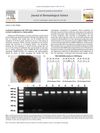
November 2009 in “Journal of Dermatological Science” This article discusses various dermatological studies cited by previous authors and reports no new clinical results.
June 2026 in “Case Reports in Dermatology” This case study reported that in a 67-year-old woman with Netherton syndrome, treatment with dupilumab improved skin inflammation and pruritus and was associated with significant improvements in hair growth and structure, including the resolution of "bamboo" hair.
3 citations
,
September 2024 in “The FASEB Journal” This review discusses the roles of dermal white adipose tissue in skin functions and pathology, underscoring its antibacterial activity and potential anti-fibrotic role, but reports no new experimental results.
14 citations
,
August 2014 in “The FASEB Journal” This study found that the catalytically inactive serine protease CAP1/Prss8 can still induce skin disorders in mice and is subject to inhibition by nexin-1, independent of its catalytic activity.

This study found that patient-reported outcomes revealed the persistence of neuropathy, insomnia, and nail changes in breast cancer patients beyond chemotherapy, emphasizing the importance of monitoring long-term adverse events.
5 citations
,
November 2001 in “Auris Nasus Larynx” This case report presents a rare instance of Winer's dilated pore in a 51-year-old female, emphasizing its pathological features and the need for accurate differential diagnosis to avoid misinterpreting it for more serious conditions.
May 2024 in “International journal of medicine and psychology.” In this study, combining transcranial electrical stimulation with bisphosphonate therapy in patients with postmenopausal osteoporosis resulted in a protective effect on bone collagen synthesis, as indicated by higher P1NP levels over 12 months, compared to bisphosphonates alone.
 July 2022 in “Journal of Investigative Dermatology”
 This study found that Substance P increased mitochondrial activity and biogenesis markers in cultured human scalp hair follicles, suggesting a novel link between stress-related neuropeptide signaling and hair follicle mitochondrial responses.
February 2026 in “Chemical Engineering Journal” This study found that a novel nano-engineered platform, PCA, significantly promoted hair regeneration in an androgenetic alopecia mouse model by enhancing angiogenesis and hair follicle stem cell proliferation, showing promise for future hair regrowth treatments.
 143 citations
,
September 1991 in “Archives of Dermatology”
143 citations
,
September 1991 in “Archives of Dermatology” In this study, patients with generalized pustular psoriasis were classified into subgroups to better understand the disease's variability and assist in treatment selection, highlighting the role of localized infections in triggering flares.
 April 2023 in “Journal of Investigative Dermatology”
 This study found that short-term NB-UVB treatment significantly reduced anxiety levels in psoriasis patients, but not depression.
 3 citations
,
March 2018 in “Journal of Continuing Education in Nursing”
3 citations
,
March 2018 in “Journal of Continuing Education in Nursing” This study found that a continuing education program significantly improved rural nurse practitioners' knowledge about assessing, diagnosing, and managing PCOS.
 5 citations
,
May 2019 in “Archives of Dermatological Research”
5 citations
,
May 2019 in “Archives of Dermatological Research” This study reported that narrowband UVB treatment significantly increased WNT7B, WNT10B, and TCF7L2 gene expression in lesional skin of psoriasis patients, suggesting these genes may play a role in psoriasis pathogenesis.