 November 2023 in “TẠP CHÍ KHOA HỌC TRƯỜNG ĐẠI HỌC QUỐC TẾ HỒNG BÀNG”
 This study isolated and identified three natural compounds—syringaresinol, mayuenolid, and ciwujiaton—from Leersia hexandra, a traditional liver treatment used in Huyện Tam Nông, Đồng Tháp, using advanced chromatography and spectroscopy techniques.
 March 2022 in “Institutional Repositories DataBase (IRDB)”
 Philippine stingless bee propolis may promote hair growth and fight cancer.

This research concluded that the novel hydrogel PlacMA, derived from human placenta and curable by visible light, shows promise for cell culture and tissue engineering applications due to its tunable properties.
 April 2018 in “Journal of Ayurvedic and herbal medicine”
 This study highlights the role of bioinformatics and in-silico studies for identifying drug targets, specifically in herbal drugs, using software and modern techniques to analyze data and model disease pathways before later-stage in vivo and in vitro testing.
 January 2017 in “Rasayan journal of Chemistry”
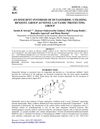
 This paper describes a new scalable synthesis method for Dutasteride, highlighting its potential for large-scale commercial production.

This study found that compounds isolated from Indian medicinal plants showed good to moderate hair growth activity in vivo compared to minoxidil.
January 2019 in “Columbia Academic Commons (Columbia University)” This study used cryo-electron microscopy to reveal the structural mechanisms by which TRPV6 and TRPV3 ion channels open, close, and are regulated, providing insights for potential future research.
12 citations
,
January 1934 in “Proceedings of the Royal Society of London Series B Containing Papers of a Biological Character” This study found that the X-ray patterns of stretched mammalian hair (β-keratin) are similar to those of natural silk (fibrion), suggesting a similar elastic mechanism involving reversible intra-molecular transformations.
 December 2025 in “Fullerene Journal of Chemistry”
 This study investigated the potential of nutmeg-derived phytochemicals as anti-alopecia agents using molecular docking and simulations, finding that geranylgeraniol exhibited significant binding stability and potential efficacy against androgenetic alopecia comparable to finasteride and superior to minoxidil.
124 citations
,
January 2009 This article provides an overview of crystallization processes, challenges, and applications, discussing various techniques and examples, but it reports no new experimental findings.
56 citations
,
April 2019 in “The Plant Journal” This study found that CNGC 6, CNGC 9, and CNGC 14 are crucial for maintaining calcium oscillations necessary for normal root hair growth in plants, with mutations leading to defects like swelling and bursting.
1 citations
,
January 2007 in “AIP conference proceedings” This study used phase contrast hard x-ray microscopy to capture detailed images of healthy human hair, revealing distinct structures such as the medulla, cortex, and cuticular layer.
1 citations
,
January 2017 in “Science” In this study, researchers used iron ion coordination to successfully create a molecular knot with three organic ligand strands and eight crossings.
This study reports that a specific transporter protein in Staphylococcus hominis is responsible for transporting a malodour precursor, thereby playing a key role in human body odor production.
January 2025 in “SSRN Electronic Journal”  1 citations
,
September 1984 in “Journal of Biological Education”
1 citations
,
September 1984 in “Journal of Biological Education” Plants change their growth in response to shade based on light signals detected by phytochrome.
 September 1984 in “Journal of Biological Education”
 Human hair growth involves active, resting, and intermediate phases, and examining plucked hairs can teach students about hair biology and diseases.
 August 2025 in “ChemPhotoChem”
 This study demonstrated that CD anisotropy effectively distinguishes between two polymorphs of finasteride with nearly identical electronic circular dichroism spectra, using imaging and simulated spectra to uncover unique signatures that traditional methods miss.
April 2020 in “International Journal of Cosmetic Science” This study found that improved protein extraction methods enhanced the resolution of hair proteins on gels, but differences in protein abundance between curly and straight Japanese women’s hair were minimal and unlikely to affect hair structure.
This study found that the NuMA protein's microtubule-binding domain is essential for proper spindle orientation and differentiation in keratinocytes, affecting skin and hair development in mice.
65 citations
,
May 2006 in “Journal of Structural Biology” This study concluded that the curliness of human hair, regardless of ethnicity, originates from the inhomogeneous internal nanostructure due to differences in the distribution of two types of cortices.
17 citations
,
July 2021 in “Polymers” This study found that treating chitin from crab shells with ultrasonication at specific conditions effectively produced fine nanofibers with a high yield.
7 citations
,
February 2020 in “Analytical and Bioanalytical Chemistry” 10 citations
,
September 2022 in “Journal of Composites Science” In this study, cricket-derived chitin successfully converted to nanochitin, which demonstrated improved physical properties such as higher transmittance and greater modulus compared to crab shell nanochitin.
 December 2018 in “Neuroradiology”
 MRI helps distinguish between pituitary adenomas and craniopharyngiomas, guides treatment for pediatric CNS tumors, and assesses rhinocerebral mucormycosis with a high mortality rate in transplanted patients.
6 citations
,
January 2018 in “Advances in experimental medicine and biology” 9 citations
,
September 2022 in “Frontiers in Physics” This study found that Mueller Matrix microscopy can accurately identify, detect, and evaluate hair follicles in mouse skin tissue, suggesting its potential for skin structure research and dermatological applications.
January 1991 in “Acta Dermato Venereologica” This article describes a new method for staining hair fibers that visualizes keratin filaments without the need for OsO4 fixation or sulfur bond breakage, but it provides no new experimental results beyond the method itself.
 474 citations
,
January 2012 in “Chemistry & biology”
474 citations
,
January 2012 in “Chemistry & biology” This review discusses the discovery and potential therapeutic uses of proteasome inhibitors across various diseases, including cancer and autoimmune conditions, but does not present new clinical data.
 421 citations
,
January 2015 in “Chemical Society Reviews”
421 citations
,
January 2015 in “Chemical Society Reviews” This review discusses recent advances in surface modification and endothelialization of biomaterials for vascular grafts, highlighting promising methods like gene engineering and targeting ligand immobilization to improve clinical outcomes.