58 citations
,
November 1969 in “British Journal of Dermatology” This report describes two patients with ichthyosis linearis circumflexa exhibiting symptoms resembling Netherton's disease, noting multiple hair shaft defects and discussing a possible connection to aminoaciduria.
 3 citations
,
November 2021 in “Applied Microscopy”
3 citations
,
November 2021 in “Applied Microscopy” This article presents a comprehensive overview of hair microscopy techniques and their diagnostic potential for systemic and cutaneous disorders, emphasizing its usefulness in resource-limited settings and highlighting the underutilization of this non-invasive method due to lack of awareness.
72 citations
,
March 2023 in “Biomolecules” This study reviewed the use of dupilumab, beyond its approved indications for atopic dermatitis and prurigo nodularis, and found effective treatment reports for various chronic inflammatory skin diseases such as bullous autoimmune diseases, eczema, and alopecia areata, highlighting its broad potential in dermatology.
118 citations
,
January 2004 in “European Journal of Cell Biology” Balanced protease activity is crucial for healthy skin and hair development.
 30 citations
,
May 2004 in “Journal der Deutschen Dermatologischen Gesellschaft”
30 citations
,
May 2004 in “Journal der Deutschen Dermatologischen Gesellschaft” This review proposes a classification system for childhood hair loss based on clinical appearance, age of onset, and associated symptoms, but reports no new clinical results.
 147 citations
,
January 2003 in “American journal of clinical dermatology”
147 citations
,
January 2003 in “American journal of clinical dermatology” This review discusses various forms of ichthyosis, including genetic and acquired types, detailing their characteristics, causes, and potential management strategies, but reports no new clinical results.
January 2000 in “The Mouseion at the JAXlibrary (Jackson Laboratory)” This study identified a new mouse mutation associated with noninflammatory proliferative skin disease and hair abnormalities, drawing parallels to human conditions like Netherton's syndrome and monilethrix.
30 citations
,
February 2015 in “Anais Brasileiros de Dermatologia” This case report describes a 4-year-old boy with Netherton syndrome, where trichoscopy importantly aided diagnosis and is recommended for all children with erythroderma.
 1 citations
,
January 2013 in “Elsevier eBooks”
1 citations
,
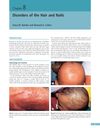
January 2013 in “Elsevier eBooks” The document reviews various hair and nail disorders, their causes, and treatments, emphasizing the need for proper diagnosis and the link between nail changes and systemic diseases.
5 citations
,
January 2011 in “Archives de Pédiatrie” This study illustrates the severe neonatal clinical presentation of Netherton syndrome, which can be fatal despite intensive care, highlighting a specific homozygous mutation (c.1431-12G > A) associated with lethal cases.
 23 citations
,
November 2001 in “Archives of Dermatology”
23 citations
,
November 2001 in “Archives of Dermatology” This review discusses recent advances in the genetic understanding of inherited hair and nail disorders and reports no new clinical results.
 50 citations
,
March 2021 in “Journal of investigational allergology & clinical immunology”
50 citations
,
March 2021 in “Journal of investigational allergology & clinical immunology” This review examines existing research and clinical trials on the use of dupilumab for various skin, respiratory, and gastrointestinal disorders, but it reports no new clinical findings.
9 citations
,
August 2021 in “Journal of clinical medicine” This review discusses pili torti, a rare hair shaft disorder, and reports no new clinical results; it emphasizes the need to investigate underlying conditions in affected individuals.
 6 citations
,
November 1988 in “Journal of the American Academy of Dermatology”
6 citations
,
November 1988 in “Journal of the American Academy of Dermatology” The document concludes that hair analysis is not good for assessing nutrition but can detect long-term heavy metal exposure.
 44 citations
,
August 2008 in “Archives of Dermatology”
44 citations
,
August 2008 in “Archives of Dermatology” This abstract provides no results; it is a website notification about cookies and general access to JAMA content.
37 citations
,
June 2000 in “Experimental dermatology” This study investigated a spontaneous mutation in mice resulting in hair abnormalities and elevated IgE levels, which resembles human Netherton's syndrome and monilethrix.
 36 citations
,
August 2018 in “Dermatologic Clinics”
36 citations
,
August 2018 in “Dermatologic Clinics” This article reviews various hair abnormalities observable through trichoscopy in conditions like monilethrix, trichorrhexis nodosa, and ectodermal dysplasias, with no new clinical findings reported.
 January 2010 in “The Year book of perinatal/neonatal medicine”
 Early skin biopsy helps diagnose and manage severe skin conditions in babies.
 January 2008 in “Journal of The American Academy of Dermatology”
 Trichoscopy is a helpful and quick method to identify different types of hair loss in women.
 November 2009 in “Medical & surgical dermatology”
 This study found that haploinsufficiency of SPINK5 can lead to Netherton syndrome when a single null mutation combines with homozygous G1258A polymorphisms, suggesting it acts as a genuine mutation affecting LEKTI function.
12 citations
,
October 1996 in “Dermatologic clinics” This review outlines the diagnostic criteria for congenital and hereditary hair shaft abnormalities and emphasizes the need to understand the weathering process in assessing these disorders.
 87 citations
,
January 2017 in “PLoS Genetics”
87 citations
,
January 2017 in “PLoS Genetics” This study found that simultaneously inhibiting both KLK5 and KLK7 proteases completely rescued skin barrier defects in a mouse model of Netherton syndrome, suggesting both should be therapeutic targets.
 42 citations
,
January 2007 in “Pediatric dermatology”
42 citations
,
January 2007 in “Pediatric dermatology” This report describes an 11-year-old boy with Netherton syndrome who developed Cushing syndrome after using low-potency hydrocortisone ointment extensively, highlighting caution with long-term topical treatments in such conditions.
 April 2017 in “IOSR journal of dental and medical sciences”
 This abstract discusses Netherton Syndrome, a genetic disorder with a characteristic triad of symptoms caused by SPINK5 gene mutation, and reports no new clinical findings or treatment advances.
 November 2023 in “Global Medical Genetics”
 This case report describes a 1-month-old male infant with Netherton syndrome, characterized by severe hypernatremia, skin and scalp issues, highlighting the syndrome's complications, including growth retardation and infection risks in early life.
 9 citations
,
March 2018 in “European journal of dermatology/EJD. European journal of dermatology”
9 citations
,
March 2018 in “European journal of dermatology/EJD. European journal of dermatology” This study in a Pakistani family identified a novel ST14 gene variant as the likely genetic cause of autosomal recessive ichthyosis with hypotrichosis syndrome.
 3 citations
,
January 2020 in “Acta Dermato Venereologica”
3 citations
,
January 2020 in “Acta Dermato Venereologica” This clinical case report presents photographs of a patient with Netherton syndrome, highlighting severe inflammatory vegetative lesions on the pubic area and umbilicus.
 September 2025 in “OBM Genetics”
 This case report describes a 9-month-old male infant with Netherton syndrome, highlighting the importance of early diagnosis and treatment initiation for better management of symptoms and prevention of misdiagnosis.
This study presents a rare instance of Netherton syndrome diagnosed incidentally in siblings of consanguineous parents, initially misdiagnosed as other skin conditions, emphasizing the need for careful evaluation in chronic skin cases to prevent misdiagnosis.
 9 citations
,
April 2023 in “Frontiers in immunology”
9 citations
,
April 2023 in “Frontiers in immunology” This review discusses the current and emerging methods for profiling skin microbes to advance our understanding of the microbiome in skin disease, but it reports no new clinical findings.