 April 2017 in “Journal of Investigative Dermatology”
 This case study reports that a heterozygous missense GJA1 mutation, p.Gly138Ser, in a 2-year-old boy with oculodentodigital syndrome primarily resulted in syndactyly, fifth finger hypoplasia, and hypotrichosis, without neurological or craniofacial abnormalities.
 September 2022 in “Frontiers in genetics”
 This case study reports a new LAMB3 mutation linked to junctional epidermolysis bullosa with severe urinary tract stenosis, outlining treatment challenges and expanding knowledge of EB-related urological complications.
3 citations
,
June 2002 in “PubMed” This case report describes the diagnosis of Netherton's syndrome in two young sisters, attributing their serious erythrodermia, poor hair growth, and atopic conditions to this hereditary condition.
 April 2023 in “Journal of Investigative Dermatology”
 This study found that in a mouse model of Gorlin syndrome, constitutive activation of signaling in dermal cells led to abnormal follicular growth, indicating non-epidermal factors may contribute to the disease.
33 citations
,
June 2009 in “Journal of Cutaneous Pathology” This article discusses the cutaneous side effects of erlotinib, an EGFR inhibitor, in a patient with non-small cell lung cancer, reporting nonscarring alopecia and indicative scalp biopsy findings.
 54 citations
,
January 2016 in “Cell reports”
54 citations
,
January 2016 in “Cell reports” This study found that different epidermal stem cell populations contribute to the formation of various skin tumors and new hair follicles following β-catenin activation in the adult epidermis.
62 citations
,
October 1999 in “Journal of Investigative Dermatology” New mutations in hair keratin genes can change hair structure and cause monilethrix, with nail issues more common in certain gene mutations.
2 citations
,
May 2020 in “The journal of investigative dermatology/Journal of investigative dermatology” This study describes a family where a TP63 mutation was linked with prominent alopecia and mild ectodermal dysplasia features.
5 citations
,
June 2008 in “British Journal of Dermatology”  17 citations
,
November 2012 in “Journal of Investigative Dermatology”
17 citations
,
November 2012 in “Journal of Investigative Dermatology” This paper reviews the genetic aspects of hair disorders and suggests that understanding these genes could advance treatment and diagnosis; it reports no new experimental findings.
2 citations
,
May 2023 in “Indian Journal of Dermatology Venereology and Leprology” A new genetic mutation in the CAST gene may link PLACK syndrome to alopecia areata.
In this study, researchers identified the c.296C>T (p.T99I) variant in the KRT32 gene, which co-segregates with loose anagen hair syndrome, and found it decreases binding affinity to KRT82, potentially weakening hair anchorage.
7 citations
,
January 2020 in “Dermatology online journal” In this case report, adult-onset porokeratotic eccrine ostial and dermal duct nevus improved with topical tazarotene treatment, as evidenced by dermatoscopic images.
35 citations
,
May 2006 in “Journal of Investigative Dermatology” Monilethrix involves multiple genes affecting hair structure, including DSG4 mutations.
36 citations
,
January 2016 in “The journal of investigative dermatology/Journal of investigative dermatology” This article reviews the connection between PI3K-AKT-mTOR pathway mutations and heritable skin diseases characterized by tissue overgrowth, but it reports no new clinical results.
61 citations
,
January 2011 in “PloS one” In this study, researchers found that Notch signaling is crucial for late-stage epidermal differentiation and postnatal hair cycle homeostasis by regulating hair follicle stem cell proliferation and differentiation.
 1 citations
,
May 2023 in “Frontiers in endocrinology”
1 citations
,
May 2023 in “Frontiers in endocrinology” The researchers reported that the novel MBTPS2 variant p.Glu172Asp found in a male proband is likely pathogenic, consistent with osteogenesis imperfecta symptoms and molecular signatures, including disrupted fatty acid metabolism and collagen production.
This study suggests that the ANE syndrome mutation in yeast Nop4, analogous to human RBM28, disrupts protein folding and protein-protein interactions, contributing to ribosomal dysfunction.
June 2020 in “The journal of investigative dermatology/Journal of investigative dermatology” This study found that rare damaging variants in the KRT82 gene, which affect hair shaft integrity, may contribute to the risk of alopecia areata.
1 citations
,
January 2025 in “Journal of Cosmetic Dermatology” This study found that increased ACE2 expression, prompted by mechanical stretch, promotes skin regeneration and reduces dermal thinning during tissue expansion by enhancing collagen synthesis, suggesting ACE2's potential to improve clinical outcomes in reconstructive surgery settings.
5 citations
,
January 2016 in “International Journal of Trichology” This case report describes two patients who experienced loose anagen hairs and pili torti, resulting in nonscarring alopecia, potentially linked to erlotinib treatment for solid tumors.
 6 citations
,
August 2012 in “The Journal of Pediatrics”
6 citations
,
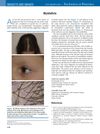
August 2012 in “The Journal of Pediatrics” This case report describes a 12-year-old girl diagnosed with monilethrix, characterized by fragile, beaded hair shafts, with no effective treatment currently available.
 December 2023 in “American journal of medical genetics. Part A”
 In this study, researchers identified compound heterozygous variants in the MBTPS1 gene associated with ectodermal dysplasia features in a 14-year-old female, broadening the known disorder spectrum linked to these genetic mutations.
February 2026 in “Pediatric Dermatology”  12 citations
,
December 2020 in “Archives animal breeding/Archiv für Tierzucht”
12 citations
,
December 2020 in “Archives animal breeding/Archiv für Tierzucht” This study found that EDA and EDAR are expressed throughout cashmere goat fetal development and play a critical role in hair follicle formation by influencing gene expression in fibroblasts and epithelial cells.
66 citations
,
December 1999 in “Journal of Investigative Dermatology” New mutations in the hairless gene may cause hair loss and affect bone development.
208 citations
,
November 2000 in “Development” This study found that while Eda and Edar proteins interact in vitro, their roles in dental development differ, with downless mutant mice showing distinct tooth defects compared to tabby mutants.
33 citations
,
August 2000 in “Experimental Cell Research” 10 citations
,
January 2009 This study suggests that collagen XVIII and its variant endostatin may play a role in regulating Wnt-signaling in hair follicles, affecting wound healing and skeletal development in mice.
25 citations
,
October 2007 in “Developmental biology” In this study, transgenic mice altered to express a Clim-inhibiting molecule under a keratin promoter showed corneal degradation and hair follicle failure, highlighting Clim proteins' role in maintaining these tissues.