 44 citations
,
September 2014 in “Cell Death & Differentiation”
44 citations
,
September 2014 in “Cell Death & Differentiation” This review discusses the role of tumor suppressors in controlling tumor-associated inflammation and suggests that targeting this inflammation may counteract the effects of tumor suppressor loss.
 211 citations
,
May 2013 in “Journal of Nutrition Health & Aging”
211 citations
,
May 2013 in “Journal of Nutrition Health & Aging” This study found that while MK-0773 significantly increased lean body mass in sarcopenic frail elderly women, it did not significantly improve muscle strength or physical function compared to placebo.
68 citations
,
August 2009 in “American Journal of Medical Genetics Part A” This study systematically reviewed clinical findings in trichothiodystrophy patients and suggested a new clinico-genetic classification to help better understand the ichthyotic phenotype and its management.
 April 2024 in “Journal of endocrinological investigation”
 This study found that topical minoxidil significantly enhanced facial hair growth in transgender individuals assigned female at birth undergoing gender affirming hormone therapy, with improvements most notable after six months of use.
July 2024 in “Journal of Investigative Dermatology” Certain substances can help skin cells become anti-inflammatory, aiding in tissue repair.
 123 citations
,
November 2012 in “Stem cells”
123 citations
,
November 2012 in “Stem cells” This study reports that miR-302 promotes pluripotency by inhibiting NR2F2 and indirectly regulating OCT4 in stem cells, enhancing reprogramming efficiency when added to traditional factors.
3 citations
,
December 2015 in “Musculoskeletal care” This study found that many patients taking methotrexate for inflammatory arthritis tolerate significant side effects, but adherence to the medication still varies among individuals.
4 citations
,
February 2024 in “Poultry Science” This study found that the miR-140-y-TCF4 axis regulates the proliferation of goose embryonic dermal fibroblast cells by affecting the Wnt signaling pathway, highlighting its role as a dynamic regulator during skin and feather follicle development.
5 citations
,
October 2021 in “American Journal of Medical Genetics Part A” This case report identifies a novel maternally inherited MBTPS2 variant associated with an expanded phenotypic spectrum of BRESHECK syndrome, including cytopenias, bone marrow fibrosis, and chronic diarrhea.
 1 citations
,
May 2021 in “Annals of the rheumatic diseases”
1 citations
,
May 2021 in “Annals of the rheumatic diseases” This study found that tofacitinib may be effective for treating pediatric rheumatic diseases, with especially promising results in patients with autoinflammatory diseases, arthritis and alopecia, and juvenile dermatomyositis.
February 2016 in “PubMed” This review discusses testosterone replacement therapy, highlighting that most studies report no increased myocardial infarction risk when the therapy is properly administered with controlled hormone levels; it calls for careful consideration despite insurance coverage challenges.
15 citations
,
May 1987 in “Fundamental and applied toxicology” This study found that SMR-2 and SMR-6, analogs of retinoic acid and retinol, were approximately 100 times more toxic than retinoic acid in mice, inducing hypervitaminosis A and affecting various organs and tissues.
44 citations
,
November 2022 in “Frontiers in Immunology” This review discusses the role of toll-like receptors in cancer treatment, providing an overview of pre-clinical studies and clinical trials on TLR-targeted therapies and noting the challenges and future prospects.
November 2025 in “The Journal of Immunology” In this study, researchers observed elevated levels of epidermal γδ T cells, keratinocytes, and an upregulation of the BST2 gene among immune cells in C3H/HeJ mice with alopecia areata, suggesting a potential role in disease pathogenesis.
 4 citations
,
November 2022 in “Frontiers in Immunology”
4 citations
,
November 2022 in “Frontiers in Immunology” This review discusses the roles of resident macrophages in the liver and lung, emphasizing their unique contributions to maintaining tissue homeostasis and the interface between circulation and external environments, but reports no new findings.
January 2014 in “eScholarship (California Digital Library)” In this study, researchers observed that TLR3 and scavenger receptors play key roles in skin barrier repair following UVB damage, contributing to our understanding of cellular responses to skin injury.
13 citations
,
August 2015 in “Oncology Reports” This study found that human adipose tissue-derived mesenchymal stem cells inhibited A549 tumor growth but significantly promoted HT-29 tumor growth in mouse models, highlighting opposing effects depending on the cancer type.
207 citations
,
July 2006 in “Development” This study identified a novel MTS24-positive murine keratinocyte population with increased colony-forming ability, suggesting these cells may serve as a new reservoir of proliferative progenitor or stem cells in hair follicles.
April 2019 in “Journal of Investigative Dermatology” This study demonstrates that DHT-induced lipid synthesis in sebocytes involves the mTOR pathway, suggesting mTOR inhibitors may help modulate androgen-dependent sebum overproduction.
15 citations
,
August 2013 in “Gene” This study found that the MTHFR gene C677T mutation appears to be a susceptibility factor for alopecia areata in the Turkish population.
 1 citations
,
June 2023 in “Advances in therapy”
1 citations
,
June 2023 in “Advances in therapy” In a real-world registry study, ripretinib showed effectiveness with a median progression-free survival of 7.70 months and a tolerable safety profile in Chinese patients using it as a fourth-line treatment for advanced GIST, particularly benefiting those with non-gastric tumors.
 67 citations
,
August 2007 in “American Journal of Pathology”
67 citations
,
August 2007 in “American Journal of Pathology” This study found that overexpression of the mineralocorticoid receptor in a mouse model led to premature epidermal barrier development, keratinocyte apoptosis, and postnatal alopecia, indicating new roles for MR signaling in skin physiology.
 16 citations
,
February 2019 in “Pediatric Blood & Cancer”
16 citations
,
February 2019 in “Pediatric Blood & Cancer” In this study, 96% of children with CNS tumors receiving MAPK and mTOR inhibitors experienced common, treatable skin reactions, occasionally requiring therapy adjustments.
13 citations
,
August 2000 in “Blood” This article discusses the evaluation of minimal residual disease in childhood acute lymphoblastic leukemia using molecular methods and reports no new findings.
 10 citations
,
August 2016 in “Oxford Medical Case Reports”
10 citations
,
August 2016 in “Oxford Medical Case Reports” This case report describes the development of halo naevi, vitiligo, and diffuse alopecia areata in a 33-year-old woman undergoing tocilizumab therapy, suggesting a link between these conditions and cellular and humoral immune factors.
May 2010 in “OPAL (Open@LaTrobe) (La Trobe University)” This research discusses potential cancer vaccine strategies using cell-based and DNA vector-based approaches, and suggests targeting the v3 splice variant of thioredoxin reductase 1 to inhibit cancer cell motility and metastasis formation.
 133 citations
,
May 2016 in “Cell Host & Microbe”
133 citations
,
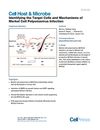
May 2016 in “Cell Host & Microbe” In this study, human dermal fibroblasts were identified as natural host cells that support productive Merkel cell polyomavirus infection, and the MEK antagonist trametinib was introduced as an effective inhibitor to control the virus.
9 citations
,
May 2021 in “Frontiers in aging neuroscience” This study found that long-term use of triterpenoids from Ganoderma lucidum may improve brain function and alleviate aging-related issues in normal and Alzheimer's mouse models.
 July 2026 in “International Journal of Molecular Sciences”
 This study found that TSG-enriched Polygonum multiflorum extract, optimized through microwave-assisted and chromatographic methods, promotes hair regrowth in a mouse model of androgenetic alopecia via 5α-reductase inhibition and Wnt/β-catenin pathway activation, suggesting its potential as a natural treatment.

This study found that γδTregs can prevent and treat alopecia areata in a mouse model with human scalp transplants, suggesting potential for cell-based therapies in autoimmune diseases like alopecia.