 15 citations
,
January 2014 in “BioMed Research International”
15 citations
,
January 2014 in “BioMed Research International” This review discusses the concept of drug repositioning and highlights fragmin and protamine as emerging biomaterials for tissue engineering and regenerative medicine, but it reports no new clinical results.

In this case report, a 25-year-old female with Mixed Connective Tissue Disease presented unusual symptoms in a specific geographical region, prompting clinicians to approach diagnosis and management with caution due to potential severe complications such as pulmonary hypertension and renal crisis.
13 citations
,
July 2019 in “Chemical papers/Chemické zvesti” This study developed and optimized a molecularly imprinted polymer-based electrochemical sensor, demonstrating its ability to detect minoxidil with high sensitivity and selectivity at concentrations as low as 0.3 nM, and successfully applied it for minoxidil measurement in various real sample matrices.
 6 citations
,
April 2025 in “Communications Biology”
6 citations
,
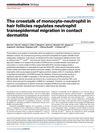
April 2025 in “Communications Biology” In this study, researchers used a murine model of irritant contact dermatitis to reveal that hair follicle regions serve as key sites for neutrophil transepidermal migration, which requires MMP-9 expression stimulated by dermal monocytes.
1 citations
,
July 2024 in “Journal of Investigative Dermatology” Immune cells boost stem cell activity in hairy moles, causing more hair growth.
January 2025 in “Dermatology Research and Practice” In this research, RNA expression analysis of scalp biopsies from lichen planopilaris patients revealed changes in specific genes after treatments with hydroxychloroquine, narrow band UVB, or low level laser light therapy, suggesting potential biomarkers and implicating M2 macrophages in the disease's immunopathogenesis.
5 citations
,
January 2015 in “Case reports in medicine” In this case report, a novel missense mutation c.1360G>C (p.Ala454Pro) in the MBTPS2 gene was identified in a boy with typical IFAP syndrome and severe atopic features, although no phenotype/genotype correlation was established.
 January 2026 in “International Journal of Women s Health”
 This study found that a nomogram prediction model based on clinical characteristics, bone metabolism, and ovarian function can effectively predict the treatment response to long-acting GnRHa in girls with idiopathic central precocious puberty.
 January 2025 in “HemaSphere”
 This review discusses the implications of renaming myelodysplastic syndromes as "myelodysplastic neoplasms" and argues that the "low-risk" label may misrepresent patient experiences and hinder research.
 6 citations
,
July 2015 in “European Journal of Dermatology”
6 citations
,
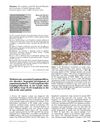
July 2015 in “European Journal of Dermatology” Stopping methotrexate might reverse lymphoma-like conditions in some patients.
 May 2015 in “Journal of The American Academy of Dermatology”
 Mycophenolate mofetil may improve symptoms and stop hair loss in Lichen planopilaris, but more research is needed.
 March 1998 in “Journal of dermatological science”
 Protease Nexin-1 is found in human hair growth cells and is affected by male hormones.
 September 2025 in “Medical Materials Research”
 This review explores the recent developments and diverse applications of microneedles in drug delivery and diagnostic platforms but reports no new clinical results.
March 2022 in “JAAD case reports” A man had a non-cancerous, fast-growing skin lump on his arm that was removed with surgery.
 April 2018 in “The journal of investigative dermatology/Journal of investigative dermatology”
 This study suggests that mitochondrial dysfunction might contribute to the pathogenesis of Lichen planopilaris by triggering a metabolic shift that leads to chronic inflammation and hair follicle damage.
 1 citations
,
February 2017 in “The American journal of dermatopathology/American journal of dermatopathology”
1 citations
,
February 2017 in “The American journal of dermatopathology/American journal of dermatopathology” This case report presented a 52-year-old man with cutaneous focal mucinosis, exhibiting rare follicular induction of the epidermis, underscoring the importance of recognizing this association in differential diagnoses.
19 citations
,
October 2016 in “Nutrition in clinical practice” This article provides guidelines by ASPEN for managing parenteral nutrition shortages but reports no new clinical findings.
 July 2022 in “The journal of investigative dermatology/Journal of investigative dermatology”
 This study found that inhibiting mTORC1 activity with rapamycin significantly increased melanin production and extended hair growth phase in human hair follicles, suggesting potential for managing hair growth and pigmentation disorders.
 12 citations
,
August 2022 in “Journal of Controlled Release”
12 citations
,
August 2022 in “Journal of Controlled Release” In this study, a microneedle patch containing conditioned media from hypoxia-pretreated stem cells enhanced hair regeneration in an androgenetic alopecia mouse model by boosting perifollicular vascularization and hair follicle stem cell activation compared to minoxidil.
 6 citations
,
August 2020 in “JCRPE”
6 citations
,
August 2020 in “JCRPE” This report presents a case of familial male-limited precocious puberty with a novel LHCGR gene mutation, where a boy responded well to treatment with bicalutamide and anastrozole.
 April 2023 in “The journal of investigative dermatology/Journal of investigative dermatology”
 This study found that inhibiting the Mitochondrial Pyruvate Carrier in human hair follicles ex vivo activated the integrated stress response, affecting cell proliferation and metabolism.
 3 citations
,
May 2022 in “The journal of investigative dermatology/Journal of investigative dermatology”
3 citations
,
May 2022 in “The journal of investigative dermatology/Journal of investigative dermatology” In this study, researchers found that skin pigmentation alterations in a mouse model of Carney complex may be caused by specific dermal fibroblasts promoting melanogenic signaling.
 April 2024 in “AAPS PharmSciTech”
 New microneedle method improves hair regrowth treatment delivery.
58 citations
,
November 1969 in “British Journal of Dermatology” This report describes two patients with ichthyosis linearis circumflexa exhibiting symptoms resembling Netherton's disease, noting multiple hair shaft defects and discussing a possible connection to aminoaciduria.
5 citations
,
December 2016 in “Microscopy Research and Technique” This study suggests that prenatal infusion of epidermal neural crest stem cells may improve certain neural markers and reduce cortical injury in a mouse model of methylazoxymethanol-induced malformations.
 14 citations
,
January 2020 in “International Journal of Biological Sciences”
14 citations
,
January 2020 in “International Journal of Biological Sciences” This study explored the use of multiphoton microscopy to monitor changes in tumors and surrounding tissues in breast cancer patients undergoing neoadjuvant chemotherapy, finding it may effectively detect treatment response at cellular levels without using exogenous contrast agents.
 4 citations
,
January 2014 in “Indian dermatology online journal”
4 citations
,
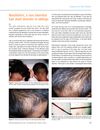
January 2014 in “Indian dermatology online journal” This article discusses the genetic hair disorder monilethrix, characterized by beaded, fragile hair due to defective keratin genes, and reports no effective treatment currently available; variability in severity was noted among affected siblings.
3 citations
,
December 2023 in “Pain Medicine” This case report described how peripheral nerve stimulation provided significant pain relief and reversal of dermatological symptoms for a female patient with complex regional pain syndrome after conventional treatments failed.
 12 citations
,
April 2025 in “Discover Pharmaceutical Sciences”
12 citations
,
April 2025 in “Discover Pharmaceutical Sciences” This review examines microneedle patches for drug delivery, detailing their designs, materials, manufacturing methods, and potential advantages, but reports no new clinical results.
 January 2023 in “Indian dermatology online journal”
 This case report discusses a 15-year-old boy with pachyonychia congenita, identifying a keratin 17 gene mutation, and highlights the need for a national registry and more accessible genetic testing in India.