November 2025 in “OPAL (Open@LaTrobe) (La Trobe University)” In this study, researchers developed a hierarchically engineered microreactor that effectively combats infected wounds by releasing antimicrobials at acidic sites, eradicating MRSA while avoiding resistance, and enhancing tissue repair through immune system modulation.
 46 citations
,
January 2020 in “Research”
46 citations
,
January 2020 in “Research” This review discusses the design, properties, and potential applications of smart microneedles, with no new clinical results presented.
10 citations
,
June 2023 in “Preprints.org” This review discusses transdermal drug delivery using hydrogel-forming microneedles and highlights their potential and challenges for clinical application, but it reports no new clinical findings.
In this study, researchers developed a photocurable polyurethane resin for 3D printing, creating high-resolution elastomeric microwell arrays that effectively promote uniform spheroid formation and growth of A549 cells, which could aid in disease modeling and organoid research.
18 citations
,
December 2022 in “Frontiers in Bioengineering and Biotechnology” This minireview summarizes current strategies using superwettable bio-interfaces for wound care, focusing on managing biofluids, and offers insights for designing advanced materials in this field, but reports no new clinical results.
2 citations
,
July 2025 in “Analytical Chemistry” This study reported the development of a workflow that combines SIMS and X-ray elemental mapping techniques for multimodal imaging at the single cell level, successfully applied to visualize elements, metals, and lipids in porcine skin without loss or delocalization.
6 citations
,
June 2024 in “Biofabrication” This study used digital-light-processing bioprinting to create a 3D skin-on-a-chip model with a miniaturized vascular network to closely study immune cell interactions similar to real human skin, demonstrating the potential to analyze immune-T cell trafficking influenced by skin signals.
July 2026 in “Organoid Research” This review focuses on hydrogel microsphere-mediated strategies to improve organoid culture by addressing deficiencies in extracellular matrix organization, potentially enhancing the physiological accuracy and clinical translatability of osteomuscular in vitro models as reported in this study.
28 citations
,
October 2023 in “Trends in biotechnology” 7 citations
,
December 2024 in “International Journal of Pharmaceutics” In this study, researchers developed a new method for producing dissolving microneedle array patches containing mesoporous silica nanoparticles, successfully confirming nanoparticle deposition and release in both ex vivo and in vivo models.
April 2026 in “Biomaterials” November 2025 in “ACS Nano” This study reported the development of a pH-responsive microreactor that effectively targets infections by eradicating over 99.9% of MRSA and reprogramming the immune response to promote healing, achieving complete infection clearance and tissue regeneration in a 7-day period.
165 citations
,
May 2023 in “Science Advances” In this study, the researchers developed a living microecological hydrogel containing Chlorella and Bacillus subtilis that showed potential in promoting the healing of infected diabetic wounds by providing continuous oxygen delivery and anti-infective properties.
August 2026 in “Acta Biomaterialia” February 2023 in “Default Digital Object Group” This study demonstrated that a single multimode fiber can be used for single-shot wide-field reflectance imaging, achieving high correlation with the ground truth and enabling real-time microendoscopy at up to 180 frames per second.
February 2026 in “Advanced Healthcare Materials” This study proposes a metal-organic gel-encapsulated microneedle system with antibacterial, anti-inflammatory, and pro-angiogenic properties for treating infected wounds, demonstrating potential for precise and adaptive management by targeting various stages of wound healing.
22 citations
,
November 2023 in “Molecules” This review focuses on recent advances in smart responsive polymer microneedles, which offer precise, on-demand drug delivery triggered by external or physiological stimuli, highlighting significant research implications for transdermal drug administration according to this source.
January 2025 in “SSRN Electronic Journal” 13 citations
,
January 2001 in “Skin pharmacology and physiology” This article discusses a new device for visualizing and quantifying skin distribution of a radioactively labelled compound, but reports no new clinical results.

In this study, researchers developed a versatile sprayable hydrogel that promotes wound healing in mice by facilitating rapid gelation, reducing inflammation, and accelerating tissue regeneration, with potential applications in chronic wound treatment and beyond.
48 citations
,
July 2023 in “Biomedicines” This review discusses transdermal drug delivery using hydrogel-forming microneedles and highlights their potential for disease treatment, but notes challenges in their clinical application.
 September 2025 in “Medical Materials Research”
 This review explores the recent developments and diverse applications of microneedles in drug delivery and diagnostic platforms but reports no new clinical results.
21 citations
,
June 2024 in “Pharmaceuticals” This review examines the potential of swellable microneedles in drug delivery and diagnostics, highlighting innovations and challenges in their use for chronic disease treatment, but noting that issues like physiological responsiveness and long-term stability still require research.
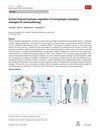
This review highlights that surface mechanical regulation can program macrophage behavior through specific mechanical cues on material surfaces, potentially advancing immunotherapies and regenerative medicine by enabling precise control over macrophage functions.
December 2025 in “Regenerative Biomaterials” In this study, researchers developed a responsive bilayer hydrogel for diabetic wounds that delivers drugs and oxygen in sync with healing stages, achieving a 99.1% wound closure rate in 14 days by integrating anti-inflammatory, antibacterial, and anti-fouling functions.
 50 citations
,
January 2016 in “The Journal of Clinical Endocrinology and Metabolism”
50 citations
,
January 2016 in “The Journal of Clinical Endocrinology and Metabolism” This study found that miRNA expression profiles in follicular fluid are altered in women with PCOS, with certain miRNAs potentially useful for distinguishing patient subtypes and contributing to understanding PCOS heterogeneity.
15 citations
,
January 2024 in “Chemical Engineering Journal” May 2026 in “Journal of Controlled Release”  December 2025 in “Journal of Pharma Insights and Research.”
 This paper reviews the state of knowledge on injectable cryogels, highlighting their unique properties such as shape-memory and mechanical integrity, which allow for minimally invasive delivery via needles and potential applications in oncology and regenerative medicine.
1 citations
,
May 2023 in “bioRxiv (Cold Spring Harbor Laboratory)” In this study, researchers developed a custom-designed 3D-printed microscope stage insert for inverted confocal microscopes, enhancing the accessibility of long-term intravital imaging of live cell dynamics in live transgenic mice, particularly in the skin.