 2 citations
,
April 2019 in “Journal of the American Society of Nephrology”
2 citations
,
April 2019 in “Journal of the American Society of Nephrology” This study found that fluconazole increased water transport in renal cells via effects on aquaporin-2 channels, suggesting potential as a treatment for nephrogenic diabetes insipidus, though clinical trials are needed to confirm efficacy in humans.
18 citations
,
June 2004 in “Mycoses” This case study describes effective treatment of local alopecia caused by Trichophyton schoenleinii in two patients, using griseofulvin and ciclopirox cream, respectively.
 13 citations
,
July 2019 in “Toxicology research”
13 citations
,
July 2019 in “Toxicology research” In this study, ethanamizuril was found to cause alopecia, biochemical changes, and organ damage at higher doses in rats, with a no-observed-adverse-effect level of 20 mg/kg over 30 days.
196 citations
,
November 2014 in “PubMed” This article discusses the diagnosis and treatment of tinea infections, emphasizing the importance of confirming certain diagnoses with lab tests and recommending treatments such as terbinafine for tinea capitis and onychomycosis.
 33 citations
,
February 1996 in “Journal of The American Academy of Dermatology”
33 citations
,
February 1996 in “Journal of The American Academy of Dermatology” Treat scalp and beard fungal infections early with oral antifungal medication and sometimes topical therapy, avoiding unnecessary allergy tests and surgery.
21 citations
,
August 2002 in “British Journal of Ophthalmology” This article discusses topical and intralesional cidofovir use for SCC and suggests a successful outcome in one case, with no systemic toxicity observed so far.
 18 citations
,
May 1988 in “Journal of The American Academy of Dermatology”
18 citations
,
May 1988 in “Journal of The American Academy of Dermatology” In this study, itraconazole was reported to effectively alleviate clinical symptoms in patients with recalcitrant Trichophyton rubrum infections, though toenail infections often recurred, indicating the need for further research on long-term efficacy and safety.
 January 2019 in “Open access journal of mycology & mycological sciences”
 This article discusses tinea capitis, highlighting its causes, symptoms, diagnostic methods, and the importance of selecting treatment based on the causal agent for effective outcomes; it reports no new clinical results.
3 citations
,
May 2007 in “Pediatrics in review” This article reviews the epidemiology, presentation, and treatment of tinea infections and offers no new clinical findings, advocating for the use of oral antifungals and proper hygiene practices.
3 citations
,
November 1998 in “PubMed” This article discusses tinea capitis prevention and treatment strategies, emphasizing the importance of systemic therapy for effective antifungal action and reducing contagion risk.
 February 2010 in “Journal of The American Academy of Dermatology”
 NB-002 is a promising new topical treatment for fungal nail infections, showing better results than a non-medicated option.
125 citations
,
May 2010 in “Pediatric dermatology” This review presents European guidelines for treating tinea capitis, noting systemic antifungals are essential, with griseofulvin preferred for Microsporum infections and newer antifungals viable for Trichophyton but often costlier.
January 2026 in “Biospecies” In this study, a hair tonic containing black fungus extract was shown to have antifungal activity against Malassezia furfur, with the 70% extract concentration providing the strongest effect.
8 citations
,
July 1983 in “Veterinary Quarterly” This study found that treating dermatomycosis in cats and dogs with ketoconazole for 20 days resulted in new hair growth and a high rate of clinical cure, with minimal side effects.
11 citations
,
March 2016 in “PubMed” This article highlights that tinea capitis in adults is often misdiagnosed, leading to treatment delays, and suggests fungal testing for those unresponsive to seborrheic dermatitis or psoriasis treatments.
April 1992 in “Pediatrics in Review” This review discusses diagnostic methods for superficial fungal infections in children and does not report new clinical results; the authors note the ease and simplicity of these diagnostic approaches.
In this case study, a 20-year-old man with dermatitis initially misdiagnosed as caused by Herpes simplex was found to have a fungal infection, Trichophyton mentagrophytes, and successfully treated with oral terbinafine and ketoconazole products.

In this case report, an 8-year-old Spitz dog with refractory dermatophytosis showed significant clinical improvement after switching to posaconazole, chosen based on antifungal susceptibility testing, offering a promising treatment option for dogs unresponsive to standard antifungal therapies.
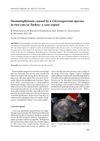 4 citations
,
December 2013 in “Veterinární medicína”
4 citations
,
December 2013 in “Veterinární medicína” In this report, two Persian cats and their owner with low immunity due to chemotherapy were identified with a rare dermatophytic infection caused by Chrysosporium spp., and the infection improved following fluconazole treatment.
28 citations
,
January 1999 in “Dermatology” This case report describes a dermatophytic granuloma caused by Microsporum canis in a heart-lung transplant recipient, emphasizing the need for systemic antifungal treatment in such deep infections.
 November 2022 in “JAAD case reports”
 This report diagnosed a 68-year-old man with comedonal folliculotropic mycosis fungoides based on clinical and histopathological findings, and found pegylated interferon alpha-2a with isotretinoin beneficial in reducing skin lesions.
4 citations
,
October 2023 in “Case Reports in Dermatology” In this case report, the researchers highlighted the diagnostic challenge of Majocchi’s granuloma, a deep fungal infection that mimics other skin conditions and resists initial treatment, emphasizing the importance of considering it as a diagnosis even after failed topical antifungal therapies.
 March 2014 in “Journal of clinical microbiology”
 This paper reviews the diagnosis and treatment of inflammatory tinea capitis, highlighting the importance of laboratory confirmation and recommending griseofulvin as the gold standard treatment.
5 citations
,
April 1992 in “Pediatrics in review” This review discusses diagnostic methods for superficial cutaneous fungus infections in children and reports no new clinical results; the authors emphasize affordable, simple testing for confirmation.
 September 2023 in “Small animal advances”
 This case report from Veterinary Clinical Complex, Kurumbapet, India, described a kitten with superficial dermatophytosis caused by Microsporum spp., which was successfully treated using itraconazole syrup, cetirizine, and a liver-supportive syrup, achieving complete recovery by the third week without adverse effects.
 April 2024 in “Skin research and technology”
 This study retrospectively observed that combining microneedle minoxidil with triamcinolone acetonide showed clinical efficacy in treating alopecia areata, a condition marked by sudden patchy hair loss.
6 citations
,
November 2020 in “Chinese Medical Journal” This study found that among Chinese males with male androgenic alopecia, combination therapy using topical minoxidil and nano-microneedle-assisted fibroblast growth factor significantly improved hair density, diameter, and follicular unit density over 16 weeks, outperforming individual treatments.
 1 citations
,
July 2023 in “Cureus”
1 citations
,
July 2023 in “Cureus” In this study, cetosomal-based minoxidil solutions, with and without finasteride, were observed to be effective and tolerable treatments for androgenetic alopecia in adults, providing a potential alternative to traditional alcoholic formulations.
October 2010 in “EUR Research Repository (Erasmus University Rotterdam)” This case report describes the successful treatment of scedosporiosis-induced cellulitis with voriconazole and intermittent pneumatic compression in a 72-year-old Portuguese woman.
 October 2022 in “Gadua Journal of Pure and Allied Science”
 In this study, Trichophyton tonsurans and Microsporum canis were identified as the primary causes of tinea capitis, with terbinafine treatment showing the highest cure rate. Non-commercial kits surpassed real-time PCR commercial kits in specificity and sensitivity for diagnosis.