 July 2023 in “Clinical, cosmetic and investigational dermatology”
 In this study, reflectance confocal microscopy was used to diagnose periorificial dermatitis, revealing specific skin changes such as hair follicle dilatation, increased vascular density, and inflammation, which help distinguish it from similar conditions.

This case report describes a 5-year-old boy who developed generalized hypertrichosis after using 3% topical minoxidil for alopecia areata, which resolved six months after discontinuation.
January 1982 in “Clinical Cosmetic and Investigational Dermatology” This case report describes a 54-year-old woman with familial dyskeratotic comedones who experienced slight improvement in her skin lesions after three months of treatment with topical retinoids and urea cream.
 8 citations
,
July 1990 in “Archives of Dermatology”
8 citations
,
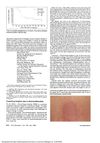
July 1990 in “Archives of Dermatology” This case report details a fixed-drug eruption in a woman linked to the use of dextromethorphan, marking it as a previously unreported skin reaction to this medication.
 August 2018 in “Journal of Investigative Dermatology”
 This case report describes the first known instance of dermatomyositis-related panniculitis in the neck and mediastinal region, effectively treated with corticosteroids, dapsone, and colchicine.
 1 citations
,
October 2023 in “Journal of the Pakistan Medical Association”
1 citations
,
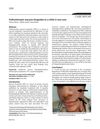
October 2023 in “Journal of the Pakistan Medical Association” This source describes a case of a 12-year-old male diagnosed with folliculotropic mycosis fungoides, presenting with an asymptomatic, erythematous plaque. Histology and immunohistochemistry confirmed FMF, which is typically rare in children and marked by follicular infiltration by CD4+ lymphocytes.
9 citations
,
June 2011 in “American Journal of Dermatopathology” This report presents a case of molluscum contagiosum virus infection within an epidermoid cyst in a 13-year-old on long-term steroid treatment, highlighting its rare occurrence and need for histological examination for accurate diagnosis.
 January 2025 in “HemaSphere”
 This review discusses the implications of renaming myelodysplastic syndromes as "myelodysplastic neoplasms" and argues that the "low-risk" label may misrepresent patient experiences and hinder research.
15 citations
,
April 2008 in “Headache” This review discusses the complex relationship between migraine and psychiatric disorders, highlighting the need for individualized treatment plans but reports no new clinical results.
 1 citations
,
February 2017 in “The American journal of dermatopathology/American journal of dermatopathology”
1 citations
,
February 2017 in “The American journal of dermatopathology/American journal of dermatopathology” This case report presented a 52-year-old man with cutaneous focal mucinosis, exhibiting rare follicular induction of the epidermis, underscoring the importance of recognizing this association in differential diagnoses.
 December 2024 in “Brazilian Journal of Hair Health”
 In this case study, a 66-year-old woman with hair-related Body Dysmorphic Disorder and newly diagnosed bipolar disorder experienced significant symptom improvement with psychiatric medications, highlighting a unique comorbidity and response to treatment.
 7 citations
,
June 2011 in “Movement Disorders”
7 citations
,
June 2011 in “Movement Disorders” A specific gene mutation is linked to a hereditary form of dystonia that responds well to certain medications.
1 citations
,
November 2021 in “Translational pediatrics” This meta-analysis reported no significant improvement in muscle strength or mobility with glucocorticoid treatment for progressive muscular dystrophy but observed an increase in adverse effects like acne and emotional irritability.
 13 citations
,
June 2015 in “International Journal of Dermatology”
13 citations
,
June 2015 in “International Journal of Dermatology” This study found that body dysmorphic disorder is about 10 times more prevalent among patients with hair loss complaints compared to general dermatology patients, with a higher incidence in males.
2 citations
,
August 2004 This study found that early diagnosis using gas chromatography/mass spectrometry and appropriate long-term treatment are crucial for improving outcomes in patients with methylmalonic acidemia.
13 citations
,
June 2012 in “European journal of medical genetics” In this study, researchers observed monochorionic diamniotic twins with discordant clinical phenotypes, where one had high-grade trisomy 12p mosaicism in certain tissues, while the other showed confined mosaicism likely due to twin-to-twin transfusion.
1 citations
,
March 2011 in “Hospital Pharmacy” This article highlights the importance of recognizing, preventing, and reporting adverse drug reactions to the FDA's MedWatch program, but it presents no new research findings.
8 citations
,
January 2016 in “Case Reports in Psychiatry” The authors report a dementia patient who developed severe trichotillomania unresponsive to SSRIs, which improved with quetiapine; they suggest dopamine blockade may manage such symptoms in dementia.
7 citations
,
November 1997 in “Pediatric Dermatology” This case report identifies an association between trichothiodystrophy and a urologic malformation with primary hypercalciuria, adding to the spectrum of TTD-related abnormalities.
 5 citations
,
January 2020 in “Wiadomości lekarskie (Warsaw Poland)”
5 citations
,
January 2020 in “Wiadomości lekarskie (Warsaw Poland)” This study found that patients with GERD and UCTD have significantly more frequent phenotypic and visceral markers than those with GERD alone, which should inform early diagnostic and treatment strategies.
78 citations
,
January 2013 in “Dermatology Online Journal” This review discusses various diseases associated with hidradenitis suppurativa, including obesity, arthritis, and pyoderma gangrenosum, but reports no new clinical results and calls for further research.
1 citations
,
July 2020 in “The Egyptian Journal of Hospital Medicine” This study found no significant association between the MDR1 C3435T polymorphism and methotrexate responsiveness in rheumatoid arthritis patients.
 September 2017 in “Journal of Investigative Dermatology Symposium Proceedings”
 This review discusses the clinical features of hypopigmented mycosis fungoides in primary cutaneous T cell lymphoma and reports no new clinical results.
 November 2022 in “bioRxiv (Cold Spring Harbor Laboratory)”
 This study found that conditional deletion of Mof in mice resulted in severe defects in skin development, including compromised epidermal differentiation and hair growth, leading to perinatal lethality.
December 2022 in “Biochemical and Biophysical Research Communications” This study found that HtrA2 inactivation in mnd2 mice is associated with delayed hair cycle phases and growth retardation of adipocytes, suggesting HtrA2's role in regulating adipogenesis-related hair growth.
2 citations
,
September 2024 in “PLoS ONE” This study suggests that combining bendamustine with tucidinostat may improve survival in patients with relapsed or refractory adult T-cell leukemia/lymphoma, highlighting its potential for clinical investigation.
 March 2023 in “The primary care companion for CNS disorders”
 Dengue fever can cause hair loss that may lead to serious psychological issues like Body Dysmorphic Disorder in young women.
6 citations
,
October 2001 in “British Journal of Ophthalmology” This article discusses the potential of intralesional cidofovir for treating SCC without systemic toxicity, noting that surgical excision remains the best treatment option; it reports no new clinical results.
 2 citations
,
April 2018 in “Journal of Investigative Dermatology”
2 citations
,
April 2018 in “Journal of Investigative Dermatology” This study defines two types of RDEB wounds, chronic open and recurrent, and finds that patient self-reports on wound size correlate well with investigator measurements when complemented by serial photography.
 2 citations
,
March 2015 in “Dermatologic Therapy”
2 citations
,
March 2015 in “Dermatologic Therapy” Using too much minoxidil foam can cause a rare movement disorder with facial twitching, but symptoms go away when the correct dose is used.