April 2010 in “Cancer Research” This study suggests that Mcl-1 has a non-apoptotic role in promoting keratinocyte proliferation and Wnt/β-catenin signaling, potentially indicating a novel oncogenic activity.
24 citations
,
January 2023 in “Cancer Research” This study suggests that activating AMPK to phosphorylate ZDHHC13 may enhance MC1R function and reduce melanoma risk in individuals with red hair.
 April 2024 in “Current Rheumatology Reviews”
 This case report describes an 8-year-old girl with Mixed Connective Tissue Disease who experienced remission after treatment with immunomodulator drugs, highlighting the diagnostic value of anti-U1 RNP antibody testing in children.
 17 citations
,
June 2018 in “Frontiers in Physiology”
17 citations
,
June 2018 in “Frontiers in Physiology” This study found that acellular dermal matrix scaffolds may facilitate full-thickness skin wound healing by promoting a pro-regenerative immune response through M2 macrophage polarization via the Lamtor1 pathway.
 25 citations
,
September 1998 in “The Journal of Steroid Biochemistry and Molecular Biology”
25 citations
,
September 1998 in “The Journal of Steroid Biochemistry and Molecular Biology” This study concludes that rhesus macaques are a suitable model for testing the pharmacological properties of finasteride and other 5aR inhibitors, due to their biochemical similarity to humans.
26 citations
,
September 2012 in “Cell Reports” In this study, knockout of B-raf and C-raf genes in mice showed they are not needed for early melanocyte development, but are crucial for maintaining melanocyte stem cells, as evidenced by hair graying due to stem cell depletion.
 51 citations
,
November 2005 in “Journal of Medical Primatology”
51 citations
,
November 2005 in “Journal of Medical Primatology” This study observed that hair loss in captive rhesus macaques varies with season, sex, and housing conditions, and is significantly correlated with HPA axis activity as indicated by faecal cortisol metabolites.
 10 citations
,
September 1997 in “Molecular carcinogenesis”
10 citations
,
September 1997 in “Molecular carcinogenesis” This study found that mirex and TPA promote papilloma formation in CD-1 mouse skin through distinct populations of mutant Ha-ras cells, resulting in additive tumor yields.
6 citations
,
January 2018 in “Advances in experimental medicine and biology” 2 citations
,
August 2004 This study found that early diagnosis using gas chromatography/mass spectrometry and appropriate long-term treatment are crucial for improving outcomes in patients with methylmalonic acidemia.
2 citations
,
June 2025 in “ACS Biomaterials Science & Engineering” This study demonstrates that encapsulating cell-free fat extract in a gelatin methacrylate hydrogel enhances flap repair by sustaining angiogenesis, reducing oxidative stress, and offering favorable biocompatibility in a murine skin flap model, thereby advancing potential clinical flap necrosis treatments.
 17 citations
,
May 2016 in “Archives of Dermatological Research”
17 citations
,
May 2016 in “Archives of Dermatological Research” This study identified specific reflectance confocal microscopy features that help differentiate scarring from non-scarring alopecia, providing a non-invasive diagnostic tool.
 April 2023 in “The journal of investigative dermatology/Journal of investigative dermatology”
 This study revealed distinct cellular and transcriptomic differences among various subtypes of cutaneous T-cell lymphoma, particularly highlighting characteristics unique to folliculotropic mycosis fungoides.
August 2024 in “International Journal of Cosmetic Science” This study found that acetyl zingerone methyl ether (MAZ) in hair dyes and haircare products may reduce oxidative damage, improve hair condition, and enhance the longevity and quality of dyed hair color.
28 citations
,
December 2001 in “European Journal of Pharmacology” This study found that the compound M50054 inhibits apoptosis by blocking caspase-3 activation and may improve chemotherapy-induced alopecia and hepatitis symptoms.
75 citations
,
June 2007 in “Journal of Biological Chemistry” This study found that the combination of MT-DADMe-ImmA and MTA selectively induced apoptosis in head and neck squamous cell carcinoma cell lines FaDu and Cal27, but not in normal fibroblasts or MTAP-deficient breast cancer cells.
 April 2019 in “The journal of investigative dermatology/Journal of investigative dermatology”
 In this study, the researchers observed significant metabolic dysregulation in central centrifugal cicatricial alopecia, particularly involving lipid metabolism and the downregulation of AMPK-related genes.

This study found that a high-fat diet in macaques led to severe gastrointestinal inflammation and chronic wasting, with more pronounced effects in females, highlighting the potential risks of certain dietary interventions in obesity models.
June 2024 in “Current Developments in Nutrition” This study found that a nutritional intervention in dogs can alleviate atopic dermatitis symptoms by modulating immune responses and altering skin microbiome composition, which includes reducing fungal diversity and the abundance of pathogenic species such as Malassezia pachydermatis.
 133 citations
,
May 2016 in “Cell Host & Microbe”
133 citations
,
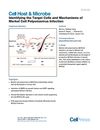
May 2016 in “Cell Host & Microbe” In this study, human dermal fibroblasts were identified as natural host cells that support productive Merkel cell polyomavirus infection, and the MEK antagonist trametinib was introduced as an effective inhibitor to control the virus.
 6 citations
,
July 2005 in “Farmaco”
6 citations
,
July 2005 in “Farmaco” This study developed a micellar electrokinetic capillary chromatography method for determining minoxidil in Rogaine and generic products, offering a simple and efficient alternative to HPLC.

In this study, women in their 40s with hair loss showed significant improvements in hair properties such as pore density and hair thickness when treated with a caffeine-based scalp ampoule and Microneedle Therapy System, compared to a caffeine-free control.
 April 2023 in “The journal of investigative dermatology/Journal of investigative dermatology”
 This study found that inhibiting the Mitochondrial Pyruvate Carrier in human hair follicles ex vivo activated the integrated stress response, affecting cell proliferation and metabolism.
 January 2024 in “JAAD case reports”
 This study discusses zinc's vital role in skin cell growth and how its deficiency can lead to acrodermatitis enteropathica, marked by symptoms like alopecia and dermatitis. It notes that similar symptoms appear in people with certain metabolic conditions, referred to as acrodermatitis dysmetabolica.
January 2000 in “Hair and its disorders: biology, pathology and management, 2000, ISBN 1853177997, págs. 137-152” 44 citations
,
December 2005 in “Journal of Investigative Dermatology” This study found significant associations between certain MICA variants and haplotypes with alopecia areata, suggesting MICA as a potential candidate gene linked to the disease's susceptibility and severity.
 April 2026 in “Scientific Reports”
 In this study, the proposed MSF-VMDNet, combining dual encoder networks with a multi-frequency domain mechanism, significantly outperformed existing methods in segmenting skin cancer tissues from histological slide images, achieving high accuracy with an MIoU of 95.37% and a Dice coefficient of 95.11%.
 24 citations
,
April 2017 in “Aesthetic plastic surgery”
24 citations
,
April 2017 in “Aesthetic plastic surgery” In this study, micro-autologous fat transplantation (MAFT) for frontal augmentation using the MAFT-GUN showed high patient satisfaction and no complications among 178 patients, suggesting it may be a reliable method for forehead contouring.
February 2024 in “Medicina” In this study, researchers used atomic force microscopy to capture and analyze morphological changes in the surface of healthy hair, identifying features such as pitting and rod-shaped macro-fibrillar elements, which could inform future research on hair conditions and care.
43 citations
,
May 1999 in “Journal of Biological Chemistry” This study found that full-length Agouti protein modulates melanocortin receptor signaling through a dual mechanism involving competitive antagonism and receptor down-regulation, whereas the carboxyl-terminal fragment acts solely as a competitive antagonist.