 39 citations
,
July 2015 in “British Journal of Dermatology”
39 citations
,
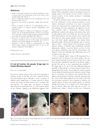
July 2015 in “British Journal of Dermatology” This article discusses the pseudo 'fringe sign' in frontal fibrosing alopecia, highlighting that it is not solely related to traction, and it reports no new clinical results.
17 citations
,
June 2016 in “Archives de Pédiatrie” This case report describes three pediatric cases of frontal fibrosing alopecia, a condition typically seen in postmenopausal women, including a unique instance involving female twins.
1 citations
,
August 2018 in “Journal of the American Academy of Dermatology” A young woman developed facial bumps before hair loss, which is unusual for her condition.
 6 citations
,
February 2025 in “Scientific Reports”
6 citations
,
February 2025 in “Scientific Reports” This study found that MEGA PROTAC improved the prediction of ternary structures with higher maximum DockQ scores compared to the BOTCP method in 16 out of 22 test cases.
April 2025 in “Australasian Journal of Dermatology” This report presents the first Australian case of familial frontal fibrosing alopecia involving a mother and daughter and seeks to differentiate clinical features between familial and sporadic cases.
1 citations
,
September 2025 in “Frontiers in Immunology” This study found that FRβ knockout mice exhibited autoimmune symptoms and slower tumor growth compared to wild type mice, suggesting that the FRβ receptor may play a role in regulating immune responses in tumors and autoimmune conditions.
 4 citations
,
January 2020 in “Skin appendage disorders”
4 citations
,
January 2020 in “Skin appendage disorders” This case report describes a unique presentation of frontal fibrosing alopecia characterized by a hair loss pattern that resembles the Greek letter upsilon, supported by trichoscopic and histological findings.
May 2025 in “Journal of Clinical Medicine” This study suggests that women with alopecia have decreased microcirculation oscillations, which may imply neuroinflammation as a factor in the disease's pathogenesis.
10 citations
,
May 2007 in “British Journal of Dermatology” This case report describes the first known instance of congenital follicular mucinosis in a newborn, diagnosed through histopathological examination of a scalp lesion.
 5 citations
,
August 2014 in “Journal of The American Academy of Dermatology”
5 citations
,
August 2014 in “Journal of The American Academy of Dermatology” This article notes slow progression and spontaneous stabilization in untreated cases of a specific scarring alopecia and reports no new results; the authors call for randomized trials to confirm the treatment's benefit.
14 citations
,
February 2003 in “Journal of the American Academy of Dermatology” This case report describes the first use of laser capture microdissection to confirm that atypical lymphocytes in a folliculotropic mycosis fungoides case involving the central nervous system were part of the same tumor clone.
 41 citations
,
July 2017 in “Journal of The American Academy of Dermatology”
41 citations
,
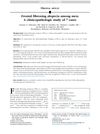
July 2017 in “Journal of The American Academy of Dermatology” This study observed that frontal fibrosing alopecia also occurs in men, with clinical features and areas of involvement similar to those seen in women, but often affecting sideburns and facial hair.
4 citations
,
July 2025 in “Annals of the New York Academy of Sciences” This review emphasizes that collaboration between forensic anthropology and molecular anthropology could significantly improve the identification of unknown human remains by creating more comprehensive biological profiles.
This study found that the Arabidopsis thaliana protein Formin 2 localizes to plasmodesmata and is crucial for regulating their permeability by anchoring actin filaments, which affects virus susceptibility.
475 citations
,
October 2006 in “Proceedings of the National Academy of Sciences” This study suggests that folliculin, mutated in Birt–Hogg–Dubé syndrome, and its partner FNIP1 may play a role in energy and nutrient sensing through the AMPK and mTOR pathways.
 3 citations
,
January 2022 in “Journal of The American Academy of Dermatology”
3 citations
,
January 2022 in “Journal of The American Academy of Dermatology” This study found that sunscreen and moisturizer use was associated with a higher likelihood of developing frontal fibrosing alopecia in the reviewed studies.
3 citations
,
January 2017 in “Acta Dermato Venereologica” This study found that a specific T-cell receptor motif associated with lipid-antigen stimulation may play a role in the pathogenesis of folliculotropic mycosis fungoides.
 29 citations
,
July 2010 in “Journal of Cutaneous Medicine and Surgery”
29 citations
,
July 2010 in “Journal of Cutaneous Medicine and Surgery” This study reported no significant improvement in patients with frontal fibrosing alopecia treated with various therapeutic agents, highlighting the need for more evidence-based treatments, especially in those with active disease.
January 2026 in “Dermatologic Therapy” This review discusses folliculotropic mycosis fungoides, highlighting its diagnostic criteria and therapeutic strategies based on disease staging, but does not report new clinical findings.
 1 citations
,
October 2008 in “Expert Review of Dermatology”
1 citations
,
October 2008 in “Expert Review of Dermatology” This review discusses frontal fibrosing alopecia, noting its frequent misdiagnosis and highlighting the need for larger studies to better understand its epidemiology, causes, and treatment options; it reports no new clinical findings.
 2 citations
,
June 2021 in “Research Square (Research Square)”
2 citations
,
June 2021 in “Research Square (Research Square)” This study identified a novel missense mutation in the FGF5 gene associated with the longhair phenotype in about 3% of Maine Coon cats, suggesting it may be a breed-specific variant.
 16 citations
,
January 2007 in “Actas dermo-sifiliográficas/Actas dermo-sifiliográficas”
16 citations
,
January 2007 in “Actas dermo-sifiliográficas/Actas dermo-sifiliográficas” This review discusses frontal fibrosing alopecia and reports no clinical results; the authors note that no therapeutic options tested, including corticosteroids, finasteride, and minoxidil, have shown clear benefits.
February 2026 in “Skin Appendage Disorders” This study found a significant association between pseudofolliculitis barbae and mood disorders such as depression and anxiety, but not with obsessive-compulsive disorder.
 April 2026 in “Human Genome Variation”
 In this study, researchers identified a recurrent MBTPS2 splice-site variant as a mutational hotspot in IFAP syndrome across diverse families, with phenotype severity suggesting the influence of additional modifiers.
 24 citations
,
June 2020 in “Industrial Crops and Products”
24 citations
,
June 2020 in “Industrial Crops and Products” This study reports that biomass activated carbon fibers derived from metaplexis japonica seed hair effectively adsorb methylene blue dye, demonstrating high capacity and rapid adsorption performance.

This review discusses male androgenetic alopecia treatments, noting that topical minoxidil and oral finasteride are FDA-approved and require continuous use to maintain hair retention effects, but reports no new clinical results.
August 2018 in “Journal of the American Academy of Dermatology”  26 citations
,
August 2016 in “Actas Dermo-Sifiliográficas”
26 citations
,
August 2016 in “Actas Dermo-Sifiliográficas” This study found that men with frontal fibrosing alopecia were more likely to have facial papules, androgenetic alopecia, and body hair loss compared to women, with the average patient age being higher than in other series, potentially explaining these differences.
 6 citations
,
January 2019 in “The American Journal of Dermatopathology”
6 citations
,
January 2019 in “The American Journal of Dermatopathology” This study discovered that adipose tissue infiltration at the isthmus level appears significantly more often in frontal fibrosing alopecia cases compared to controls, suggesting a potential role in the condition's pathology.
 115 citations
,
March 2019 in “Nature Communications”
115 citations
,
March 2019 in “Nature Communications” This study identified significant genetic associations with frontal fibrosing alopecia at four genomic loci, suggesting it is a genetically predisposed immuno-inflammatory disorder influenced by the HLA-B*07: 02 allele.