 3 citations
,
September 2019 in “Skin appendage disorders”
3 citations
,
September 2019 in “Skin appendage disorders” This study found that females with frontal fibrosing alopecia had more preauricular lines than age-matched controls, indicating a potential new clinical marker for the condition.
 April 2023 in “Journal of Investigative Dermatology”
 This study suggests that linalool, a common allergen in personal care products, may contribute to frontal fibrosing alopecia pathogenesis by triggering immune responses and depleting hair follicle stem cells, especially in sensitized individuals.
 8 citations
,
December 2020 in “Skin appendage disorders”
8 citations
,
December 2020 in “Skin appendage disorders” This study observed eyebrow regrowth in 7 patients with frontal fibrosing alopecia treated with low-dose oral minoxidil, suggesting it may be a promising treatment option, especially in early disease stages.
 36 citations
,
July 2014 in “Neuromuscular Disorders”
36 citations
,
July 2014 in “Neuromuscular Disorders” This study investigated a patient with spinal and bulbar muscular atrophy who had 68 CAG repeats, revealing early onset and unique symptoms not previously documented in the condition.
 5 citations
,
June 2023 in “Engineering Technology & Applied Science Research”
5 citations
,
June 2023 in “Engineering Technology & Applied Science Research” This study developed a new neural network model (AA-GAN-AB-MTEDeep) to enhance Alopecia Areata classification using synthetic scalp images, achieving an accuracy of 96.94%.
 155 citations
,
September 2008 in “British journal of dermatology/British journal of dermatology, Supplement”
155 citations
,
September 2008 in “British journal of dermatology/British journal of dermatology, Supplement” This study observed that frontal fibrosing alopecia predominantly affects postmenopausal women, can be associated with lichen planus, and may lead to progressive hairline recession, though this progression is not consistent in all cases.
 6 citations
,
June 2016 in “Experimental Dermatology”
6 citations
,
June 2016 in “Experimental Dermatology” This article reviews the pathogenesis of frontal fibrosing alopecia, highlighting the potential genetic and environmental contributions, particularly the use of sunscreens, and calls for further research into effective treatments.
 2 citations
,
July 2020 in “Giornale italiano di dermatologia e venereologia”
2 citations
,
July 2020 in “Giornale italiano di dermatologia e venereologia” A woman with frontal fibrosing alopecia experienced unusual hair growth after using a specific topical lotion.
 December 2023 in “The journal of cell biology/The Journal of cell biology”
 This study developed the mTurquoise2-Col4a1 mouse model and used fluorescent tagging of collagen IV to offer new insights into basement membrane dynamics during hair follicle budding, revealing that basement membranes are flexible and stable structures in developing skin tissue.
This study found that mycophenolate mofetil was well tolerated and effective as a second-line treatment for autoimmune hepatitis in patients who were intolerant to azathioprine.
This document supplements a study on androgenetic alopecia, describing materials and methods, and includes figures showing fibrosis in the bulge region of miniaturized hair follicles.
 98 citations
,
January 2013 in “Journal of The American Academy of Dermatology”
98 citations
,
January 2013 in “Journal of The American Academy of Dermatology” This study reported that while various treatments for frontal fibrosing alopecia showed limited effectiveness, dutasteride most effectively stabilized the condition among patients at Duke University.
 May 2024 in “Ultramicroscopy”
 Atomic Force Microscopy is a more accurate way to assess hair damage and the effect of cosmetic treatments.
July 2020 in “DOAJ (DOAJ: Directory of Open Access Journals)” This review suggests that excessive facial photoprotection could play a role in frontal fibrosing alopecia through a disturbance in immunological balance via the aryl hydrocarbon receptor-kynurenine pathway.
 17 citations
,
June 2016 in “Australasian Journal of Dermatology”
17 citations
,
June 2016 in “Australasian Journal of Dermatology” In this case report, a 46-year-old woman with familial frontal fibrosis alopecia experienced initial stabilization of hair loss with dutasteride and minoxidil, but artificial hair transplantation led to implant folliculitis, requiring removal of the fibers.
 69 citations
,
August 2008 in “Journal of The European Academy of Dermatology and Venereology”
69 citations
,
August 2008 in “Journal of The European Academy of Dermatology and Venereology” Oral dutasteride and topical pimecrolimus can safely and effectively treat Frontal Fibrosing Alopecia, leading to significant hair regrowth.
18 citations
,
February 2018 in “Journal of the American Academy of Dermatology” This study reports no new clinical results but suggests a potential relationship between frontal fibrosing alopecia and cutaneous conditions such as rosacea, indicating a need for further research.
3 citations
,
January 2025 in “Journal of the American Academy of Dermatology” Early diagnosis and a multidisciplinary approach are crucial for managing Frontal Fibrosing Alopecia.
10 citations
,
November 2017 in “Letters in drug design & discovery” This paper discusses a structure-based analysis to find new BRD4 inhibitors, identifying finasteride and amentoflavone as promising candidates for BET inhibition.
2 citations
,
September 2020 in “bioRxiv (Cold Spring Harbor Laboratory)” This study demonstrated that ablation of individual somatostatin-expressing interneurons increased activity in nearby neurons of the mouse motor cortex during motor learning.
January 2025 in “Journal of Clinical Case Studies” The authors concluded that individuals with Marfan syndrome should avoid heavy weight lifting and receive genetic counseling to better manage their condition.
23 citations
,
February 2025 in “Advanced Materials” This study found that a new autonomous, moisture-driven flexible electrogenerative dressing significantly accelerated chronic wound healing in a diabetic mouse model compared to the control group.
 31 citations
,
April 2010 in “British journal of dermatology/British journal of dermatology, Supplement”
31 citations
,
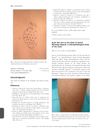
April 2010 in “British journal of dermatology/British journal of dermatology, Supplement” This report describes two patients with frontal fibrosing alopecia who developed acute hair loss on their limbs, revealing that the limb alopecia had similar histological features to scalp alopecia.
 July 1991 in “Endocrinology”
 This study suggests that combining the 5α-reductase inhibitor 4-MA with the antiandrogen Flutamide may improve prostate cancer therapy by additively inhibiting prostatic growth and androgen-sensitive functions in rats.
 1 citations
,
January 2020 in “Skin appendage disorders”
1 citations
,
January 2020 in “Skin appendage disorders” Finasteride may help treat frontal fibrosing alopecia, but more research is needed.
January 2015 in “Pathology” A 64-year-old man had a rare skin cancer near his ear, unresponsive to antibiotics, with specific skin and hair follicle changes.
 September 2025 in “Dermatologic Surgery”
 This study found that combining Fractional Microneedling Radiofrequency (FMRF) with topical minoxidil significantly increased hair counts and density more than minoxidil alone or combined with Fractional CO2 in women with androgenic alopecia.
 February 2026 in “Zenodo (CERN European Organization for Nuclear Research)”
 This review discusses the epidemiology, pathophysiology, diagnosis, and management of male androgenetic alopecia, noting that combination treatments, including FDA-approved and emerging therapies, may improve outcomes without added side effects.
 22 citations
,
July 2003 in “Military medicine”
22 citations
,
July 2003 in “Military medicine” This article reviews the causes, classification, and new treatments for pseudofolliculitis barbae but provides no new research findings.
January 2016 in “Indian dermatology online journal” This case report describes a 50-year-old woman with frontal fibrosing alopecia who showed no improvement despite multiple treatments, including intralesional triamcinolone and topical glucocorticoids.