January 2026 in “International Journal of Cosmetic Science” This study identifies key attributes—luminosity, structural integrity, and vitality—that define hair vibrancy, providing insights to guide the development of hair products that align with consumer expectations.
 December 2025 in “Zenodo (CERN European Organization for Nuclear Research)”
 This review highlights aloe vera's role in hair cosmetics, attributing benefits such as scalp soothing, reducing dandruff, and enhancing hair luster to its rich composition, while also noting potential risks like skin irritation and allergic reactions with use.
 December 2025 in “Zenodo (CERN European Organization for Nuclear Research)”
 This overview reports that aloe vera, widely used in hair cosmetics, boasts components that may promote hair health by nourishing hair follicles, soothing the scalp, and enhancing hair strength and luster, although some individuals may experience allergies or skin irritation.
 March 2022 in “International Journal of Current Science Research and Review”
 This article describes subclinical ketosis in pregnant cows and associates it with several metabolic changes and clinical signs, reporting decreased levels of hemoglobin and glucose and increased ketone bodies.

This study found that polycystic ovary syndrome was the most common cause of hirsutism among premenopausal Algerian women.
 January 2011 in “Web journal anti-aging medicine/Anti-aging medicine”
 In this study, kamishoyosangoshimotsuto extract improved skin moisture, texture, and brightness, as well as hair thickness and strength in women with skin and scalp hair problems over 24 weeks.
July 2007 in “International Journal of Cosmetic Science” This study found that a new hybrid polymer made from hydrolyzed protein, alkyl chain, and silicone helped prevent discoloration and improve moisture feel and manageability in dyed and damaged hair.
 January 2003 in “Research Portal (King's College London)”
 This study employed a laser-based method to analyze how light reflection patterns vary on human hair fibers, revealing changes related to hair color and the tilt of the cuticle cells.
31 citations
,
December 2012 in “British Journal of Dermatology” This study found that as Korean women age, their hair density, diameter, tensile strength, and lustre decline, while grey hair ratio and certain sterol contents increase, suggesting unique ageing features compared to women in other countries.
 17 citations
,
July 2014 in “Our Dermatology Online”
17 citations
,
July 2014 in “Our Dermatology Online” In this study of elderly patients at an Indian medical center, researchers found that xerosis was the most common physiological skin change and pruritus was the most frequent complaint.
 August 2026 in “Zenodo (CERN European Organization for Nuclear Research)”
 This narrative literature review by LUSTRAO examines the complex biological mechanisms influencing hair growth and loss, highlighting that androgen signalling, while significant, works within a network involving regenerative, inflammatory, and vascular processes, without establishing it as the sole explanation for conditions like androgenetic alopecia.
9 citations
,
December 2018 in “Journal of Natural Fibers” This study found that K33A was significantly upregulated in lustrous Magra wool follicles, while other keratin and KAP genes showed downregulation, impacting wool's physical properties like luster.
 January 2024 in “Wiadomości Lekarskie”
 This research by Dr. Lester Fehmi suggests that exercises to shift attention from focused to dispersed may enhance alpha wave synchronization in the brain, potentially reducing pain perception.
4 citations
,
July 2010 in “International Journal of Cosmetic Science” This study observed that hair fibers in older women become more curved with age, decreasing hair luster due to their disordered alignment and structural differences between the convex and concave sides.
2 citations
,
June 2023 in “Zenodo (CERN European Organization for Nuclear Research)” The authors outlined fundamental aspects of hair conditioners, including their purpose for enhancing hair management and luster, and evaluated three types—Herbal, Synthetic, and Ayurvedic—based on various properties such as pH and moisturization, focusing on ingredients like Aloe vera and flaxseed for potential hair repair benefits.
 February 2026 in “Cureus”
 This review highlights that castor oil has potential dermatological uses, including enhancing hair luster, reducing hyperpigmentation, and improving skin hydration and elasticity, although rare side effects like contact dermatitis occur, necessitating further research to confirm its effectiveness in these applications.
1 citations
,
November 2002 in “Hair transplant forum international” This article is an edited transcript of a presentation on the historical contribution of Dr. Joseph Lister to antiseptic surgery and reports no new research findings.
 April 2025 in “Research Journal of Topical and Cosmetic Sciences”
 This study found that an anti-dandruff shampoo containing Bromelain effectively preserves hair fiber integrity, enhances uniformity and lustre, and offers therapeutic benefits for scalp infections and inflammation, making it a safer alternative for dandruff treatment.
5 citations
,
September 1989 in “Pediatric dermatology” Persistent papular plaques on children's faces need better understanding and treatment.
September 2014 in “Journal of the American Academy of Dermatology” This case report describes a 9-year-old girl diagnosed with loose anagen hair syndrome, which may spontaneously improve or be aided by minoxidil therapy for faster resolution.
26 citations
,
October 1999 in “Archives of Dermatology” This discussion suggests that acquired progressive kinking of hair in androgen-dependent scalp areas may indicate the early stages of androgenetic alopecia with a poor prognosis, but it offers no new clinical findings.
7 citations
,
March 2020 in “Journal of the American Academy of Dermatology” This study observed that trichoscopic changes associated with EGFRI treatment include pili torti and asymmetric hyperpigmented fusiform widening, along with dermoscopic skin manifestations such as scale and branching vessels.
2 citations
,
January 1983 in “Archives of Dermatology” This case report describes a 3-year-old boy with tinea capitis, suggesting that Penicillium may have been the causative agent.
 1 citations
,
November 2023 in “Curēus”
1 citations
,
November 2023 in “Curēus” This case report describes a young male with trachyonychia with associated hypertrophic cutaneous lichen planus, reticular oral lichen planus, and nail lichen planus. The diagnosis was aided by dermoscopy and histopathology, highlighting the importance of accurate diagnosis for effective treatment and prognosis.
 January 2025 in “Journal of Pharmacognosy and Phytochemistry”
 This study developed an herbal shampoo with Emblica officinalis (amla) and Eclipta alba (bhringraj), known from Ayurvedic medicine, which showed effective cleansing ability and improved hair texture and manageability, suggesting it is a promising chemical-free option for hair care.
April 2011 in “www.virtualization.info” This report describes a case of trachyonychia with associated various types of lichen planus in a young male, highlighting the importance of accurate diagnosis for effective treatment.
 August 2010 in “Journal of The American Academy of Dermatology”
 This educational activity reports no new research findings; it aims to help physicians assess and improve their clinical skills through self-evaluation and continued medical education.
 20 citations
,
May 2020 in “Experimental Dermatology”
20 citations
,
May 2020 in “Experimental Dermatology” This review discusses age-related changes in scalp skin and their potential effects on hair follicle aging, but reports no new clinical results, calling for further investigation.
4 citations
,
November 1999 in “PubMed” This article presents five family cases of monilethrix and reports that neither vitamins nor desquamative ointments are effective treatments, although symptoms may spontaneously regress over time.
 January 2026 in “Cosmoderma”
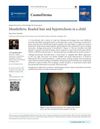
 In this clinical case study, a 9-year-old girl was diagnosed with monilethrix, a hereditary hair shaft disorder characterized by weak, beaded hair, with management focusing on minimizing hair trauma.