 December 2025 in “Italian Journal of Anatomy and Embryology”
 This narrative literature review examined how linking embryonic development with non-genetic skin anomalies can improve diagnostic accuracy, guide prenatal counseling, and enrich dermatology education by revealing specific vulnerabilities in skin morphogenesis and supporting advances in regenerative medicine.
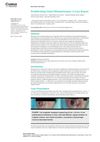
In this case report, researchers detailed a giant proliferating pilomatrixoma in a 36-year-old woman, emphasizing the importance of complete excision to prevent recurrence or potential malignant transformation, distinguishing it from malignancies like angiosarcoma or melanoma.

This study identified a genetic locus associated with rhabdomyosarcoma susceptibility in mice and found that specific differentiation markers are linked to the regression of basal cell carcinoma.
 October 2016 in “Elsevier eBooks”
 This article reviews the most common skin diseases worldwide and reports no new clinical findings.
 March 2015 in “Polish Journal of Public Health”
 This study found that capillaroscopic patterns varied among patients with systemic scleroderma, psoriasis, psoriatic arthritis, and alopecia, suggesting potential microcirculation disturbances; however, no correlations were observed with serum angiogenic markers.
 June 1996 in “Irish Journal of Medical Science (1971 -)”
 This study found a statistically significant increase in glycosylated hemoglobins among patients with adult-acquired panhypopituitarism undergoing long-term GH replacement therapy, with two developing diabetes requiring treatment.
 May 1993 in “Current problems in dermatology”
 This review discusses diagnostic approaches for childhood skin diseases with fever through clinical observations and covers recent advances in understanding the pathogenesis and epidemiology of related infections, without reporting new clinical results.
 15 citations
,
September 2007 in “Cell & tissue research/Cell and tissue research”
15 citations
,
September 2007 in “Cell & tissue research/Cell and tissue research” This study suggests that human embryonic stem cells may improve skin graft quality and functionality by enabling the identification and amplification of early ectodermal progenitors, pending confirmation from preclinical studies.
January 2005 in “Experimental Dermatology” This abstract reviews recent findings on genetic factors in acne, highlighting the potential of genetic studies to advance understanding of its pathogenesis, but reports no new clinical results.
June 2025 in “British Journal of Dermatology” This case series highlighted three pediatric patients with congenital nail anomalies, revealing underlying developmental or genetic issues such as symbrachydactyly and potential Adams–Oliver syndrome, underscoring the critical role of dermatologists in early detection and diagnosis of these conditions.
 June 2026 in “Frontiers in Cell and Developmental Biology”
 This review synthesizes the diverse roles of the transcription factor LHX2 in development, tissue maintenance, and injury repair across various organ systems, highlighting its potential therapeutic applications and significance in regenerative medicine, particularly in developmental disorders and tissue regeneration.
112 citations
,
October 2008 in “Wound Repair and Regeneration” This study demonstrated that disrupting sonic hedgehog signaling, using cyclopamine, significantly impaired wound healing in a mouse model, suggesting its crucial role in postnatal tissue repair.
27 citations
,
February 2023 in “Frontiers in Cell and Developmental Biology” This review discusses the expanded understanding of WNT10B's role in various tissues and diseases over the past decade, emphasizing its genetic correlations and potential therapeutic implications, but reports no new clinical results.
36 citations
,
January 2016 in “The journal of investigative dermatology/Journal of investigative dermatology” This article reviews the connection between PI3K-AKT-mTOR pathway mutations and heritable skin diseases characterized by tissue overgrowth, but it reports no new clinical results.
25 citations
,
November 2020 in “Proceedings of the National Academy of Sciences” This study found that the HoxC gene cluster plays a critical role in the development of ectodermal organs, including hair and nails, with mammalian-specific enhancers increasing transcription levels during development.
23 citations
,
January 2017 in “BMC Medical Genetics” This study presents the first reported Spanish case of Hypotrichosis with Juvenile Macular Dystrophy, identifying a new CDH3 mutation and highlighting the importance of clinical and genetic evaluation for accurate diagnosis.
2 citations
,
May 2020 in “The journal of investigative dermatology/Journal of investigative dermatology” This study describes a family where a TP63 mutation was linked with prominent alopecia and mild ectodermal dysplasia features.
46 citations
,
June 2015 in “American Journal Of Pathology” This review highlights how diabetes affects stem and progenitor cells through altered signaling and homeostasis, impacting tissue function and complicating diabetic therapy efforts; new clinical results are not presented.
2 citations
,
October 2025 in “Frontiers in Medicine” This study identified several previously unrecognized adverse events linked to ISO, including serious conditions such as Dandy-Walker syndrome and suicidal ideation, suggesting that safety measures and drug labeling should be updated.
1 citations
,
January 2018 in “Indian dermatology online journal” This case report describes a girl diagnosed with ADULT syndrome, highlighting its rarity, varied presentation, and the importance of early diagnosis to prevent unnecessary stress and medical expenses.
June 2026 in “JAAD Case Reports” Scurvy, caused by vitamin C deficiency, can occur in people with restrictive diets and can be diagnosed by twisted hair shafts.
November 2025 in “Journal of Clinical Medicine” This narrative review highlights innovations in regenerative medicine and longevity research within plastic surgery, emphasizing biological, ethical, and regulatory aspects. The study underscores the potential to extend healthspans while balancing these advances with ethical considerations and safety.
This study found that in early retinal neurogenesis in mice, the transcription factor Lhx2 regulates Sonic Hedgehog signaling by controlling expression of pathway genes like the co-receptors Gas1 and Cdon.
November 2019 in “BMC veterinary research” This study concluded that moderate to severe alopecia in Belgian Blue crossbred calves was due to malabsorption of dietary fat caused by a mixing error of milk replacer.
39 citations
,
September 2015 in “Clinical Therapeutics” This review summarizes updated US prescribing information for teriflunomide in relapsing multiple sclerosis, highlighting its efficacy in reducing lesion activity and relapse rates but noting potential adverse effects such as headache and diarrhea.
 10 citations
,
July 2022 in “Journal of Medicinal Chemistry”
10 citations
,
July 2022 in “Journal of Medicinal Chemistry” This article discusses the potential for combining PROTACs with other therapeutic modalities in drug discovery and reports no clinical results.
7 citations
,
January 2024 in “Cancer Research Communications” This study found that TAp63 and ΔNp63 isoforms in the p63 family interact with different transcription factors to regulate distinct transcriptional programs, affecting various biological functions like metabolic pathways, oxidative stress response, and epithelial morphogenesis in mouse epidermal cells.
January 2026 in “Animal Genetics” This study investigated a Labrador Retriever with paw pad hyperkeratosis and identified a unique de novo heterozygous missense variant in the GJB6 gene, suggesting its potential role in the condition, analogous to Clouston syndrome in humans, although differences between species may provide further insights.
December 2025 in “Current Issues in Molecular Biology” In this systematic review, animal studies showed that cytarabine causes multi-organ toxicities, notably neurotoxicity, linked to oxidative stress and other mechanisms, though study quality raises concerns about reliability and translation to human outcomes.
83 citations
,
January 2023 in “Development” This review provides an overview of Hox genes, focusing on their evolutionary history, genomic organization, and roles in development, but reports no new study results.