1 citations
,
December 2015 in “TURKDERM” This study found that treatment improved symptoms and stopped disease progression for 75% of lichen planopilaris patients whose follow-up data were available.
 158 citations
,
February 2000 in “Archives of dermatology”
158 citations
,
February 2000 in “Archives of dermatology” This study reports that some patients with androgenetic alopecia may also exhibit clinical and histological features of inflammation and fibrosis, similar to those found in lichen planopilaris.
 January 2017 in “Postepy Dermatologii I Alergologii”
 This study investigates the potential role of the corticotropin-releasing hormone system in the pathogenesis of lichen planus but does not report new clinical results, emphasizing the need for further exploration.
 June 2011 in “International Journal of Dermatology”
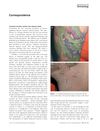
 A man's red tattoo caused a skin reaction and hair loss in his beard, which improved after treatment.
 11 citations
,
February 2021 in “Biomedicines”
11 citations
,
February 2021 in “Biomedicines” This review discusses the role of hair follicle bacterial colonization in immune responses and the pathogenesis of alopecia but reports no new clinical results.
 17 citations
,
January 2014 in “Journal of Clinical and Diagnostic Research”
17 citations
,
January 2014 in “Journal of Clinical and Diagnostic Research” This study found that patients with oral lichen planus and oral lichenoid reactions have higher levels of serum cholesterol and LDL-C than healthy individuals, suggesting a potential elevated risk for cardiovascular disease.
 17 citations
,
May 1987 in “Clinical and Experimental Dermatology”
17 citations
,
May 1987 in “Clinical and Experimental Dermatology” This study reports a new association of follicular mucinosis occurring in a patient with Sézary syndrome.
 16 citations
,
February 2010 in “Journal of the European Academy of Dermatology and Venereology”
16 citations
,
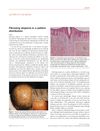
February 2010 in “Journal of the European Academy of Dermatology and Venereology” This article is a letter to the editor about fibrosing alopecia in a pattern distribution and reports no new research findings.
 May 2023 in “Indian journal of dermatology, venereology, and leprology”
 This article aims to enumerate and describe the types of tissue degeneration observed in various dermatopathological conditions, offering beneficial insights for residents studying the deterioration of skin tissues due to inflammatory, infective, drug-induced, or neoplastic stimuli.
 44 citations
,
November 1998 in “Australasian Journal of Dermatology”
44 citations
,
November 1998 in “Australasian Journal of Dermatology” This review provides a framework for diagnosing acquired scalp alopecias and discusses both non-scarring and scarring types, but reports no new clinical results.
 37 citations
,
June 2011 in “Journal of The American Academy of Dermatology”
37 citations
,
June 2011 in “Journal of The American Academy of Dermatology” This study demonstrates that sebaceous gland loss is a common early feature in primary scarring alopecia and suggests that inflammation of sebaceous glands or ducts may contribute to follicular damage.
 21 citations
,
November 1981 in “Archives of Dermatology”
21 citations
,
November 1981 in “Archives of Dermatology” This study hypothesizes that postinflammatory hyperpigmentation in ashy dermatosis may result from basal cell apoptosis, as evidenced by consistent histologic findings across nine patients.
 15 citations
,
August 2019 in “Dermatologic Therapy”
15 citations
,
August 2019 in “Dermatologic Therapy” This letter details a case report on platelet-rich plasma treatment for a patient with treatment-resistant frontal fibrosing alopecia, but it does not provide new clinical results.
 9 citations
,
September 2016 in “Dermatologic Surgery”
9 citations
,
September 2016 in “Dermatologic Surgery” This study identified a new subtype of lichen planopilaris that mimics androgenetic alopecia, selectively affecting vellus hair follicles and presenting unique histopathological features.
 7 citations
,
June 2015 in “Cutaneous and Ocular Toxicology”
7 citations
,
June 2015 in “Cutaneous and Ocular Toxicology” This study attempts to classify histomorphologic reactions to drugs to aid in diagnosing drug eruptions, which are common in hospitalized patients but lack specific diagnostic features.
 6 citations
,
September 1994 in “Veterinary Clinics of North America: Small Animal Practice”
6 citations
,
September 1994 in “Veterinary Clinics of North America: Small Animal Practice” This review examines skin diseases affecting the pinna of dogs and cats, highlighting those unique to this area and noting its role as a common initial site for several conditions; it reports no new results.
 4 citations
,
January 2012 in “Chemical Immunology”
4 citations
,
January 2012 in “Chemical Immunology” This paper discusses the challenges of diagnosing drug eruptions, emphasizing the nonspecific patterns and unclear pathomechanisms, and calls for further research using new biologic drugs to understand these reactions better.
 3 citations
,
July 2017 in “Elsevier eBooks”
3 citations
,
July 2017 in “Elsevier eBooks” This article reviews the identification and assessment of cutaneous drug reactions, emphasizing the importance of early recognition and the need for accurate diagnosis to prevent serious complications; it reports no new clinical results.
 1 citations
,
July 2018 in “Elsevier eBooks”
1 citations
,
July 2018 in “Elsevier eBooks” This review discusses the basic principles of hair pathology and findings in common types of alopecia but reports no new research results.
 July 2011 in “British Journal of Dermatology”
 Dermatologists give better information on pathology forms, hypersensitivity vasculitis is a common skin issue, misdiagnoses can occur, and various skin conditions are linked to loss of elastin or genetic factors.
 13 citations
,
January 2019 in “Skin appendage disorders”
13 citations
,
January 2019 in “Skin appendage disorders” This study reported that fibrosing alopecia in a pattern distribution can occur in patients of color, with clinical and histopathological features allowing for an accurate differential diagnosis.
 January 2026 in “Frontiers in Pharmacology”
 This research highlights the potential of personalized medicine and advanced therapeutic strategies, including 3D biomaterials and natural products, to enhance wound healing and skin care, while also acknowledging the limitations and safety concerns associated with these innovations.
1 citations
,
January 2025 in “Genes & Diseases” This review highlights that T cells are crucial in regulating hair follicle regeneration and their disruption can lead to alopecia, providing insights into hair disorders related to T cell immune balance and hair follicle regeneration.
 January 2017 in “Dermatology Review”
 This article discusses skin lesions in chronic graft-versus-host disease and highlights the importance of coordinated care between haematologists and dermatologists for effective management; it presents no new clinical results.
6 citations
,
January 2015 in “Indian Dermatology Online Journal” This case report describes a unique presentation of porokeratotic eccrine ostial and dermal duct nevus with lesions on the dorsum of the hand and a focal lichenoid infiltrate, differing from typical palm and sole involvement.
March 2026 in “Anais Brasileiros de Dermatologia” Lichen planopilaris and frontal fibrosing alopecia are likely distinct diseases with different tissue involvement.
 January 2025 in “Indian Journal of Dermatology”
 This review discusses the various factors implicated in the etiology of frontal fibrosing alopecia and notes the need for effective treatments, reporting no new clinical findings.
1 citations
,
March 2013 in “Journal of Dermatological Case Reports” This case report describes an atypical presentation of lichen planopilaris affecting only facial vellus hair, without scalp involvement, in a 46-year-old man.
 34 citations
,
January 2005 in “Journal of the American Veterinary Medical Association”
34 citations
,
January 2005 in “Journal of the American Veterinary Medical Association” This study found that cyclosporine A treatment at 5 mg/kg/day may reduce inflammation and promote gland regeneration in dogs with sebaceous adenitis, though symptoms returned when treatment stopped.
 December 2025 in “Portuguese Journal of Dermatology and Venereology”
 In this study, researchers conducted a retrospective analysis of 16 cases of erosive palmoplantar lichen planus in North East India, finding a higher prevalence in pediatric and male patients, with common clinical features including plantar involvement and histopathological indicators such as basal cell degeneration.