 41 citations
,
December 2008 in “Journal of the American Academy of Dermatology”
41 citations
,
December 2008 in “Journal of the American Academy of Dermatology” This review discusses fixed drug eruption (FDE) potentially linked to finasteride and emphasizes dermatologists' need to recognize its possible occurrence due to the drug's widespread use, but reports no new clinical results.
 April 2024 in “Canadian Journal of Ophthalmology”
 The authors report that a 62-year-old woman with invasive conjunctival squamous cell carcinoma experienced complete remission two years after combining cemiplimab, retinoic acid, and IFNα-2b treatments, highlighting potential utility despite limited availability of IFNα-2b.
60 citations
,
August 2022 in “ESMO Open” This review discusses managing common and notable adverse events associated with the antibody-drug conjugate trastuzumab deruxtecan in patients with HER2-positive unresectable/metastatic breast cancer and reports no new clinical results.
 1 citations
,
December 2021 in “Tropical Journal of Pharmaceutical Research”
1 citations
,
December 2021 in “Tropical Journal of Pharmaceutical Research” This study concluded that adding Kanglaite injection to gemcitabine and cisplatin chemotherapy for advanced non-small cell lung cancer improved response rates and reduced adverse side effects.
12 citations
,
March 2021 in “JAAD Case Reports” This study reported that immunotherapy in cancer patients can lead to skin-related immune adverse events, such as rashes, pruritus, and vitiligo, affecting a substantial proportion of patients.
December 2020 in “Forum Dermatologicum” In this case report, a combination treatment of intralesional triamcinolone acetonide, oral acitretin, and topical clobetasol propionate showed effectiveness in reducing symptoms of Graham-Little-Piccardi-Lasseur syndrome in one patient over two months, with no new areas of hair loss observed.
 153 citations
,
January 2001 in “Science”
153 citations
,
January 2001 in “Science” In a neonatal rat model, this study found that topical CDK2 inhibitors reduced chemotherapy-induced hair loss in 33 to 50% of the animals, suggesting a potential strategy for preventing alopecia in cancer patients.
 2 citations
,
October 1990 in “The Lancet”
2 citations
,
October 1990 in “The Lancet” Some people have a genetic variation that makes them less effective at breaking down drugs.
17 citations
,
December 1997 in “Transplantation” This report describes two renal transplant patients whose hair loss improved after switching from tacrolimus to cyclosporine, suggesting that cyclosporine might counteract steroid-induced alopecia.
March 2026 in “The Journal of Dermatology” This study found that ritlecitinib 50 mg is cost-effective compared to no treatment for patients in Japan with alopecia areata and significant scalp hair loss, demonstrating an incremental cost-effectiveness ratio below the country's cost-effectiveness threshold.
 April 2023 in “Journal of Investigative Dermatology”
 This study found that the oral IRAK4-inhibitors BAY 1834845 and BAY 1830839 reduced skin inflammation and systemic inflammatory responses in healthy volunteers, showing similar pharmacodynamic effects to prednisolone when challenged with topical imiquimod and intravenous LPS.
14 citations
,
April 2023 in “Acta Dermato Venereologica” Upadacitinib effectively treated severe hair loss in a child.
15 citations
,
August 2022 in “The Application of Clinical Genetics” This review describes the clinical presentation, diagnosis, and management of adrenomyeloneuropathy, including rehabilitative therapies and spasticity management, and reports no new clinical results.
 12 citations
,
March 2016 in “Life Sciences”
12 citations
,
March 2016 in “Life Sciences” This review discusses the potential of combined therapy with WP 631 and epothilone B for ovarian cancer, but reports no new clinical results.
 March 2024 in “EMBO molecular medicine”
 This study found that the antiviral drug daclatasvir significantly improved fibrosis and quality of life in a mouse model of recessive dystrophic epidermolysis bullosa, suggesting potential for treating this and other fibrotic diseases.

In this study, researchers identified an elite germplasm of the medicinal plant Eclipta alba, known for its liver disease benefits, with higher growth, yield, and wedelolactone content, suitable for large-scale cultivation to reduce strain on wild populations.
 6 citations
,
August 1989 in “European journal of pediatrics”
6 citations
,
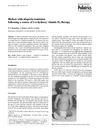
August 1989 in “European journal of pediatrics” This case study describes a child with rickets and alopecia who responded to a small dose of 1-a-hydroxyvitamin D3, but her alopecia remained unchanged despite treatment.
11 citations
,
August 2021 in “Stem Cell Research & Therapy” This study found that coadministration of pimecrolimus may interfere with the therapeutic efficacy of mesenchymal stem cell therapy in atopic dermatitis.
 5 citations
,
July 1991 in “Irish Journal of Medical Science (1971 -)”
5 citations
,
July 1991 in “Irish Journal of Medical Science (1971 -)” Immunosuppressive therapy helps manage autoimmune diseases but carries risks like infection and potential for malignancy.
53 citations
,
October 1998 in “The journal of investigative dermatology/Journal of investigative dermatology” This study found that cyclophosphamide induced significant keratinocyte apoptosis in anagen hair follicles of mice, while topical calcitriol-analogs reduced this apoptosis, suggesting a protective effect against chemotherapy-induced alopecia.
February 2025 in “Skin Appendage Disorders” This scoping review found that most of the 64 alopecia areata patients treated with upadacitinib in existing reports experienced significant hair regrowth, with mild side effects, but the authors call for larger studies to confirm these outcomes.
 January 1983 in “Side effects of drugs annual”
 This chapter reviews adverse effects of anti-anginal and beta-blocker drugs, stating that starting a beta-blocker may temporarily affect driving ability, but it reports no new clinical findings.
10 citations
,
January 2023 in “SAGE Open Medical Case Reports” In this case report, a 23-year-old man with Crohn's disease experienced near-complete resolution of alopecia universalis after 7 months of upadacitinib treatment, suggesting potential benefits for treating concurrent alopecia areata and Crohn's disease.
 18 citations
,
January 2017 in “Journal der Deutschen Dermatologischen Gesellschaft”
18 citations
,
January 2017 in “Journal der Deutschen Dermatologischen Gesellschaft” This study reports that sequential high- and low-dose prednisolone therapy effectively promotes complete hair regrowth in 62% of children with severe alopecia areata, while minimizing severe side effects.
 April 2016 in “Journal of Investigative Dermatology”
 This study identified mefloquine as a potent inducer of lethal ER stress that effectively eliminated vemurafenib-resistant and sensitive melanoma cells, suggesting its potential for repurposing as a melanoma treatment.

In this study, ritlecitinib treatment for 12 and 24 weeks downregulated immunity-related genes and upregulated hair keratin genes in patients with alopecia areata, correlating with scalp hair regrowth response.
 139 citations
,
November 2016 in “Journal of the American Academy of Dermatology”
139 citations
,
November 2016 in “Journal of the American Academy of Dermatology” In this retrospective review, tofacitinib treatment was associated with clinically significant hair regrowth in most adolescent patients with alopecia areata, though limitations suggest further studies are needed to confirm these findings.
 42 citations
,
January 2019 in “Frontiers in Immunology”
42 citations
,
January 2019 in “Frontiers in Immunology” This study identified diltiazem, a calcium channel blocker for hypertension, as a promising repurposed treatment for influenza, enhancing antiviral efficacy when combined with oseltamivir.
In this study, conditional inactivation of the Mad2l1 SAC gene in mice led to aggressive and lethal acute lymphoblastic leukemia and hepatocellular carcinoma, demonstrating a link between chromosomal instability and cancer development.
5 citations
,
May 2022 in “International Journal of Surgery Case Reports” This case study reported the successful management of cardiac tamponade in a pregnant woman with systemic lupus erythematosus using pericardiocentesis and immunosuppressant therapy, although the patient declined cyclophosphamide treatment.