 16 citations
,
August 2011 in “Annals of Allergy Asthma & Immunology”
16 citations
,
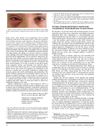
August 2011 in “Annals of Allergy Asthma & Immunology” This report describes a case of a 19-year-old woman experiencing severe recurrent angioedema with airway issues, leading to multiple emergency visits and unsuccessful treatment with typical steroid-sparing agents.
 4 citations
,
April 2016 in “Journal of The American Academy of Dermatology”
4 citations
,
April 2016 in “Journal of The American Academy of Dermatology” This case report details the first known instance of interferon-induced lichen planus in a seronegative HCV patient with metastatic renal cell carcinoma.
5 citations
,
January 2017 in “Nevrologiâ, nejropsihiatriâ, psihosomatika” In this study, sustained-release sodium valproate showed high efficacy in achieving seizure remission for adults with focal and generalized epilepsy over one year, but side effects like weight gain and tremor were more frequent among heterozygous carriers of certain gene variants.
 157 citations
,
December 2015 in “Journal of the American Academy of Dermatology”
157 citations
,
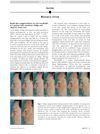
December 2015 in “Journal of the American Academy of Dermatology” This case study reported significant but temporary hair regrowth and skin repigmentation in a patient with vitiligo and alopecia areata during treatment with oral ruxolitinib.
 5 citations
,
June 2001 in “Annals of Internal Medicine”
5 citations
,
June 2001 in “Annals of Internal Medicine” This report describes a case where rituximab provided durable remission in a patient with refractory aggressive diffuse B-cell lymphoma that was unresponsive to prior chemotherapy.
 32 citations
,
September 2015 in “Dermatology”
32 citations
,
September 2015 in “Dermatology” This study describes a newly recognized skin reaction associated with dasatinib, nilotinib, and ponatinib, marked by a lichenoid exanthem with severe pruritus that may necessitate discontinuation of therapy.
June 2026 in “DOAJ (DOAJ: Directory of Open Access Journals)” This report observed that a patient with alopecia areata, resistant to ritlecitinib, experienced significant recovery after 24 weeks of treatment with upadacitinib, highlighting its potential in treating ritlecitinib-resistant cases and suggesting personalized treatment strategies in managing alopecia areata.
 January 1982 in “Clin-Alert”
 Some medications caused temporary health issues that improved after stopping the drugs, but two patients died from liver problems linked to carbamazepine.
March 2023 in “International Journal of Trichology” This case report describes the first known occurrence of alopecia areata associated with cemiplimab, an anti-PD1 drug, in a patient with a positive cancer treatment response.
Ivarmacitinib effectively regrows hair in severe alopecia areata.
 28 citations
,
July 2017 in “Expert Review of Anticancer Therapy”
28 citations
,
July 2017 in “Expert Review of Anticancer Therapy” This study found that CDK4/6 inhibitors in hormone-positive metastatic breast cancer were linked to increased risks of fatigue, alopecia, and stomatitis compared to placebo.
June 2026 in “JEADV Clinical Practice” In this case report, a 77-year-old woman developed alopecia areata after discontinuing cemiplimab treatment for metastatic cutaneous squamous cell carcinoma, suggesting an immune-related adverse effect potentially linked to systemic immune activation.
53 citations
,
November 2014 in “International Journal of Oncology” This study found that wedelolactone, a natural compound from plants, inhibited breast cancer-mediated osteoclast differentiation and activity in vitro, suggesting its potential as a therapy for bone destruction in breast cancer bone metastasis.
November 2007 in “Hospital pharmacy” This article discusses the importance of increasing awareness about specific adverse drug reactions, prevention methods, and the promotion of reporting ADRs to the FDA's MEDWATCH program; it reports no new results.
 1 citations
,
July 2025 in “SKIN The Journal of Cutaneous Medicine”
1 citations
,
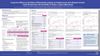
July 2025 in “SKIN The Journal of Cutaneous Medicine” In this study, ritlecitinib 50-mg showed clinically meaningful efficacy, with improvements in the Severity of Alopecia Tool score observed in patients with alopecia areata over a 3-year period, demonstrating long-term benefit in both clinician- and patient-reported outcomes.
 8 citations
,
July 1996 in “Annals of Internal Medicine”
8 citations
,
July 1996 in “Annals of Internal Medicine” This report documented a case of thrombocytopenia and leukopenia linked to the long-term use of itraconazole in a patient with acute myelogenous leukemia.
22 citations
,
September 2020 in “The journal of investigative dermatology/Journal of investigative dermatology” This review highlights the possible role of T regulatory cells in the immune-related mechanisms of alopecia areata but reports no new clinical findings.
20 citations
,
December 2021 in “Journal of the American Academy of Dermatology” This study found that the oral JAK inhibitors ritlecitinib and brepocitinib were effective in maintaining hair regrowth in alopecia areata with continuous use, though efficacy decreased after withdrawal.
665 citations
,
April 2016 in “Nature communications” This study shows that inhibiting anti-apoptotic proteins BCL-W and BCL-XL can specifically induce apoptosis in senescent cells, suggesting a potential strategy for treating age-related pathologies.
July 2026 in “Dermatology and Therapy” In this retrospective study, baricitinib and ritlecitinib showed similar effectiveness and safety over 52 weeks for treating severe alopecia areata, with non-severe adverse events more common for baricitinib, driven by weight gain.
 1 citations
,
December 2022 in “Journal of cosmetic dermatology”
1 citations
,
December 2022 in “Journal of cosmetic dermatology” This study found that combining a potent steroid with a vitamin D analogue may offer more convenient treatment for localized alopecia areata than using a superpotent steroid alone, with comparable efficacy but fewer side effects.
22 citations
,
March 2017 in “Transplant Infectious Disease” This case report describes successful treatment of generalized trichodysplasia spinulosa with leflunomide in a patient undergoing immunosuppressive therapy following solid organ transplantation.
July 2023 in “Indian Journal of Endocrinology and Metabolism” This case study reports that carbimazole therapy led to significant hair regrowth and a drop in thyrotropin receptor antibody levels in an 11-year-old girl diagnosed with alopecia areata and Graves' disease.
 June 2017 in “Journal of The American Academy of Dermatology”
 Teriflunomide often causes mild to moderate hair thinning and loss in MS patients, which usually improves with or without treatment.
1 citations
,
July 2024 in “Journal of Investigative Dermatology” VYN201 shows promise as a safe and effective treatment for non-segmental vitiligo.
June 2026 in “Cancer Research Communications” In this phase 1B study, patients with ER-positive/HER2-negative metastatic breast cancer receiving combined pegylated liposomal doxorubicin and pembrolizumab had a disease control rate of 67% with responses lasting a median of 11 months; the treatment was well tolerated and showed potential for extended use.
 1 citations
,
April 2019 in “Reumatología Clínica (English Edition)”
1 citations
,
April 2019 in “Reumatología Clínica (English Edition)” In this systematic review and meta-analysis, researchers found that methotrexate and leflunomide have similar efficacy for rheumatoid arthritis as first-line treatments, but methotrexate offered a greater reduction in swollen joints, while leflunomide was more associated with liver enzyme increases and fewer gastrointestinal side effects.
 June 2023 in “Journal of Clinical Oncology”
 This study found that alopecia induced by CDK4/6 inhibitors in breast cancer patients occurs more quickly and is more resistant to minoxidil treatment compared to endocrine therapy-induced alopecia.
 2 citations
,
January 2007 in “Toxicologie Analytique et Clinique”
2 citations
,
January 2007 in “Toxicologie Analytique et Clinique” This case study observed a massive lithium overdose in a 38-year-old woman with bipolar disorder, who survived despite extremely high lithium concentrations through continuous venovenous hemodiafiltration.
This compilation details various potential side effects and interactions of vitamin A, but it reports no new research findings.