 5 citations
,
January 2021 in “Journal of The American Academy of Dermatology”
5 citations
,
January 2021 in “Journal of The American Academy of Dermatology” This article reflects on the history and significance of the FDA's approval of topical minoxidil for treating androgenetic alopecia in men and women, dating back to 1988 and 1991 respectively.
November 2024 in “Skin Appendage Disorders” This review provides insights and guidelines for clinicians and patients on assessing the risks and benefits of ritlecitinib for adolescents with alopecia areata, emphasizing shared decision-making and management strategies.
2 citations
,
September 2024 in “Expert Opinion on Drug Metabolism & Toxicology” This review highlights Ritlecitinib as a promising new oral treatment for Alopecia Areata, emphasizing its targeted action and potential efficacy, especially in adults and adolescents, though it notes the need for further real-world effectiveness and long-term safety studies.
January 2026 in “JCEM Case Reports” The researchers reported a case of a 51-year-old woman with primary hypothyroidism who developed anaphylaxis to intravenous levothyroxine after being unresponsive to oral formulations, highlighting potential allergic reactions to IV treatments in such patients.
1 citations
,
August 2024 in “British Journal of Dermatology” This study found that after 15 months of treatment with ritlecitinib, patients with alopecia areata and less than 95% initial hair loss experienced significant hair regrowth, though those with more extensive hair loss showed more variable improvement.
In a proof-of-concept study at Xiangya Hospital, the researchers observed that combining tofacitinib with low-dose interleukin-2 helped maintain remission in refractory alopecia areata patients, with three out of four maintaining complete remission for 11–20 months post-treatment and no adverse events reported.
This study found that Anovlar effectively reduced pain in severe dysmenorrhea cases and regulated cycles in oligomenorrhea patients, but some side effects and occasional treatment failures were reported.
November 2025 in “The Journal of Dermatology” In this case report, a Japanese woman with both atopic dermatitis and alopecia areata showed improvement in both conditions following treatment with nemolizumab.
 6 citations
,
November 2023 in “Clinical Pharmacokinetics”
6 citations
,
November 2023 in “Clinical Pharmacokinetics” This research discusses the parallel clinical development of ritlecitinib, an oral Janus kinase 3/tyrosine kinase inhibitor, for treating conditions such as alopecia areata, vitiligo, ulcerative colitis, Crohn's disease, and rheumatoid arthritis. Results are not reported in the abstract.
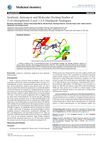 8 citations
,
January 2013 in “Medicinal chemistry”
8 citations
,
January 2013 in “Medicinal chemistry” This study reported that among 10 tested 2-(4-chlorophenyl)-5-aryl-1,3,4-oxadiazole compounds, compound 4c showed the highest activity against cancer cell lines, with a 95.37% average growth rate.
10 citations
,
May 2011 in “American Journal of Hematology” This study found that vinblastine treatment rapidly increased platelet counts in childhood refractory immune thrombocytopenia, providing effective control of bleeding symptoms, although side effects like neuropathic pain were common and resolved with dose adjustments.
3 citations
,
July 2024 in “Archives of Dermatological Research” This study found that oral dexamethasone and DPCP were more effective for treating severe alopecia areata compared to oral ritlecitinib and baricitinib, but oral ritlecitinib had better safety outcomes.
 October 2024 in “International Journal For Multidisciplinary Research”
 This review highlights that Wedelolactone, a compound in Eclipta prostrata, appears to be a potent antioxidant and selective modulator of proteins linked to chronic diseases, suggesting further research into its pharmacological effects is warranted according to the examined data.
December 2025 in “Drug Design Development and Therapy” This retrospective study reported that in HER-2-negative metastatic breast cancer patients, anlotinib combined with taxane/capecitabine showed superior disease control rate, progression-free survival, and overall survival compared to bevacizumab plus chemotherapy, with both treatments having tolerable safety profiles.
July 2004 in “Journal of Clinical Oncology” This study found that therapeutic isolated limb perfusion with melphalan for in-transit melanoma metastases resulted in a high response rate but was associated with some systemic toxicity, including nausea, vomiting, and transient bone marrow depression.
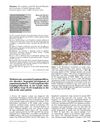 6 citations
,
July 2015 in “European Journal of Dermatology”
6 citations
,
July 2015 in “European Journal of Dermatology” Stopping methotrexate might reverse lymphoma-like conditions in some patients.

In this study using C3H/HeJ mice, a single subcutaneous injection of the fusion protein PTH-CBD increased anagen hair follicle counts and promoted hair regrowth comparably to daily oral ruxolitinib, potentially by enhancing beta-catenin production and stimulating anagen transition.
1 citations
,
January 2025 in “CPT Pharmacometrics & Systems Pharmacology” In this study, the researchers evaluated the exposure-response relationship of ritlecitinib on eyebrow and eyelash regrowth and concluded that the established models justify selecting a 50 mg dose for patients with severe alopecia areata, while highlighting differing efficacy among evaluation methods.
9 citations
,
April 2010 in “Lung cancer” This study reported that a gemcitabine and pemetrexed regimen was moderately active in advanced NSCLC but did not offer an advantage over the paclitaxel and gemcitabine regimen and is not recommended for further evaluation.
January 2026 in “Journal of Dermatology & Dermatologic Surgery” In this case report, a 26-year-old man with alopecia universalis, resistant to multiple standard treatments, achieved complete and sustained hair regrowth with ruxolitinib, highlighting its potential as a promising option for patients with refractory AU.
 April 2012 in “Journal of the American Academy of Dermatology”
 In this survey of dermatologists, pimozide was most commonly identified as the preferred first-line antipsychotic for treating delusions of parasitosis, followed by risperidone.
September 2023 in “Journal of the American Academy of Dermatology” CTP-543 significantly improved eyebrow and eyelash regrowth and patient satisfaction in adults with alopecia areata.
July 2025 in “Journal of the European Academy of Dermatology and Venereology” This study reports no new findings but provides corrected figures for the long-term safety and efficacy of ritlecitinib in treating alopecia areata from the ALLEGRO-LT phase 3 study.
 6 citations
,
April 2014 in “European journal of medicinal chemistry”
6 citations
,
April 2014 in “European journal of medicinal chemistry” This study found that several newly synthesized dihydrobenzopyran compounds inhibited insulin secretion and had vasorelaxant activity, with some more potent than reference KATP channel activators, though compound 21 functioned as a Ca2+ entry blocker.
September 2025 in “Journal of the American Academy of Dermatology” Deuruxolitinib improves anxiety and depression in severe alopecia areata patients.
26 citations
,
July 1992 in “International Journal of Dermatology” In this study, treating refractory alopecia universalis with low-dose cyclosporine A and prednisolone improved symptoms, with no recurring alopecia six months post-treatment and enhancements in immunologic function.
December 2025 in “The Journal of Dermatology” This study reported that ritlecitinib effectively improved hair regrowth in JAK inhibitor-naïve adolescent patients with severe alopecia areata, achieving significant reductions in SALT scores within 24 weeks, but was less effective for patients who had previously been treated with baricitinib.
23 citations
,
October 2024 in “British Journal of Dermatology” In this study, ritlecitinib showed sustained effectiveness and a favorable safety profile in treating alopecia areata in patients aged 12 and older over 24 months, with improvements observed in hair and eyebrow regrowth and patient satisfaction.
 1 citations
,
January 2014 in “Side effects of drugs annual”
1 citations
,
January 2014 in “Side effects of drugs annual” This review discusses adverse reactions to antihelminthic drugs and highlights that levamisole, a common street cocaine adulterant, can cause serious side effects, including skin necrosis and vasculitis.
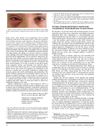 16 citations
,
August 2011 in “Annals of Allergy Asthma & Immunology”
16 citations
,
August 2011 in “Annals of Allergy Asthma & Immunology” This report describes a case of a 19-year-old woman experiencing severe recurrent angioedema with airway issues, leading to multiple emergency visits and unsuccessful treatment with typical steroid-sparing agents.