 1 citations
,
September 2024 in “Frontiers in Cell and Developmental Biology”
1 citations
,
September 2024 in “Frontiers in Cell and Developmental Biology” Pigs are a good model for studying human hair growth and disorders.
 January 1957 in “Nihon Chikusan Gakkaiho”
 This article examines microscopic structural differences and pigment distribution in various rabbit hair colors and reports no clinical results.
 October 2005 in “Nature reviews. Molecular cell biology (Print)”
 This study suggests that the interaction between the hairless and wise proteins can help bald mice regrow fur, highlighting its essential role in hair-follicle regeneration.
 April 2018 in “Journal of Investigative Dermatology”
 This study found that arrector pili muscles formed by Sonic Hedgehog signaling play a critical role in maintaining sympathetic nerve connections to hair follicle stem cells, influencing hair regeneration, with implications for hair loss treatments.
192 citations
,
October 1998 in “Experimental Dermatology” This article examines the terminal to vellus transition in androgenetic alopecia through cellular and developmental mechanisms, discussing challenges and knowledge gaps without presenting new clinical findings.
 April 2018 in “Journal of Investigative Dermatology”
 This study investigated novel genetic tools to manipulate hair follicle compartments in mice and found that altering dermal papilla genes can significantly impact hair pigmentation.
1 citations
,
September 2020 in “Journal of dermatology” This study identified a novel mutation and confirmed a previous mutation in the LIPH gene in a woman with autosomal recessive woolly hair, expanding the mutation spectrum for this condition.
 11 citations
,
July 2008 in “International Journal of Dermatology”
11 citations
,
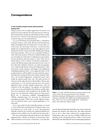
July 2008 in “International Journal of Dermatology” This article discusses a case of patchy alopecia areata that spares greying hairs but reports no new findings; it refers to existing literature for context.
 4 citations
,
November 2018 in “JAAD case reports”
4 citations
,
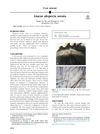
November 2018 in “JAAD case reports” This report presents a case of alopecia areata manifesting in a linear pattern, deviating from the typical presentation of sharply demarcated round patches.
 109 citations
,
July 1993 in “The journal of investigative dermatology/Journal of investigative dermatology”
109 citations
,
July 1993 in “The journal of investigative dermatology/Journal of investigative dermatology” Hair color production is closely linked to the active growth phase of hair in mice and may also influence hair growth itself.
May 2026 in “Journal of Investigative Dermatology”  September 2023 in “Cells tissues organs”
 In this study, researchers observed that in mice, as they age beyond 200 days, unusual curved hair follicles and increased white hairs emerge, indicating stem cell-related changes in keratinocyte and melanocyte characteristics, providing insights into hair aging processes.
 40 citations
,
January 2010 in “International Journal of Trichology”
40 citations
,
January 2010 in “International Journal of Trichology” This review discusses the diagnostic criteria and guidelines for managing loose anagen syndrome and differentiating it from non-scarring alopecias, but it reports no new clinical results.
1 citations
,
April 2023 in “Animals” In this study, Min pigs were found to have unique characteristics for secondary hair growth compared to Berkshire and Yorkshire pigs, with the Wnt and BMP signaling pathways stimulating follicle stem cell activity and promoting secondary hair growth and gene expression.
 5 citations
,
January 2016 in “Skin appendage disorders”
5 citations
,
January 2016 in “Skin appendage disorders” This case report describes a rare occurrence of lichen planopilaris on the face in a 45-year-old man, contributing to the limited existing cases in the literature.
 5 citations
,
January 2014 in “International Journal of Trichology”
5 citations
,
January 2014 in “International Journal of Trichology” Hair loss on the lower legs is common in middle-aged men, usually harmless, and doesn't need treatment.
This study found that innate lymphoid cells-type 1 (ILC1lc) can induce alopecia areata (AA) by disrupting hair follicle immune privilege and causing hair follicle dystrophy and regression in both ex vivo and in vivo settings.
November 2025 in “Pediatric Dermatology” In this case study, a previously healthy 7-year-old boy was treated with a combination of topical minoxidil, retinoic acid, and clobetasol for a rare presentation of linear alopecia areata, resulting in full hair regrowth one year later.
5 citations
,
August 2005 in “Anatomy and Embryology” This study found that concentrated clusters of noradrenergic nerve fibers form a longitudinal linear system in rat skin, particularly innervating arrector pili muscles.
 41 citations
,
January 2014 in “Annals of Dermatology”
41 citations
,
January 2014 in “Annals of Dermatology” This study found that dermoscopy showed distinctive patterns for different types of alopecia, supporting its clinical usefulness for diagnosing diseases with small round or oval hairless patches on the scalp.
July 2020 in “Research Square (Research Square)” This study reported distinct expression patterns and potential functions of lncRNAs during the hair follicle cycle in yaks, suggesting insights into lncRNA roles and conservation between yak and cashmere goat.
12 citations
,
January 2013 in “International Journal of Genomics” In this study, researchers used mRNA sequencing to identify and categorize over 49,000 contigs in goat skin, revealing significant gene activity related to metabolism, cell cycle, and cell division during hair growth.
February 2026 in “International Journal of Pharmaceutics” 
This study found that melatonin upregulates LncRNA16913.1, which sequesters chi-miR-195-5p to release FZD6 and enhance fibroblast proliferation in cashmere goat skin, suggesting a regulatory mechanism within the lncRNA-miRNA-mRNA cascade in vitro.
12 citations
,
January 2013 in “Indian dermatology online journal” This case report presents a patient with woolly hair and associated symptoms, including keratosis pilaris, nail dystrophy, increased interdental spaces, and recurrent bullous impetigo, observing a combination not previously reported.
 September 2026 in “Scientific Reports”
 This study discovered a conserved "fiber-like-motif" of melanosomes aligned in hair across various mammalian species, shedding light on the internal structure that influences hair's thermal and mechanical properties.
 14 citations
,
September 2018 in “Asian-Australasian Journal of Animal Sciences”
14 citations
,
September 2018 in “Asian-Australasian Journal of Animal Sciences” This study found significant changes in gene and protein expression related to hair follicle development in Rex rabbits' skin during the first 8 weeks of life.
 January 2018 in “Journal of Cosmetics, Dermatological Sciences and Applications”
 This case report indicates that hair transplantation using follicular unit extraction can successfully treat hair loss at the nape of the neck caused by acne keloidalis nuchae.

This study identified specific lncRNAs and mRNAs differentially expressed in miniaturized follicles compared to normal follicles in patients with androgenetic alopecia, with AL136131.3 potentially inhibiting hair growth and accelerating follicle transition to catagen through effects on glycolysis-related genes.
79 citations
,
December 1999 in “Mechanisms of Development” Whn is crucial for hair growth in certain areas by controlling a specific gene.