1 citations
,
July 2020 in “Iberoamerican Journal of Medicine” This study found that cicatricial alopecia predominantly affects middle-aged Libyan females, with conditions like lichen planopilaris and discoid lupus erythematosus among the most common diagnoses.
11 citations
,
September 2023 in “Nature Communications” In this study, researchers found that the cell surface protein Lrig1 plays a crucial role in regulating the suppressive function of regulatory T cells, suggesting it as a potential target for treating autoimmune diseases, as evidenced by experiments in mouse models.
 24 citations
,
January 2019 in “Theranostics”
24 citations
,
January 2019 in “Theranostics” This study found that loss of the Pten gene in Lgr5+ hair follicle stem cells promoted squamous cell carcinoma formation through the Akt/β-catenin signaling pathway.
July 2025 in “Journal of Investigative Dermatology” Ritlecitinib reduces alopecia areata symptoms by blocking JAK3/TEC signaling and T-cell activity.
July 2015 in “Reactions weekly” Lamotrigine can cause hair loss in some patients.
6 citations
,
October 2020 in “Actas Dermo-Sifiliográficas” This review discusses the effectiveness of low-level laser therapy for androgenetic alopecia, finding significant increases in hair density and growth for individuals treated with this method.
4 citations
,
December 2020 in “Tissue Barriers” This review explores the immunological aspects of epidermal differentiation in loricrin knockout mice, offering insights into keratinization and potential intrinsic factors affecting immune function, but provides no new clinical findings.
1 citations
,
December 2020 in “Medical lasers” The laser therapy device effectively increased hair growth in people with androgenetic alopecia.
 5 citations
,
May 1999 in “Dermatologic Surgery”
5 citations
,
May 1999 in “Dermatologic Surgery” Lasers can effectively treat pseudofolliculitis barbae, but insurance often doesn't cover it, possibly due to racial bias.
 December 2022 in “Medical lasers”
 This study reviews the mechanism and potential treatment roles of low-level laser therapy for immune-mediated skin diseases, reporting no new clinical results.
February 2025 in “Canadian Journal of Health Technologies” This review assessed the clinical and cost-effectiveness of baricitinib, an oral treatment for severe alopecia areata in adults, to inform Canadian reimbursement recommendations, excluding Quebec.
91 citations
,
July 1997 in “Dermatologic Clinics” This article compares traditional nonlaser hair removal methods with newly developed laser-assisted techniques, discussing their applications but not presenting new research findings.
 January 2008 in “Journal of The American Academy of Dermatology”
 A nonchemical lotion was found effective in killing head lice and their eggs in most people, indicating it could be useful for managing head lice.
August 2021 in “Journal of Investigative Dermatology” This study found that ILC1-like cells can induce alopecia areata in healthy human hair follicles, suggesting that these cells might be a therapeutic target in AA management.
 146 citations
,
June 2012 in “PLoS ONE”
146 citations
,
June 2012 in “PLoS ONE” This study observed that quiescent label-retaining cells in the intestine, identified by Paneth cell markers, can switch to a proliferative state and activate Bmi1 expression during tissue injury, contributing to tissue regeneration.
April 2008 in “Progrès en Urologie”  6 citations
,
September 2018 in “Journal of Dermatological Treatment”
6 citations
,
September 2018 in “Journal of Dermatological Treatment” This review examines the FDA's 510(k) approval process for low-level laser therapy devices used in treating androgenetic alopecia and reports no new clinical findings.
7 citations
,
March 2023 in “JEADV. Journal of the European Academy of Dermatology and Venereology/Journal of the European Academy of Dermatology and Venereology” This letter discusses the potential of the Janus kinase 1 inhibitor abrocitinib for treating oral lichen planus but provides no new research findings.
November 2009 in “Dermatology Times” Low-level laser therapy is safe and effective for treating female hair loss.
 4 citations
,
August 2014 in “Dermatology and Therapy”
4 citations
,
August 2014 in “Dermatology and Therapy” This study suggests that LOYON® is safe, well tolerated, and effective in reducing scaling from cradle cap in infants and children without causing spot bleedings.
This study characterized Eclipta alba for use in a capillary product for alopecia, confirming its suitable physico-chemical properties and pharmacological constituents, including wedelolactone for hair growth.
 April 2017 in “Journal of Investigative Dermatology”
 This study suggests that sirolimus and propranolol may reduce abnormal lymphatic endothelial cell proliferation in lymphatic malformations, potentially improving vessel function and patient outcomes.
 April 2026 in “International Journal of Drug Delivery Technology”
 This study found that Lactobacillus acidophilus cell-free supernatant caused significant cytotoxicity, reduced migratory ability, and induced apoptosis in cervical cancer cell lines, suggesting its potential as a non-toxic adjunct therapy for cervical cancer.
 5 citations
,
November 2014 in “Hair transplant forum international”
5 citations
,
November 2014 in “Hair transplant forum international” This article introduces a series on low level laser light therapy, focusing on its science, regulatory aspects, and controlled trial methodologies, but reports no new clinical results.
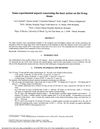 June 2001 in “Proceedings of SPIE”
 The authors concluded that low energy laser therapy may serve as a useful complementary treatment for skin diseases such as lichen planus, infectious finger pulpits, scalp alopecia, and crural ulcers.
37 citations
,
November 2019 in “Journal of Microbiology and Biotechnology” This study found that loliolide enhanced hair growth-related functions in 3D dermal papilla spheroids by activating AKT/β-catenin signaling pathways, with increased expression of related growth factors and genes.
January 2026 in “Skin Research and Technology” The study's findings on VLDL as a biomarker for hair loss are unreliable.
 3 citations
,
September 2015 in “Journal of Vascular Surgery”
3 citations
,
September 2015 in “Journal of Vascular Surgery” This study found that chemical lumbar sympathectomy with 5% phenol effectively treated idiopathic livedo reticularis in most patients, offering a potential long-lasting solution with repeatable efficacy upon recurrence.