 December 2011 in “Drug Research”
 The document shows the state of pharmaceutical patents as of 1999, focusing on treatments for various diseases.
January 2025 in “International Journal of Advanced Biochemistry Research” This case report described a one-year-old male husky dog with severe itching and skin lesions caused by Demodex canis, where treatment with Nexgard® and other supportive therapies over two weeks improved the dog's condition, indicating Nexgard® as a viable option for managing canine demodicosis.
 January 2024 in “International Journal of Advanced Biochemistry Research”
 In this case report, a one-year-old male husky with canine demodicosis exhibited significant improvement in skin condition after receiving treatment with Nexgard®, antibiotics, and supportive therapies, suggesting Nexgard® as an effective option for managing this condition.
80 citations
,
June 2002 in “Molecular Biology of the Cell” This study found that type II keratins in proliferating epithelial tissues are phosphorylated at a conserved motif during mitosis and stress, impacting keratin solubilization and reorganization.
1 citations
,
April 2024 in “The Journal of Dermatology” This case study reports that a woman with epidermolysis bullosa acquisita experienced severe cicatricial alopecia and total nail loss after discontinuing treatment for two years, highlighting the potential for serious effects if the condition is not managed.
1 citations
,
January 1917 This article discusses various methods for administering medication to dogs effectively but does not report any new research findings.
3 citations
,
June 2019 in “Veterinary record case reports” This case report describes a miniature dachshund with pustular dermatitis and other symptoms, developing pemphigus foliaceus after receiving afoxolaner, which was effectively managed with prednisone and cyclosporine.
 May 2025 in “Scientific and Technical Bulletin оf State Scientific Research Control Institute of Veterinary Medical Products and Fodder Additives аnd Institute of Animal Biology”
 In this study, researchers developed "Akaro Spectra," an antiparasitic tablet for dogs using cryodestruction of plant materials, which showed 100% efficacy against Otodectes cynotis ticks by the second day and 93.76% efficacy against Ixodes, Dermacentor, and Rhipicephalus ticks.
2 citations
,
January 2010 in “Journal of Veterinary Behavior”  January 2024 in “Jurnal Ilmu Kesehatan Hewan”
 In this veterinary case report, a mixed breed dog with Malassezia dermatitis showed significant improvement and hair regrowth after 28 days of treatment with ketoconazole and other supportive therapies.
3 citations
,
August 2004 in “Veterinary Dermatology” This study reported that canine recombinant IFNγ (KT‐100) significantly improved atopic dermatitis symptoms in dogs compared to placebo, and it appeared to be safe during the study period.
8 citations
,
July 1983 in “Veterinary Quarterly” This study found that treating dermatomycosis in cats and dogs with ketoconazole for 20 days resulted in new hair growth and a high rate of clinical cure, with minimal side effects.
 14 citations
,
April 2019 in “Genes”
14 citations
,
April 2019 in “Genes” This study identified a genetic locus associated with coat type in domestic dogs, showing certain variants linked to single-coated breeds and suggesting potential regulatory roles.
3 citations
,
March 2021 in “Indonesia Medicus Veterinus” This case report describes successful treatment of anaplasmosis in a Kintamani mix dog with doxycycline, ivermectin, vetadryl, and Livron b-plex, leading to improved activity, hair growth, appetite, and tick eradication.
 October 2022 in “Veterinária notícias/Veterinária Notícias”
 This case report describes a 5-year-old Akita with granulomatous sebaceous adenitis and pseudocyesis, who showed clinical remission and maintained a good quality of life after treatment with surgery and topical therapy.
![2-Deoxy-2-[18F]Fluoro-D-Glucose Positron Emission Tomography/Computed Tomography](/images/assets/35fab163-57b7-4db8-b1e0-2929b51b2144/small/60162.jpg) January 2016 in “Electronic Theses of LMU Munich (Ludwig-Maximilians-Universität München)”
January 2016 in “Electronic Theses of LMU Munich (Ludwig-Maximilians-Universität München)” FDG PET/CT can improve cancer treatment plans in dogs.
3 citations
,
January 2010 in “PubMed” This case study reports that a police dog's pododemodicosis lesions resolved completely six months after a treatment regimen of ivermectin, antibacterial drugs, and beta-glucan.
January 2018 in “INTAS POLIVET” In this clinical case report, a Labrador dog with multiple skin issues was successfully treated for Demodex mites and Pemphigus foliaceus using Prednisolone, Cephalexin, Amitraz, Ivermectin, and Ketoconazole, resulting in an uneventful recovery.
1 citations
,
April 2024 in “Animal Genetics” This study described an Appenzeller Mountain Dog with clinical signs of an NSDHL defect, discovering a large heterozygous de novo deletion spanning the entire NSDHL gene through whole genome sequencing.
 January 2024 in “Jurnal Ilmu Kesehatan Hewan”
 In this case report, a 7-month-old local dog named Oreo was diagnosed with demodicosis and helminthiasis and showed improvement in skin condition after 14 days of treatment with ivermectin, antihistamines, vitamin B complex, fish oil, and sulfur soap.
 May 2024 in “Knowable Magazine”
 This source reports that various studies and case reports suggest CBD may help pets with ailments like epilepsy, arthritis, and skin issues, though findings are inconsistent and further research is needed due to variable factors such as dosages and hemp product quality.
April 2026 in “DOAJ (DOAJ: Directory of Open Access Journals)” In this study, supplementing adult Bichon Frises with 600 mg/kg Omega-3 PUFAs significantly improved their skin health, hair quality, feeding behavior, and metabolic health, compared to a control diet, over six weeks.
 May 2026 in “International Journal of Advanced Biochemistry Research”
 In this case study, a three-year-old Labrador with canine atopic dermatitis showed significant improvement in pruritus and skin lesions after treatment with oclacitinib and supportive therapy over a one-month follow-up.
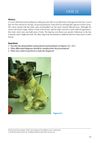 May 2019 in “Small Animal Dermatology”
 This chapter discusses a case of sebaceous adenitis in a Japanese Akita, providing educational material for students and practitioners but reports no new research findings.
2 citations
,
January 2025 in “Veterinary Dermatology” This study found that Pomeranian dogs with a woolly coat type and male dogs had a higher risk of developing Alopecia X in the Netherlands and Belgian regions studied.
April 2026 in “Veterinary Record Case Reports” In this case study, a 2-year-old Pomeranian dog from Mizoram, India, with alopecia X showed significant hair growth and improved skin condition after undergoing neutering and receiving omega-3 and omega-6 fatty acid supplements.
4 citations
,
June 2020 in “PubVet” This article reviews existing knowledge on Alopecia X in Nordic breed dogs, highlighting the hereditary aspects and treatment responses, but does not report new research findings.
9 citations
,
April 1999 in “Mammalian Genome” This study reports that the acidic and basic keratin gene clusters in dogs are located on chromosomes CFA9 and CFA27, respectively, similar to genetic arrangements in humans and mice.
 84 citations
,
March 2004 in “Veterinary Dermatology”
84 citations
,
March 2004 in “Veterinary Dermatology” In randomized controlled trials, this research reports that cyclosporin is as effective as glucocorticoids for treating canine atopic dermatitis and has potential benefits for other immune-mediated skin conditions in dogs.