53 citations
,
June 2005 in “The journal of investigative dermatology/Journal of investigative dermatology” This article reviews extensive genetic polymorphisms in the keratin-associated proteins of human hair, indicating complexity but reporting no new clinical results and calls for further research on their potential impact on hair structure.
5 citations
,
December 2017 in “Atom Indonesia” This study found higher concentrations of chromium, lead, and arsenic in the hair of workshop workers and traffic officers compared to a control group, indicating occupational exposure to these metals. Mercury levels varied across exposed groups, suggesting additional lifestyle factors may influence metal accumulation.
35 citations
,
November 2021 in “Journal of Animal Science and Biotechnology/Journal of animal science and biotechnology” This study identified dynamic changes in DNA methylation associated with different growth stages in Tan sheep, which may offer insights to retain their valuable curly fleece as they age.
79 citations
,
October 1998 in “Genomics” This study found that the mK6alpha and mK6beta genes in mice are regulated differently at the mRNA level, with implications for understanding K6 gene evolution and function in mammals.
30 citations
,
January 2013 in “Human Mutation” This study identified a homozygous frameshift mutation in the HOXC13 gene associated with pure hair and nail ectodermal dysplasia in a consanguineous Syrian family, suggesting crucial roles for HOXC13 in hair and nail development.
48 citations
,
November 2002 in “Journal of biological chemistry/The Journal of biological chemistry” In this study, researchers found that size polymorphisms in certain hKAP1 genes are linked to the hKAP1.1B and hKAP1.3 genes, arising from intragenic deletions and duplications in Japanese and Caucasian populations.
74 citations
,
March 2013 in “Development” This study found that Hopx labels a long-lived progenitor population in hair follicles, which contributes to hair follicle stem cell homeostasis and has an alternative origin from previously thought progenitors.
 11 citations
,
June 2019 in “Tissue & Cell”
11 citations
,
June 2019 in “Tissue & Cell” This study indicates that COL17A1 plays a crucial role in the differentiation process of hair-follicle-associated pluripotent stem cells.
 February 2025 in “Archives animal breeding/Archiv für Tierzucht”
 This study found that certain gene polymorphisms in keratin 27 and ELOVL4 are linked to improved cashmere fineness and production traits in Liaoning cashmere goats.
June 2018 in “Korean Journal of Family Practice” This study found that hoof progenitor cells from fresh equine tissue have multilineage differentiation capabilities, offering insights for future progenitor cell-based hoof and dermal-epidermal tissue engineering.
July 2026 in “Journal of Investigative Dermatology” April 2026 in “Chinese Chemical Letters” October 2024 in “Benha Medical Journal” In this case-control study, researchers found that patients with alopecia areata had significantly higher serum levels of interleukin-18 and NLRP3 compared to healthy controls, suggesting a potential link between these inflammatory markers and the disease.
 April 2018 in “Journal of Investigative Dermatology”
 This study found that kaempferol increased the proliferation potential of basal epidermal cells in three-dimensional skin models by enhancing integrin expression and altering cell morphology.
April 2021 in “Journal of Investigative Dermatology” Krox20 is crucial for hair growth and maintaining skin stem cells.
 June 2024 in “Okayama University Scientific Achievement Repository (Okayama University)”
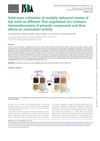
 In this study, methanol extracts from Thai-colored rice fermented with Aspergillus molds exhibited an increase in polyphenolic content and antioxidant activity, outperforming Thai white and Japanese white rice, notably transforming key polyphenols like quercetin and ferulic acid.
23 citations
,
April 2003 in “Journal of Structural Biology” Keratin structure changes during keratinization, but the exact model remains uncertain.
 April 2023 in “The journal of investigative dermatology/Journal of investigative dermatology”
 This study found that inhibiting the Mitochondrial Pyruvate Carrier in human hair follicles ex vivo activated the integrated stress response, affecting cell proliferation and metabolism.
January 2026 in “Cytokine” 1 citations
,
April 2025 in “Animals” In this study, nucleotide sequence variation in the KRTAP13-3 gene was associated with changes in heterotypic hair fibre diameter variation in Chinese Tan sheep.
 2 citations
,
November 2022 in “Skin research and technology”
2 citations
,
November 2022 in “Skin research and technology” This study found that the p.E402K mutation in the KRT86 gene is a hotspot in Chinese patients with monilethrix, and treatment with 5% topical minoxidil significantly improved hair density and quality.
 1 citations
,
June 2023 in “International journal of biological macromolecules”
1 citations
,
June 2023 in “International journal of biological macromolecules” In this preclinical study, researchers found that combining equal ratios of high molecular weight keratin intermediate filaments and low molecular weight keratin-associated proteins from human hair led to the most extensive fibrinogen precipitation, suggesting potential for developing effective hair protein-based hemostatic materials.
 42 citations
,
January 2017 in “Genes”
42 citations
,
January 2017 in “Genes” This study observed that genetic variation in the ovine KRTAP22-1 gene is linked to increased wool yield and decreased fiber curvature in sheep, indicating its potential use in breeding programs.
41 citations
,
January 2015 in “Development” This study found that inducing Atoh1 expression in transgenic mice is sufficient to generate new Merkel cells in the epidermis, with variations by skin location, developmental age, and hair cycle stage.
43 citations
,
September 2009 in “Stem Cells” This study reported that GFP labeling driven by the K15 promoter enables visualization and selection of stem cells in adult human scalp hair follicles for further analysis and manipulation.
January 2016 in “Huanjing yu Jiankang Zazhi” 4 citations
,
January 2009 in “PubMed” In this study, researchers identified an autosomal dominant mutation (E402K) in exon 7 of the KRT86 gene as a cause of Monilethrix in a large family from Turkey.
 5 citations
,
February 2010 in “Drug development and industrial pharmacy”
5 citations
,
February 2010 in “Drug development and industrial pharmacy” This study found that vesicles formed with behenyltrimethylammonium chloride, stearic acid, and hinokitiol significantly improved skin permeation of hinokitiol in vitro, which may aid in hair growth promotion.