1 citations
,
November 2020 in “UMM Institutional Repository (University of Maine at Machias)” In this true experimental study, researchers assessed the antibacterial effect of white jasmine leaf extract against Propionibacterium acnes and found varying inhibition zone diameters, with 500 µg/mL achieving up to 10.95 mm, though less effective than clindamycin, which reached 28.55 mm.
January 2024 in “SAGE Open Medical Case Reports” In this case report, a 37-year-old woman with lupus panniculitis experienced successful restoration of volume in her right cheek using injectable hyaluronic acid filler after suffering from lipoatrophy.
 September 2017 in “The journal of investigative dermatology/Journal of investigative dermatology”
 This study reports that the loss of Langerhans cells in lichen planopilaris scars may be linked to the downregulation of ITG αvβ6, which is not seen in other scar formation diseases.
29 citations
,
December 2019 in “Expert review of clinical pharmacology” This review discusses the evidence supporting Janus kinase inhibitors for alopecia areata and highlights ongoing optimism as phase 3 trials begin, with no new clinical results reported.
December 2025 in “The Journal of Dermatology” July 2018 in “Zenodo (CERN European Organization for Nuclear Research)” In this study, the use of Dravanti beeja lepa for 28 days was observed to significantly regenerate hair in patients with Indralupta (Alopecia Areata).
 June 2024 in “Military medicine”
 This review explored treatment options for alopecia areata in the military health care system, evaluating the pathogenesis and impact of the condition as well as the efficacy and safety of FDA-approved JAK inhibitors, baricitinib and ritlecitinib.
15 citations
,
December 2019 in “European Journal of Dermatology” This study identified new and recurrent missense mutations in the PHGDH and PSAT1 genes, implicating them in the pathogenesis of Neu-Laxova syndrome in Chinese patients.
July 2026 in “Journal of the American Academy of Dermatology” 1 citations
,
October 2025 in “Journal of Allergy and Clinical Immunology” A JAK1 variant causes hair loss, skin issues, and thyroid disease, but treatment with a specific inhibitor can help.
 January 2024 in “Molecules (Basel. Online)”
 In this study, researchers examined juglone's potential as a restoring agent for hair keratin damaged by permanent or bleaching treatments, finding that juglone formed Michael adducts with cysteine residues, leading to a more regular hair surface as observed via IR spectroscopy and SEM analysis.
 1 citations
,
February 2024 in “JEADV. Journal of the European Academy of Dermatology and Venereology/Journal of the European Academy of Dermatology and Venereology”
1 citations
,
February 2024 in “JEADV. Journal of the European Academy of Dermatology and Venereology/Journal of the European Academy of Dermatology and Venereology” In this research, the authors reported that long-term treatment with the JAK1/JAK2 inhibitor baricitinib effectively maintains hair regrowth in patients with severe alopecia areata and may gradually improve outcomes for partial responders over 104 weeks, without increasing side effect incidence.
 December 2022 in “Dermatology and Therapy”
 This review discusses the unmet needs and barriers in managing alopecia areata in Latin America, highlighting access constraints and recommending coordinated efforts to improve patient outcomes with promising new treatments.
January 2026 in “Medicina” This review found that oral JAK inhibitors, used off-label in various inflammatory skin disorders, often resulted in rapid and sustained clinical improvements with acceptable safety over several months, although the evidence is drawn from case-based reports.
4 citations
,
August 2006 in “The Journal of Dermatology” This case report describes the first known association of hypertrichosis lanuginosa acquisita with autoimmune hepatitis, expanding the list of conditions linked to this rare disorder.
 24 citations
,
September 1997 in “PubMed”
24 citations
,
September 1997 in “PubMed” This study concludes that loose anagen hair can develop in adulthood and may be difficult to distinguish from telogen hair loss, with pathologic findings offering limited diagnostic insights.

This review discusses loose anagen hair syndrome, a benign and self-limited condition predominantly affecting children, and highlights the importance of differentiating it from other hair disorders like telogen effluvium and trichotillomania, but reports no new results.
 July 2026 in “Zenodo (CERN European Organization for Nuclear Research)”
 In this study, researchers focused on the "bulge region" of hair follicles, identifying Janus kinases as key players in hair growth signaling, which could inform new therapies for hair restoration.
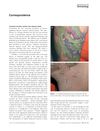 June 2011 in “International Journal of Dermatology”
 A man's red tattoo caused a skin reaction and hair loss in his beard, which improved after treatment.
June 2025 in “Medical alphabet” This review discusses the pathogenesis of alopecia areata and the use of systemic JAK inhibitors in treating severe cases in pediatric patients, highlighting the safety of selective agents for children.
2 citations
,
June 1953 in “Journal of the American Medical Association” This article explores the correlation between alopecia leprotica and Buddhist customs, presenting evidence that leprosy is contracted during infancy or childhood rather than in maturity; it reports no new clinical findings.
1 citations
,
October 2024 in “JAAD Case Reports” This article discusses alopecia areata and lichen planopilaris, providing a review of their clinical characteristics and reporting no new research findings; the authors underscore the potential progression and distinctive features of each condition.
June 2026 in “The Journal of Dermatology”  August 2025 in “Arabixiv (OSF Preprints)”
 Low-level laser therapy effectively improves hair growth in androgenetic alopecia with minimal side effects.
 2 citations
,
January 2005 in “Journal of Cosmetic and Laser Therapy”
2 citations
,
January 2005 in “Journal of Cosmetic and Laser Therapy” New cosmetic treatments for acne, hair loss, cellulite, wrinkles, and skin resurfacing are effective.
July 2004 in “TSpace (University of Toronto)” This case report describes the rare coexistence of alopecia areata and lichen planus in a 42-year-old man, with alopecia stabilizing after topical betamethasone treatment.
 September 2014 in “SciBX”
 In a mouse study, JAK inhibitors like Jakafi and Xeljanz prevented alopecia areata and aided hair regrowth; similar effects were observed in three patients with the condition.
2 citations
,
October 2014 in “Orbit” This study observed that lacrimal gland inflammation and alopecia areata, both autoimmune conditions, can occur together in patients.
1 citations
,
December 2023 in “Molecules/Molecules online/Molecules annual” This review summarized the latest knowledge suggesting that Janus kinase inhibitors may have therapeutic potential for treating skin diseases like atopic dermatitis and psoriasis, especially when conventional therapies do not work.