 178 citations
,
October 2001 in “Genes & Development”
178 citations
,
October 2001 in “Genes & Development” This study found that the mammalian hairless gene encodes a corepressor protein that interacts with thyroid hormone receptors, providing insights into hair loss syndromes in humans and mice.
 4 citations
,
May 2025 in “npj Parkinson s Disease”
4 citations
,
May 2025 in “npj Parkinson s Disease” This study identified peripheral myeloid cells as the earliest dysregulated immune cells in PINK1 KO mice with Parkinson’s-like symptoms following intestinal infections, suggesting that PINK1 regulates gut immune functions linked to early Parkinson’s disease mechanisms.
 1 citations
,
October 1996 in “Journal of Cutaneous Medicine and Surgery”
1 citations
,
October 1996 in “Journal of Cutaneous Medicine and Surgery” This review discusses the advancements needed for gene therapy to become commonly used in dermatology and reports no new clinical results.

In this clinical trial, patients with lichen planopilaris treated with the oral TYK2 inhibitor deucravacitinib showed significant improvement in PGA, LPPAI, and Skindex-16 scores over 24 weeks, with transcriptomic analyses indicating decreased inflammatory and immune pathway activity post-treatment.
 December 2021 in “Molecular genetics and genomics”
 This study found that two unrelated domestic shorthair cats had novel DSG4 gene mutations causing defective hair shafts, representing the first report of pathogenic DSG4 variants in domestic animals.
 336 citations
,
August 2015 in “European Journal of Epidemiology”
336 citations
,
August 2015 in “European Journal of Epidemiology” This article reviews the design and objectives of the Rotterdam Study, as well as summarizes major findings, without reporting new results.
1 citations
,
October 2025 in “BMC Genomics” This study found that both natural and environmental selection have significantly influenced the goat genome, revealing genetic loci tied to adaptation, fitness, and productive traits, more so than artificial selection, across various goat populations.
2 citations
,
December 2020 in “Frontiers in genetics” In this study, the researchers identified the SPEF2 and PRLR genes as potential candidates associated with feather rate phenotypes in Shouguang chickens through combined genome-wide association and differential expression analyses.
 6 citations
,
January 2013
6 citations
,
January 2013 This chapter reviews hyperadrenocorticism in ferrets, covering its causes, symptoms, diagnosis, and treatment options, but reports no new research findings.
9 citations
,
July 2016 in “Genes” This study identified specific genetic variants as the cause of visual impairment and non-syndromic alopecia in two brothers, reinforcing the link between PDE6H variants and achromatopsia and LPAR6 variants and alopecia.
8 citations
,
May 2025 in “Biomolecules” This review highlights the evolution of forensic genetics from basic DNA analysis to complex genome-wide studies, enabling insights into personal traits, ancestry, and habits, and suggests future advancements through technologies like CRISPR and AI.
4 citations
,
February 2023 in “iScience” This study found that unique genomic regions in Korean long-tailed chickens may contribute to their long tail feathers, offering potential for genetic advancements in ornamental chicken breeding.
 June 2026 in “Nature Communications”
 This study found that in stretch-mediated tissue expansion, fibroblasts adopt an embryonic-like, low-collagen state that enhances epidermal stem cell renewal, supporting coordinated skin expansion crucial for reconstructive surgeries.
 May 2014 in “Transfusion and Apheresis Science”
 Multiple plasma donations do not change donors' biochemical parameters.
 102 citations
,
October 1996 in “Dermatologic Clinics”
102 citations
,
October 1996 in “Dermatologic Clinics” Photographic documentation crucial for evaluating hair growth in androgenetic alopecia.
 9 citations
,
November 2008 in “Journal of Cosmetic Dermatology”
9 citations
,
November 2008 in “Journal of Cosmetic Dermatology” This study found that artificial copolyamide fiber implantation was generally safe and aesthetically pleasing for patients with androgenetic alopecia who failed conventional therapies, though mild complications like folliculitis were noted in some cases.
 7 citations
,
April 1999 in “Dermatologic Clinics”
7 citations
,
April 1999 in “Dermatologic Clinics” High-quality photos help track hair growth progress in androgenetic alopecia patients.
 1 citations
,
November 2015 in “Indian Journal of Clinical Biochemistry”
1 citations
,
November 2015 in “Indian Journal of Clinical Biochemistry” The conference presented findings on how vitamin D levels, genetic factors, and lifestyle choices like smoking and yoga affect various health conditions and diseases.
 94 citations
,
April 2002 in “The Journal of clinical endocrinology and metabolism/Journal of clinical endocrinology & metabolism”
94 citations
,
April 2002 in “The Journal of clinical endocrinology and metabolism/Journal of clinical endocrinology & metabolism” This study describes the first case of female pseudohermaphroditism due to a novel homozygous glucocorticoid receptor gene mutation, indicating possible pre- and postnatal virilization in affected females.
 70 citations
,
December 2004 in “Differentiation”
70 citations
,
December 2004 in “Differentiation” This study identifies six novel keratin genes from the chromosome 17q21.2 region, suggesting their association with hair follicles, while all 27 keratin genes in the domain have been characterized transcriptionally.
 45 citations
,
January 1998 in “Dermatology”
45 citations
,
January 1998 in “Dermatology” This review examines acneiform eruptions, often drug-induced, highlighting that they differ from acne vulgaris in causes and characteristics, with no new clinical results reported.
 37 citations
,
March 1990 in “The Journal of Pediatrics”
37 citations
,
March 1990 in “The Journal of Pediatrics” Toxic shock syndrome is caused by a complex interaction of bacterial toxins and the immune system, and understanding this can help improve diagnosis and treatment.
 20 citations
,
June 2020 in “Stem Cell Research & Therapy”
20 citations
,
June 2020 in “Stem Cell Research & Therapy” This study found that treating acute and chronic canine skin wounds with adipose-derived mesenchymal stem cells significantly improved healing and reduced inflammation, suggesting potential benefits for human wound care.
 18 citations
,
October 2010 in “Bioorganic & Medicinal Chemistry Letters”
18 citations
,
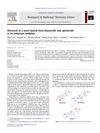
October 2010 in “Bioorganic & Medicinal Chemistry Letters” This study found that a new hybrid compound designed from finasteride and epristeride was a potent inhibitor of 5α-reductase with a mechanism similar to finasteride.
![Effect of C-Ring Modifications in Benzo[c]quinolizin-3-ones, New Selective Inhibitors of Human 5α-Reductase 1](/images/assets/c687900f-ea40-4de1-8f0b-a5b818951b1c/small/15452.jpg) 12 citations
,
June 2001 in “Bioorganic & Medicinal Chemistry”
12 citations
,
June 2001 in “Bioorganic & Medicinal Chemistry” This study found that octahydrobenzo[c]quinolizin-3-one derivatives, particularly compound 3, were potent and selective inhibitors of the enzyme 5α-reductase type 1.
 9 citations
,
August 2005 in “Experimental Dermatology”
9 citations
,
August 2005 in “Experimental Dermatology” In this study, the researchers report that a modified epimorphin-derived peptide shows potential for hair follicle regeneration, especially when used with 1% minoxidil in mice.
 8 citations
,
May 2004 in “Textile Research Journal”
8 citations
,
May 2004 in “Textile Research Journal” This study reports promising preliminary results for using monoclonal antibodies to identify cashmere fibers, highlighting observed immunological differences from wool keratins.
 January 2025 in “il Diabete”
 This study explores potential strategies for targeted drug delivery specifically to pancreatic beta-cells in type 2 diabetes treatment, highlighting methods for inducing drug expression in beta-cells, suitable drug carriers, active targeting peptides, and optimal administration routes.
 November 2022 in “Journal of the Endocrine Society”
 This case study reports that in an 8-year-old male, a pituitary adenoma causing isolated high LH secretion led to early testosterone-driven puberty without typical testicular enlargement, highlighting the differential roles of LH and FSH in pubertal development.
 November 2014 in “Elsevier eBooks”
 This article reviews the clinical and biochemical features of genetic mutations affecting dihydrotestosterone production and their potential role in male pseudo-hermaphroditism, but presents no new clinical results.