93 citations
,
January 2009 in “PubMed” This study found that women with serum ferritin levels below or equal to 30 ng/mL have a strong association with an increased risk of diffuse telogen hair loss.
 5 citations
,
August 2018 in “International Journal of Dermatology”
5 citations
,
August 2018 in “International Journal of Dermatology” This study suggests obstructive sleep apnea may increase the risk of male-pattern baldness in men with a family history of hair loss, and links low serum transferrin saturation levels to both conditions.
2 citations
,
July 2025 in “BMC Women s Health” This study confirms that many iron deficiency symptoms occur in non-anemic women, with transferrin saturation showing a strong correlation with symptom diversity, suggesting its potential as an early diagnostic biomarker.
1 citations
,
September 2021 in “Biomedical & Pharmacology Journal” This study found that the reticulocyte hemoglobin content (CHr) most frequently indicated iron deficiency in female patients with diffuse non-scarring hair loss.
 January 2026 in “Zenodo (CERN European Organization for Nuclear Research)”
 This abstract highlights that iron deficiency anemia, affecting over half of global anemia cases, poses significant challenges to health, especially in young children and women, with treatment focusing on iron supplementation and prevention strategies.
 January 2026 in “Zenodo (CERN European Organization for Nuclear Research)”
 This article reviews the causes, symptoms, diagnosis, and treatment of iron deficiency anemia, emphasizing its impact on global health but does not report new findings.

In this study, GV-350 treatment over three months improved iron status and reduced the impact of Telogen Effluvium on quality of life among 20 iron-deficient women, with no adverse events reported.
This review clarifies that non-anaemic iron deficiency in non-pregnant premenopausal women often arises from menstrual iron losses and can cause symptoms like hair loss, while in post-menopausal women and adult men, iron deficiency anaemia frequently indicates chronic intestinal bleeding.
February 2018 in “The American Journal of Gastroenterology” This study observed that intravenous ferric carboxymaltose did not inhibit the drug-induced reduction of inflammatory activity in patients with inflammatory bowel disease, as indicated by lower CRP levels.
January 2018 in “Journal of Crohn s and Colitis” This study found that high-dose intravenous ferric carboxymaltose may reduce inflammatory activity in patients with inflammatory bowel disease and iron deficiency anaemia, as evidenced by decreased CRP levels and improved clinical disease indices.
 9 citations
,
February 2019 in “BMC cancer”
9 citations
,
February 2019 in “BMC cancer” This study found that M30 may protect against cyclophosphamide-induced alopecia in mice by enhancing hair growth and preventing abnormal hair, suggesting its potential as a treatment.
 1 citations
,
December 2023 in “Curēus”
1 citations
,
December 2023 in “Curēus” This study observed that five out of fourteen individuals aged 13-16 years, who were homozygous for the p.C282Y mutation related to hemochromatosis, had increased liver and phlebotomy-mobilized iron levels.
1 citations
,
May 2007 in “PubMed” This case study of a subfertile couple highlighted the importance of considering haemochromatosis, particularly involving the C282Y mutation of the HFE gene, in patients with endocrine disorders linked to hypogonadism.
 May 2023 in “Journal of The American Academy of Dermatology”
 This correspondence outlines a research aim to evaluate the usefulness of laboratory testing for telogen effluvium to assist in forming evidence-based treatment guidelines, though results are not provided in the abstract.
October 2020 in “The American Journal of Gastroenterology” This case report highlights how a thorough history and examination led to the diagnosis of hereditary hemochromatosis in a patient initially suspected to have diverticulosis, improving symptoms with phlebotomy treatment.
This study observed telogenic defluvium and dystrophic hair loss in patients with nutritional deficits, with reversible damage when diet improves and stress is alleviated.
 January 2024 in “Polski Merkuriusz Lekarski”
 This retrospective cross-section study found that in a cohort of Pica patients in Iraq, 92.4% were female, and many had low levels of ferritin, hemoglobin, and vitamin D, which may contribute to the disorder by causing psychological issues.
July 2004 in “Transplantation” This study found that enalapril treatment reduced hematocrit levels in posttransplant erythrocytosis patients and increased transferrin saturation index and ferritin levels in those with iron deficiency among long-term renal transplant recipients.
January 2026 in “Journal of Crohn s and Colitis” This study found that high-dose intravenous iron therapy was effective and safe for patients with inflammatory bowel disease-associated anemia, improving hemoglobin and iron levels, reducing inflammation markers, and alleviating disease activity and symptoms, even in those with active inflammation.
 December 2017 in “International Journal of Current Research in Biosciences and Plant Biology”
 This paper discusses how various nutrients and phytohormones affect root hair growth and suggests further research to understand the genetic and signaling mechanisms involved, but it reports no new experimental findings.
 February 2026 in “PubMed”
 This case report describes how a 21-year-old male with alopecia areata and seborrheic dermatitis showed clinical improvements and symptom relief following a tailored, three-month functional nutrition protocol, highlighting potential benefits of addressing root causes in immune-related skin conditions.
 40 citations
,
July 2015 in “Journal of Cellular Biochemistry”
40 citations
,
July 2015 in “Journal of Cellular Biochemistry” This study found that cysteine supplementation significantly increases keratin expression in human keratinocytes, and counteracts the negative impact of iron deficiency on keratin production by enhancing iron availability for cellular processes.
 30 citations
,
October 2010 in “Journal of The American Academy of Dermatology”
30 citations
,
October 2010 in “Journal of The American Academy of Dermatology” This review examines the debated link between iron deficiency and nonscarring scalp alopecia in women, offering no new clinical results but emphasizing the need for further research and well-designed trials.
 207 citations
,
April 2006 in “Journal of The American Academy of Dermatology”
207 citations
,
April 2006 in “Journal of The American Academy of Dermatology” This review discusses the complexities of diagnosing and treating iron deficiency related to nutritional anemia and hair loss, concluding that routine screening and supplementation for hair loss are not yet supported by sufficient evidence.
 8 citations
,
February 2007 in “Journal of The American Academy of Dermatology”
8 citations
,
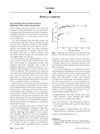
February 2007 in “Journal of The American Academy of Dermatology” This commentary critiques the definition of iron deficiency in hair loss studies, suggesting higher serum ferritin levels as a more accurate threshold for diagnosing deficiency in women.
 January 2021 in “Biomedical Research-tokyo”
 This article highlights the prevalence of iron deficiency, with or without anemia, as a significant factor in diffuse nonscarring hair loss in women, particularly affecting certain groups such as menstruating women and vegetarians.

This article suggests that alopecia areata may be an early skin manifestation of hereditary hemochromatosis in individuals predisposed to autoimmunity, recommending iron status evaluation during AA diagnosis; it reports no new clinical results.
 72 citations
,
October 2010 in “Journal of The American Academy of Dermatology”
72 citations
,
October 2010 in “Journal of The American Academy of Dermatology” This study concluded that iron deficiency is common among women but not more prevalent in those with female pattern hair loss or chronic telogen effluvium compared to control subjects without hair loss.
 40 citations
,
January 2013 in “Journal of Korean Medical Science”
40 citations
,
January 2013 in “Journal of Korean Medical Science” This study found that serum ferritin levels were lower in premenopausal women with female pattern hair loss compared to healthy controls, suggesting a potential role for iron in hair loss.
 1 citations
,
June 2011 in “Journal of The American Academy of Dermatology”
1 citations
,
June 2011 in “Journal of The American Academy of Dermatology” This study found that iron deficiency was common in both women with hair loss and control subjects, with no higher incidence in the hair loss group.