
This study introduced a customizable ELISA for detecting antibodies against botulinum neurotoxin that matches or surpasses other tests in sensitivity and allows for more efficient and animal-friendly testing when combined with the hemidiaphragm assay.
This paper introduces the clinical efficacy of a modified Renshen Yangrong Tang formula for treating viral hepatitis, insomnia, hair loss, and prolonged menstrual periods, emphasizing its application for qi and blood deficiency.
January 2011 in “Rutgers University Community Repository (Rutgers University)” This study introduced a pre-formal ontology matching approach using 39 identified dimensions to integrate drug information, improving database normalization and supporting complex use cases.
 October 2010 in “Journal of Drugs in Dermatology”
 This article introduces a modified surgical scalpel designed to minimize side effects in hair transplantation, proposing it as an ideal tool for removing the donor area.
 August 2010 in “Journal of Investigative Dermatology”
 New hair regrowth model introduced, imiquimod kills skin cancer cells, T-cadherin loss makes skin cancer more invasive, no strong link between PTCH1 gene and skin cancer after transplant, and male teens more likely to have hereditary hair loss.
 September 2009 in “Hair transplant forum international”
 This article introduces Dr. Robert H. True and highlights the growing field of hair restoration but does not report new research findings.
 September 2009 in “Hair transplant forum international”
 This article introduces a new column featuring multiple choice questions about hair disorders, with answers and explanations provided at the end of each column.
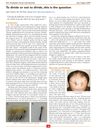 July 2009 in “International Society of Hair Restoration Surgery”
 This article introduces the concept of follicular units, highlighting their significance in hair restoration, but reports no new findings.
 June 2008 in “Dermatologic Surgery”
 This article introduces a new Core Curriculum for Hair Restoration Surgery, aimed at enhancing physician competence in diagnosing and treating hair loss with a multidisciplinary approach.
This article introduces REVVup Hair Therapy as an alternative to surgery for early-stage hair loss but reports no new clinical findings.
January 2008 in “Shanghai Journal of Traditional Chinese Medicine” This article introduces clinical experiences in treating androgenic alopecia using a combined approach of syndrome and disease differentiation, but it reports no new clinical results.
 July 2007 in “Faculty Opinions – Post-Publication Peer Review of the Biomedical Literature”
 This study introduced the BASP classification, a new system for categorizing pattern hair loss in both men and women, and applied it to analyze 2213 Korean subjects.
This review introduces in vitro evaluation methods for whitening, anti-wrinkle, and hair growth cosmetic ingredients but reports no new experimental results, highlighting the need for better human-correlated methods and reliable biomarkers.
 July 2004 in “Clinics in Dermatology”
 This research introduced and validated the Scales of General Well-Being, which reliably measures overall and specific aspects of well-being across different demographics in North America.
August 2003 in “Special report” This report introduces Barcelona - TrichoScan as a novel software tool purported to effectively analyze hair growth in patients with androgenetic alopecia or androgenetic effluvium, but it provides no clinical data.
January 1999 in “International Society of Hair Restoration Surgery” This piece introduces upcoming article features on Betty Ann Studier's contributions to surgical hair restoration and preoperative skin care, but it does not present new research findings.
September 1997 in “International Society of Hair Restoration Surgery” This announcement from Redfield Corporation introduces the first disposable linear slot punches for hair restoration surgery, with sharpness guaranteed for up to 500 recipient sites.
January 1997 in “Cosmetics and toiletries” This article introduces a silicone derivative of meadowfoam seed oil and reports its ability to penetrate and repair human hair fibers, suggesting potential use in personal-care products.
 March 1996 in “Hair transplant forum international”
 This article discusses the introduction and market presence of the Italian hair product Kevis but presents no new clinical findings.
October 2022 in “Academic journal of science and technology” This article introduces types of hair loss and treatments, explores stem cell applications, and describes adipose-derived stem cells' potential in hair regeneration, but reports no clinical results and highlights limitations.
January 2015 in “Hair transplant forum international” This abstract introduces a historical perspective on Dorothy Osborn's research about the hereditary nature of common baldness but reports no new study results.
 210 citations
,
July 1993 in “The journal of investigative dermatology/Journal of investigative dermatology”
210 citations
,
July 1993 in “The journal of investigative dermatology/Journal of investigative dermatology” This review discusses the role of intrinsic skin signals, rather than serum signals, in regulating melanin synthesis and hair pigmentation, but reports no new experimental data.
11 citations
,
May 2016 in “PubMed” This article reviews various methods and introduces new imaging technologies to assess the effects of hair shaping treatments on hair chemistry and structural integrity, without reporting clinical results.
 2 citations
,
June 2020 in “International Journal of Research -GRANTHAALAYAH”
2 citations
,
June 2020 in “International Journal of Research -GRANTHAALAYAH” This manuscript presents a hypothesis linking the intrinsic pulsating bioelectromagnetism of human hair follicles to the etiology of migraine headaches, supported by studies of inherent biomagnetism using optical microscopy techniques.
 2 citations
,
January 2010 in “International Journal of Trichology”
2 citations
,
January 2010 in “International Journal of Trichology” The Hair India 2010 conference introduced a new hair loss classification and highlighted advanced diagnostic techniques in trichology.
 1 citations
,
January 2020 in “ScholarWorks (Walden University)”
1 citations
,
January 2020 in “ScholarWorks (Walden University)” This study observed a significant relationship between intrinsic religiosity and conservative political orientation, contributing to understanding stress differences and potential for reducing healthcare costs.
March 2026 in “Ageing Research Reviews” This review highlights the complex interplay between intrinsic and extrinsic factors influencing skin aging, emphasizing the need for advanced human-specific models to study aging mechanisms and develop new therapies.
 April 2024 in “Nano research”
 This study on androgenetic alopecia in mice introduced a novel therapy combining microneedle patches and cold atmospheric plasma to enhance minoxidil delivery, leading to improved hair regeneration by boosting vascular growth and reshaping the hair follicle microenvironment.
 January 2024 in “Journal of cellular immunology”
 This review explores the complex interactions of intrinsic and extrinsic mechanisms that regulate hair follicle stem cells and their role in skin homeostasis, aiming to advance understanding that could support future research on skin disorders.
 September 2021 in “Kazanskij medicinskij žurnal”
 This article discusses the novel approach of introducing dissolved keratin into the body to enhance hair growth and reports no clinical results; further studies are needed to evaluate its efficacy.