 10 citations
,
January 2015 in “Przeglad Menopauzalny”
10 citations
,
January 2015 in “Przeglad Menopauzalny” This review discusses the effects and selection criteria of different progestogens in various treatments but reports no direct clinical comparisons of their metabolic effects.
October 2019 in “DOAJ (DOAJ: Directory of Open Access Journals)” This review focuses on the clinical presentation and management challenges of menopausal acne and reports no new experimental findings.
 47 citations
,
December 2016 in “Scientific Reports”
47 citations
,
December 2016 in “Scientific Reports” This study found that women with PMS were more likely to use suppression rather than reappraisal for emotion regulation, and increased suppression was linked to higher skin conductance levels in these women.
 10 citations
,
January 2000 in “PubMed”
10 citations
,
January 2000 in “PubMed” This study found that GnRH agonist treatment improved hirsutism scores more than finasteride after six months in women with idiopathic hirsutism, with both treatments causing no menstrual abnormalities or side-effects.
21 citations
,
December 2019 in “PloS one” In this study, the authors concluded that the VCD-induced follicular depletion rat model can effectively simulate the perimenopause transition, with hormonal changes distinguishing early/mid-transition from late transition to estropause.
3 citations
,
April 1977 in “PubMed” In this study, patients with varying severities of acne, seborrhoea, and hirsutism responded differently to Cyproteronacetate and Ethinyloestradiol treatment, with improvement rates dependent on symptom severity and treatment duration.
October 2022 in “Amplla Editora eBooks” Endometriosis significantly contributes to female infertility.
January 2011 in “Yearbook of Endocrinology”  11 citations
,
February 2008 in “British journal of nursing”
11 citations
,
February 2008 in “British journal of nursing” This article reviews idiopathic hirsutism, focusing on its definition, diagnosis, causes, and treatment options, without presenting new clinical findings.
 4 citations
,
September 2013 in “Expert Review of Endocrinology & Metabolism”
4 citations
,
September 2013 in “Expert Review of Endocrinology & Metabolism” Different types of polycystic ovary syndrome show varying levels of insulin resistance, with the 'PHO' type being the most insulin resistant.
 September 2002 in “Fertility and sterility”
 This study found that hirsutism is more frequent among female relatives of PCOS patients, suggesting a hereditary aspect of PCOS, while premature balding was not more common among male relatives.
29 citations
,
May 1975 in “Clinical Endocrinology” In this study, treatments combining betamethasone and anovulatory steroids significantly reduced testosterone production in women with hirsutism, with many reporting improved hirsutism and acne, although clinical benefit did not consistently correlate with testosterone reduction.

In this study, oral iron replacement showed some evidence of improving chronic telogen effluvium in iron deficient women, though further research is required to confirm the association.
 4 citations
,
June 2003 in “Fertility and Sterility”
4 citations
,
June 2003 in “Fertility and Sterility” In this pilot study, finasteride increased testosterone/dihydrotestosterone and progesterone/dihydroprogesterone ratios in normal ovulatory women but did not alter ovulation or gonadotropin secretion.
 5 citations
,
October 2018 in “Sains Malaysiana”
5 citations
,
October 2018 in “Sains Malaysiana” This study found that testosterone administration reduced the expression of uterine receptivity molecules in ovariectomized rats, which may negatively affect early pregnancy establishment and female fertility.
December 2025 in “Fertility and Sterility” Both LNG-IUD and systemic progestins are effective for fertility-sparing treatment, but close monitoring is needed due to recurrence risk.
38 citations
,
October 2013 in “Gynecologic and Obstetric Investigation” In this study, severe iron deficiency led to a significant reduction in conception rates in a rat model, suggesting its potential role in unexplained infertility.
 82 citations
,
May 2016 in “Best Practice & Research in Clinical Obstetrics & Gynaecology”
82 citations
,
May 2016 in “Best Practice & Research in Clinical Obstetrics & Gynaecology” This article outlines the clinical features, evaluation, and treatment strategies for androgen excess in polycystic ovary syndrome, highlighting important diagnostic and management approaches but reporting no new research results.
June 2015 in “Obstetrics, gynaecology and reproductive medicine” This article reviews the causes, physiology, and treatment strategies for hirsutism in women, highlighting that effective management often requires addressing underlying conditions and may involve lifestyle changes and pharmacological interventions.
2 citations
,
April 2020 in “Clinical and experimental obstetrics & gynecology” This study measured estradiol and progesterone in the scalp hair of pre- and postmenopausal women using immunoassay, but found no statistical significance in hormone concentration differences between the groups.
 October 2021 in “Turkderm”
 This study found that women with post-adolescent acne experience marked menstrual irregularities, polycystic ovaries, androgenetic alopecia, hirsutism, and metabolic syndrome, but insulin resistance and dyslipidemia may not significantly contribute to their acne's pathogenesis.
 34 citations
,
February 2013 in “The Journal of Clinical Endocrinology and Metabolism”
34 citations
,
February 2013 in “The Journal of Clinical Endocrinology and Metabolism” This study estimates the prevalence of hyperandrogenic states in late adolescent and young females, revealing that these disorders often begin at a young age.
 1 citations
,
March 2011 in “Infertility”
1 citations
,
March 2011 in “Infertility” This chapter discusses common endocrine disorders affecting the pituitary, thyroid, and adrenal glands, and their impact on human fertility, emphasizing practical evaluation and treatment algorithms.
 38 citations
,
December 2011 in “British Journal of Dermatology”
38 citations
,
December 2011 in “British Journal of Dermatology” This review discusses the influence of menopausal status on hair parameters in women without alopecia, finding significant differences in hair growth rate, percentage anagen, and hair diameter distributions, particularly in the frontal scalp.
 July 2022 in “L Endocrinologo”
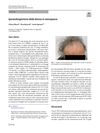
 This case report describes a 77-year-old woman with female pattern hair loss and elevated testosterone levels, who showed no improvement with minoxidil and lacked adrenal tumors on imaging.
 September 2025 in “International Journal of Women’s Dermatology”
 This study found that oral spironolactone 100 mg daily for 24 weeks improved terminal hair counts and diameters in premenopausal women with female pattern hair loss when used alongside minoxidil, despite a higher incidence of menstrual irregularities.
 39 citations
,
April 2024 in “Frontiers in Endocrinology”
39 citations
,
April 2024 in “Frontiers in Endocrinology” This study reviews the causes, mechanisms, and treatments for thin endometrium, highlighting multiple contributing factors such as hormonal influences, long-term oral contraceptive use, and uterine inflammation, while noting unclear mechanisms in promising therapeutic strategies like pharmacological treatments and regenerative medicine approaches.
May 2026 in “Annals of Internal Medicine Clinical Cases” This case report describes a postmenopausal woman with androgenic alopecia and progressive hirsutism who, despite normal imaging, had significantly elevated testosterone due to a Leydig cell tumor, revealed after surgical exploration; the condition improved post-surgery, underscoring the importance of considering such tumors in similar presentations.
 6 citations
,
March 2012 in “Journal of the European Academy of Dermatology and Venereology”
6 citations
,
March 2012 in “Journal of the European Academy of Dermatology and Venereology” This study found that 12 cycles of chlormadinone acetate in hormonal contraceptives significantly improved oily skin and hair quality, enhancing psychosocial well-being in healthy women.
128 citations
,
January 2023 in “Frontiers in Endocrinology” This review discusses recurrent implantation failure (RIF) in IVF, noting the lack of standard definitions or treatment protocols, and emphasizes the need for individualized treatment and further research.