 1 citations
,
March 2024 in “International Journal of Dermatology”
1 citations
,
March 2024 in “International Journal of Dermatology” This case report describes a therapy-resistant folliculitis decalvans patient who showed nearly complete response with increased hair density after treatment with CO2 laser-assisted photodynamic therapy.
 1 citations
,
September 2016 in “PubMed”
1 citations
,
September 2016 in “PubMed” This study found that adding topical finasteride 0.5% to diode laser therapy significantly reduced unwanted facial hair in women with idiopathic hirsutism compared to laser treatment with a placebo.
16 citations
,
January 2021 in “Journal of the American Academy of Dermatology” In this study, researchers piloted an asynchronous telemedicine program for isotretinoin management in acne patients, finding that dosing outcomes were similar to synchronous visits and clinicians were comfortable adjusting doses remotely.
July 2024 in “Reactions Weekly” June 2021 in “SWU eJournals System (Srinakharinwirot University)” The study found that cyproterone acetate could be released over 15 days using coconut oil mixed with certain wax inhibitors, though further safety studies are needed.
 June 2026 in “bioRxiv (Cold Spring Harbor Laboratory)”
 This study found that inhibiting the interaction between HOTAIR and EZH2 can block pro-fibrotic gene expression in fibroblasts and interfere with tissue remodeling in systemic sclerosis patient skin.
June 2025 in “Healthy-Mu Journal” The optimized Cinchonine gel effectively fights acne bacteria and is safe for twice-daily use.
 79 citations
,
September 2018 in “Dermatologic therapy”
79 citations
,
September 2018 in “Dermatologic therapy” This study found that treatment with oral tofacitinib, alone or with other therapies, was associated with clinical improvement in most patients with recalcitrant lichen planopilaris.
2 citations
,
May 2016 in “Journal of Clinical Oncology” This study found that topical BPM31543 was safe, tolerable, and showed potential to reduce chemotherapy-induced alopecia at higher dosing levels among adult women with cancer receiving taxane-based chemotherapy.
 November 2025 in “Mendeley Data”
 In this study, tofacitinib and baricitinib showed comparable efficacy and tolerability under unorthodox weight-stratified dosing in pediatric patients with moderate-to-severe alopecia areata over 24 weeks; however, the unorthodox baricitinib regimen yielded a lower effectiveness in severe cases, emphasizing the importance of adherence to guideline-recommended dosing.
7 citations
,
March 2025 in “Cytotechnology”  11 citations
,
January 2022 in “Journal of Cancer”
11 citations
,
January 2022 in “Journal of Cancer” This article reviews the potential for low intensity ultrasound as an antidote for the peripheral cytotoxic side effects of taxane drugs in chemotherapy, presenting no new clinical results.
October 2025 in “Coloration Technology” In this study, a new delipidisation method that removes over 97% of key lipids from wool rapidly and without yellowing was reported to improve wool processing and printing quality.
 April 2023 in “Journal of Investigative Dermatology”
 This study found that the oral IRAK4-inhibitors BAY 1834845 and BAY 1830839 reduced skin inflammation and systemic inflammatory responses in healthy volunteers, showing similar pharmacodynamic effects to prednisolone when challenged with topical imiquimod and intravenous LPS.
February 2020 in “Definitions”  April 2025 in “Jurnal Sains dan Teknologi Farmasi Indonesia”
 This study found that a nanostructured lipid carrier gel containing Minoxidil and Finasteride met desired criteria for stability and performance, suggesting it may be an effective topical treatment for hair loss, especially in extreme conditions.
 May 2017 in “Journal of The American Academy of Dermatology”
 An intact skin barrier is crucial to prevent infection in cases of tether-induced tenosynovitis.
 May 2022 in “International Journal for Research in Applied Science and Engineering Technology”
 In this study, researchers explored the causes and treatment strategies for diffuse telogen effluvium, focusing on 60 patients with the condition linked to iron deficiency anemia, comparing the effectiveness of ferrous salts alone versus combined with Quilib lotion.
March 2022 in “Institutional Repositories DataBase (IRDB)” This system overview describes the UTokyo Repository's role in storing and providing online access to digital resources from the University of Tokyo, reporting no new empirical findings or research results.
 1 citations
,
January 2017 in “Asian Journal of Chemistry”
1 citations
,
January 2017 in “Asian Journal of Chemistry” New method effectively analyzes finasteride and its stability.
 January 2024 in “Wiadomości Lekarskie”
 This study reviews modern treatment techniques for large, life-threatening pulmonary emboli and concludes that pulmonary artery thrombectomy is a safe and effective method, though it remains underutilized. Results are not reported in the abstract.
 35 citations
,
June 2005 in “The Milbank Quarterly”
35 citations
,
June 2005 in “The Milbank Quarterly” This article describes a framework for evaluating new health technologies by integrating quantitative evidence with qualitative assessments and using precedents to guide policy decisions, without reporting new clinical results.
November 2025 in “Journal of Investigative Dermatology” Ritlecitinib effectively treats severe Alopecia Areata by reducing harmful immune activity in the skin.
2 citations
,
February 2025 in “Advanced Healthcare Materials” This study developed microfluidics-based 3D microtumors to model minimal residual disease in ovarian cancer, highlighting their alignment with patient-derived MRD and response to a fatty acid oxidation inhibitor.
 14 citations
,
July 2012 in “Journal of the American Academy of Dermatology”
14 citations
,
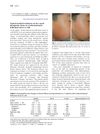
July 2012 in “Journal of the American Academy of Dermatology” This study found that topical tacalcitol improved roughness and scaling in erythromelanosis follicularis faciei et colli, although it was less effective for facial erythema.
January 2022 in “SSRN Electronic Journal” In this case study, a neoadjuvant therapy combining gemcitabine and Disitamab Vedotin proved effective and safe for a muscle-invasive bladder cancer patient with severe renal insufficiency, who could not tolerate platinum-based treatments. The study suggests this regimen may be a viable alternative, pending further research.
 April 2017 in “Journal of Investigative Dermatology”
 This study suggests that sirolimus and propranolol may reduce abnormal lymphatic endothelial cell proliferation in lymphatic malformations, potentially improving vessel function and patient outcomes.
December 2025 in “Fertility and Sterility” Both LNG-IUD and systemic progestins are effective for fertility-sparing treatment, but close monitoring is needed due to recurrence risk.
 38 citations
,
January 2023 in “International Journal of Medical Sciences”
38 citations
,
January 2023 in “International Journal of Medical Sciences” This review discusses the potential of repeated low-level red-light therapy to inhibit myopia progression through metabolic effects, highlighting its molecular and cellular impact, but reports no new clinical results.