66 citations
,
October 2002 in “Human molecular genetics online/Human molecular genetics” This study found that a nonsense mutation in the Cst6 gene of mice leads to severe skin and hair abnormalities, suggesting that cystatin M/E is crucial for epidermal function and viability.
61 citations
,
April 1980 in “Journal of the American Academy of Dermatology” This case study describes a young woman with a unique syndrome combining lamellar ichthyosis, neuroectodermal and mesodermal defects, and hair with trichoschisis and low sulfur content.
55 citations
,
April 2008 in “Clinical Genetics” This report identifies a novel mutation in the ST14 gene in a female with autosomal recessive ichthyosis with hypotrichosis, highlighting similar features to previously reported cases.
18 citations
,
December 2010 in “Journal of analytical atomic spectrometry” This study demonstrated that using lead-doped keratin film as a calibration standard allows for accurate tracking of lead distribution along hair strands, revealing different exposure patterns among workers in a battery manufacturing factory in Thailand.
 17 citations
,
September 2010 in “Pediatric dermatology”
17 citations
,
September 2010 in “Pediatric dermatology” This report describes a case of widespread Porokeratotic eccrine and hair follicle nevus in a 15-year-old woman with keratitis-ichthyosis-deafness syndrome, involving both eccrine ostia and hair follicle infundibula.
 13 citations
,
November 2012 in “PLoS ONE”
13 citations
,
November 2012 in “PLoS ONE” This study identified a novel recessive mutation in mice causing lethal congenital lamellar ichthyosis, with skin and hair follicle alterations similar to human congenital ichthyoses, linked to a specific genetic defect affecting Fatp4.
11 citations
,
November 2011 in “The Journal of Dermatology” This case report highlights the association of three CX26 gene mutations, particularly the D50N mutation, with keratitis–ichthyosis–deafness syndrome and its potential role in scalp squamous cell carcinoma and breast cancer development in a patient.
 11 citations
,
September 2011 in “British Journal of Dermatology”
11 citations
,
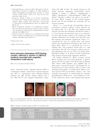
September 2011 in “British Journal of Dermatology” New ABCA12 gene mutations were linked to a skin condition with scaling and hair loss, and a treatment helped with hair loss in a related case.
 10 citations
,
March 2015 in “Journal of dermatology”
10 citations
,
March 2015 in “Journal of dermatology” This case report describes a 12-year-old boy with severe skin scaling due to novel compound heterozygous null truncation mutations in the TGM1 gene, resulting in loss of transglutaminase 1 activity.
10 citations
,
April 2013 in “Journal of Investigative Dermatology” This study reports a semidominant inheritance of epidermolytic ichthyosis due to a KRT1 mutation, which was previously thought to be only inherited dominantly.
 9 citations
,
May 2016 in “Veterinary dermatology”
9 citations
,
May 2016 in “Veterinary dermatology” This case report describes how a long-term combination of oral fatty acids and topical therapy appeared beneficial for managing autosomal recessive congenital ichthyosis in a goldendoodle with a PNPLA1 mutation.
 6 citations
,
August 2022 in “The Italian Journal of Pediatrics/Italian journal of pediatrics”
6 citations
,
August 2022 in “The Italian Journal of Pediatrics/Italian journal of pediatrics” This report identified three novel genetic mutations associated with congenital ichthyosis in Italian newborns and emphasized the importance of next-generation sequencing for personalized patient management.
 6 citations
,
July 2011 in “British Journal of Dermatology”
6 citations
,
July 2011 in “British Journal of Dermatology” This paper reports a case of sebaceous carcinoma developing at the site of chronic candidiasis in a patient with keratitis–ichthyosis–deafness syndrome, without presenting new generalizable findings.
 5 citations
,
August 2015 in “British journal of dermatology/British journal of dermatology, Supplement”
5 citations
,
August 2015 in “British journal of dermatology/British journal of dermatology, Supplement” The top research priorities for congenital ichthyosis include long-term side effects of oral retinoids, best topical treatments, and treatments for itch and hair loss.
3 citations
,
March 2019 in “European Journal of Dermatology” A specific gene mutation (Y449H in K10) was found in a patient with severe skin disorder.
3 citations
,
March 1998 in “PubMed” This case report describes a 70-year-old woman whose acquired ichthyosis resolved and darker hair regrew after removing a leiomyosarcoma, highlighting a possible association between the two conditions.
2 citations
,
April 2023 in “Diabetes Metabolic Syndrome and Obesity” 2h-ICPR can help screen for insulin antibodies in type 2 diabetes patients.
 1 citations
,
January 2019 in “International Journal of Medical Reviews and Case Reports”
1 citations
,
January 2019 in “International Journal of Medical Reviews and Case Reports” This case report describes a 10-year-old girl with lamellar ichthyosis who showed marked improvement in scaling and skin stiffness after six weeks of treatment with emollient and supportive therapy.
August 2026 in “PLoS ONE” This study will evaluate the clinical efficacy, patient-reported outcomes, and economic impact of the PAXMAN® PSCS 2 automated scalp cooling system versus standard cold-cap therapy to prevent chemotherapy-induced hair loss in women with localized breast cancer during anthracycline and taxane treatment.
 February 2026 in “International Journal of Clinical Pharmacy”
 This commentary described developing a framework to evaluate how pharmacists in community pharmacy care clinics impact emergency department visits, focusing on conditions they can manage, adverse medication events, and necessary referrals.
August 2024 in “Skin Research and Technology” This report describes the diagnosis and treatment of traumatic anserine folliculosis in children, highlighting its distinct skin features and suggesting tretinoin cream as an effective remedy.
January 2024 in “ResearchWorks at the University of Washington (University of Washington)” This study found that while measuring zinc in hair did not allow calculation of individual hair growth rates, it effectively characterized zinc, lead, and mercury concentrations and improved methods for analyzing these exposures using LA-ICP-MS.
September 2023 in “Journal of the American Academy of Dermatology” This study found that patients receiving immune checkpoint inhibitors who have a history of psoriasis are at a higher risk for developing gastrointestinal and endocrine toxicities within one year compared to those without psoriasis.
January 2022 in “International journal of dermatology and venereology” This case study reports a 36-year-old man with KID syndrome caused by an N14Y GJB2 mutation, expanding the mutation spectrum of this condition in the Chinese population.
January 2022 in “Indian dermatology online journal” This case report describes a preterm newborn with lamellar ichthyosis, detailing management with acitretin, vitamin D, and emollients, and emphasizes the importance of regular monitoring due to potential adverse effects of long-term retinoid therapy.
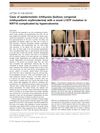 October 2011 in “Journal of dermatology”
 A man with a rare skin condition and a new gene mutation developed high calcium levels due to his treatment.
 February 2010 in “Journal of The American Academy of Dermatology”
 Surgery on a baby with a skin disorder improved eyelid position and eye health.
March 1998 in “JEADV. Journal of the European Academy of Dermatology and Venereology/Journal of the European Academy of Dermatology and Venereology” This study reported that acquired ichthyosis and hair changes in a 70-year-old woman with leiomyosarcoma resolved after the surgical removal of the tumor.
 87 citations
,
March 2014 in “Biochimica et Biophysica Acta (BBA) - Molecular and Cell Biology of Lipids”
87 citations
,
March 2014 in “Biochimica et Biophysica Acta (BBA) - Molecular and Cell Biology of Lipids” This paper discusses X-linked ichthyosis and its genetic causes, focusing on biochemical pathways and their role in epidermal differentiation and barrier function, but it presents no new clinical findings.
 25 citations
,
August 2010 in “Journal of Biological Chemistry”
25 citations
,
August 2010 in “Journal of Biological Chemistry” This study found that NFI-C plays a crucial role in the transition from the telogen to anagen phase of the hair follicle cycle, affecting hair growth initiation in mice.